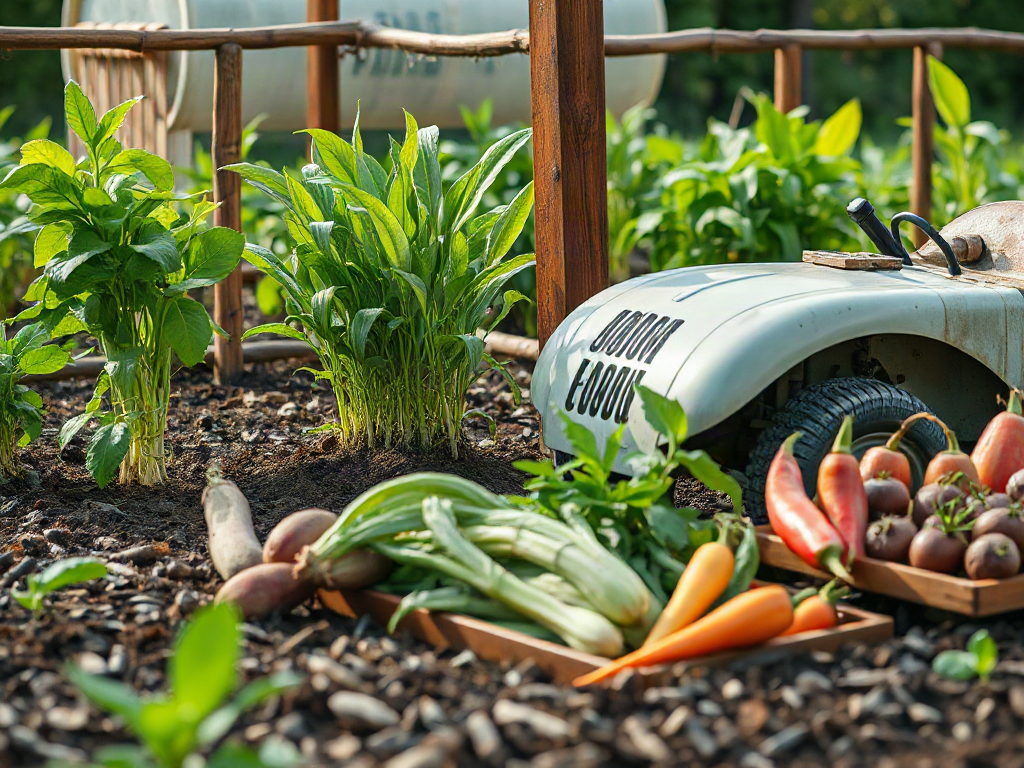
Starting a farm with no money is most realistic when the first steps focus on controlling resources rather than buying land, machinery, or livestock. Begin with a small product that has nearby buyers, secure borrowed or leased growing space, use rented or shared equipment, and test demand through preorders or a limited sales season. Keep household income while the farm proves its margins, and record every input, hour, sale, and loss. Free land is not the same as a free farm, so confirm water access, soil condition, insurance needs, local rules, and delivery costs before accepting an opportunity.
What Does “No Money” Really Mean for a New Farm?
A zero-cash farm launch is rarely literal. Seeds, feed, water, containers, fuel, licenses, fencing, insurance, and transportation all create costs, even when land and labor appear free. A more workable definition is starting without enough capital to purchase a conventional farm property or a complete equipment fleet. Under that constraint, the immediate objective is to reduce fixed costs, delay optional purchases, and protect the income that pays household bills.
Separate resources into three groups: assets you must control, assets you can share, and assets you do not yet need. A market gardener may need reliable access to soil, water, hand tools, harvest containers, and transportation. That grower can often share a tiller, rent a walk-behind tractor, or pay another operator for bed preparation. A tractor, washing line, greenhouse, and delivery van may be useful later, but buying them before sales exist turns an uncertain enterprise into a debt obligation.
Labor deserves the same scrutiny as cash. Treating personal time as free can make an unprofitable operation look successful. Record field preparation, seeding, watering, harvesting, cleaning, sales, and travel hours. If fifty hours of work produces only a modest amount after direct expenses, the answer is not automatically to plant more. The crop mix, price, workflow, or sales outlet may need to change first.
Inventory what you already control before searching for financing. Useful resources may include a backyard plot, a shed, a utility trailer, basic carpentry skills, relationships with restaurant owners, or access to a neighbor’s unused pasture. Give each resource a realistic limit. A borrowed truck that is unavailable on market day is not dependable delivery capacity, and a free field without irrigation may be unusable during dry weather.
A strong start therefore replaces ownership with dependable access. Write down the minimum conditions required to produce and sell one item legally and consistently. This exposes the actual funding gap, which is usually smaller and more specific than the cost of buying an entire farm.
Choose an Enterprise That Can Start Small
The best first enterprise is one that matches available land, labor, local demand, and time to first sale. Beginning farmers are often attracted to products they enjoy raising without checking whether those products require years of investment or specialized infrastructure. Orchards, cattle, and large grain plantings can be legitimate long-term goals, but they are difficult places to begin when cash and land security are limited.
Short-cycle vegetables, culinary herbs, plant starts, cut flowers, microgreens, mushrooms, or value-added products made under applicable local rules may allow a controlled trial. Each still has constraints. Salad greens need dependable cooling and frequent harvests. Plant starts require protected growing space and concentrated spring marketing. Mushrooms need sanitation and environmental control. Cut flowers can command good prices in the right market but demand careful harvest timing and handling.
Compare enterprises by the entire route from production to payment, not by the advertised price per unit. A high-value crop may be a poor choice if it requires expensive packaging, refrigeration, daily delivery, or a market that is already crowded. A lower-priced product sold weekly to nearby repeat customers may leave more money after waste and transportation.
| Decision Factor | Question to Check | Warning Sign |
|---|---|---|
| Time to revenue | How long until the first realistic sale? | Expenses continue for months without another income source |
| Minimum scale | Can the enterprise be tested in a small area or batch? | Profit requires major equipment from the beginning |
| Buyer access | Who is likely to purchase repeatedly? | Demand is based only on social-media interest |
| Post-harvest needs | What happens between harvest and delivery? | Cooling, storage, or processing capacity is unavailable |
| Failure exposure | What could erase the season’s income? | One weather event, disease, or customer controls the outcome |
Choose one primary product and, at most, a closely related secondary product for the first test. Ten unrelated enterprises scatter labor across different production systems and sales messages. A small herb grower, for example, might sell bunches and a limited number of potted plants using similar knowledge and customers. Adding poultry, honey, vegetables, and preserves at the same time creates separate infrastructure and regulatory questions before any operation has been proven.
How Can You Access Land Without Buying It?
Land access can come through a written lease, crop-share agreement, incubator farm, community plot, family arrangement, or stewardship agreement with an owner who wants unused acreage maintained. These options reduce the purchase barrier, but the agreement must provide enough control to operate through the intended production cycle.
Inspect the site as an operating resource rather than an attractive piece of ground. Confirm the source, reliability, and permitted use of water. Examine vehicle access after rain, sunlight, drainage, previous land uses, wildlife pressure, storage security, and distance from customers. Soil testing through an appropriate laboratory or local extension resource can identify pH and nutrient conditions; additional testing may be warranted when prior activity raises contamination concerns.
Put the arrangement in writing even when the owner is a friend or relative. The document should identify the area included, length of access, payment or crop share, water and utility responsibilities, permitted structures, maintenance duties, insurance expectations, termination terms, and ownership of improvements. If a grower installs irrigation, fencing, compost, or perennial plants, the agreement should explain what happens to those investments when access ends. Local legal advice may be worthwhile for a lease or arrangement involving substantial obligations.
A free parcel twenty miles away may cost more to operate than a small paid plot nearby. Frequent irrigation checks, harvest trips, and security problems consume fuel and labor. Likewise, cheap acreage without water is often less useful than a quarter-acre with dependable irrigation and a shed. Compare total operating access rather than rent alone.
A practical first proposal to a landowner is narrow: a defined area, a single season, clear maintenance standards, and scheduled review dates. Avoid promising to restore an entire neglected property in exchange for uncertain access. The arrangement is working when entry, water, storage, and field activities occur without repeated negotiation. Delayed permissions, changing boundaries, or verbal disagreements indicate that the site is too unstable for further investment.
Test Demand Before Spending on Production
Buyer evidence should come before production volume. Compliments, survey responses, and online followers do not prove that people will pay the required price at the required frequency. Useful evidence includes small deposits, preorders, written interest from a commercial buyer, or repeated purchases during a limited trial.
Start by speaking directly with a narrow customer group. A prospective herb grower could ask independent restaurants which herbs they currently buy, package sizes they use, delivery days they accept, seasonal volume, and reasons they reject a delivery. A grower considering a neighborhood produce subscription should ask households how often they cook, where pickup would be convenient, and whether they will commit before planting. The goal is not to persuade everyone; it is to find enough qualified buyers for a manageable pilot.
Price from costs and sales conditions rather than copying another farm. Include seed or stock, growing media, soil amendments, packaging, market fees, payment processing, mileage, spoilage, and labor. Wholesale may move more product with fewer transactions, but the price is usually lower and quality specifications may be strict. Direct sales may offer a higher price while requiring more customer communication, display time, and unsold-inventory management.
Preorders and subscriptions can contribute early cash, but they create an obligation to deliver. Use them only when the production plan is credible, the promised quantity is conservative, and customers understand how substitutions, crop failure, refunds, or pickup changes will be handled. Spending preorder money immediately on unrelated equipment can leave the farm unable to fulfill the order.
Set a pass-or-adjust threshold before the trial begins. That might be a target number of paid weekly orders, an acceptable amount of unsold product, or a minimum return after direct costs. If buyers repeatedly resist the price, deliveries are too scattered, or waste remains high, reduce the offering or change the outlet before expanding. A small test that exposes weak demand is valuable because it prevents a larger and more expensive mistake.
Build a First-Season Plan Around Cash Flow
The first-season plan should show when money leaves, when sales can begin, and which expenses can be postponed until revenue is demonstrated. Profit on paper does not prevent a cash shortage in the weeks between purchasing inputs and collecting payment. Keep farm money separate from household money, even if the operation is initially simple, and preserve outside income until sales are consistent enough to cover both operating costs and personal needs.
Build the plan backward from a conservative sales target. Identify the sale date, harvest window, production period, ordering deadline, site-preparation work, and buyer commitment needed at each stage. Then fund only the next verified step. For example, do not purchase a season’s packaging before customers have accepted the package size and pickup format. Do not build permanent wash infrastructure for a one-bed trial when food-safe portable equipment can serve the pilot appropriately.
A compact launch sequence is:
- Define one saleable offer. Specify the product, quantity, buyer, price, and delivery method.
- Secure dependable production access. Confirm land, water, storage, tools, and the length of the agreement.
- Check operating requirements. Contact relevant local authorities about zoning, business registration, sales tax, food handling, insurance, and market rules.
- Run a limited production and sales test. Keep the area, batch, or customer count small enough that failure does not threaten household finances.
- Review records before expanding. Compare expected and actual yield, waste, labor, price, and repeat purchases.
Loans and grants should solve a defined, measured bottleneck rather than finance an untested idea. A small equipment loan may be reasonable after repeated sales show that rented equipment is restricting output. Borrowing for machinery because it makes the operation look established reverses that logic. Grants can have eligibility rules, application periods, reporting duties, and restricted uses; they should not be treated as immediate or guaranteed startup cash.
Signs of progress include repeat customers, predictable production, lower waste, accurate records, and a clear reason for the next purchase. Warning signs include using household credit for routine inputs, adding products to chase every request, missing deliveries, or expanding acreage while the first plot remains poorly managed. Scale the process that works, not merely the area under production.
Conclusion
A cash-poor farm should begin as a controlled market test, not a smaller imitation of a fully equipped commercial operation. Define one product and buyer, secure dependable access to the minimum land and infrastructure, and document the arrangement before improving someone else’s property. Price the complete path from production through delivery, including labor and losses, then limit the first trial to an amount your household can afford to lose.
Use the first season to produce evidence: repeat purchases, accurate cost records, dependable yields, and a clear operational bottleneck. Keep outside income and avoid major purchases while those signals remain uncertain. The next action is to write a one-page offer for a specific customer, identify the resources required to fulfill it, and test whether buyers will commit before expanding production.
Frequently Asked Questions
Can I start a farm without owning land?
Yes. A written lease, crop-share arrangement, incubator farm, community plot, or stewardship agreement can provide access. Confirm water, vehicle access, permitted uses, lease length, and responsibility for improvements before investing labor or materials.
What is the cheapest type of farm to start?
No enterprise is cheapest everywhere. The lowest-cost option usually uses resources you already control, reaches buyers quickly, and avoids expensive machinery, buildings, refrigeration, or long production cycles.
Should I apply for a farm loan immediately?
Usually not before defining the product, market, operating costs, and repayment source. Financing is more useful when it removes a documented bottleneck in an enterprise that has already shown credible demand.
Can preorders fund a new farm?
Preorders can cover some early inputs, but they create delivery obligations. Offer conservative quantities, state fulfillment terms clearly, and retain enough cash to handle substitutions, delays, or refunds.
When should a beginner expand production?
Expand after records show repeat demand, manageable waste, reliable production, and a positive margin after direct expenses and labor. More acreage will magnify weak pricing or inefficient workflows rather than repair them.