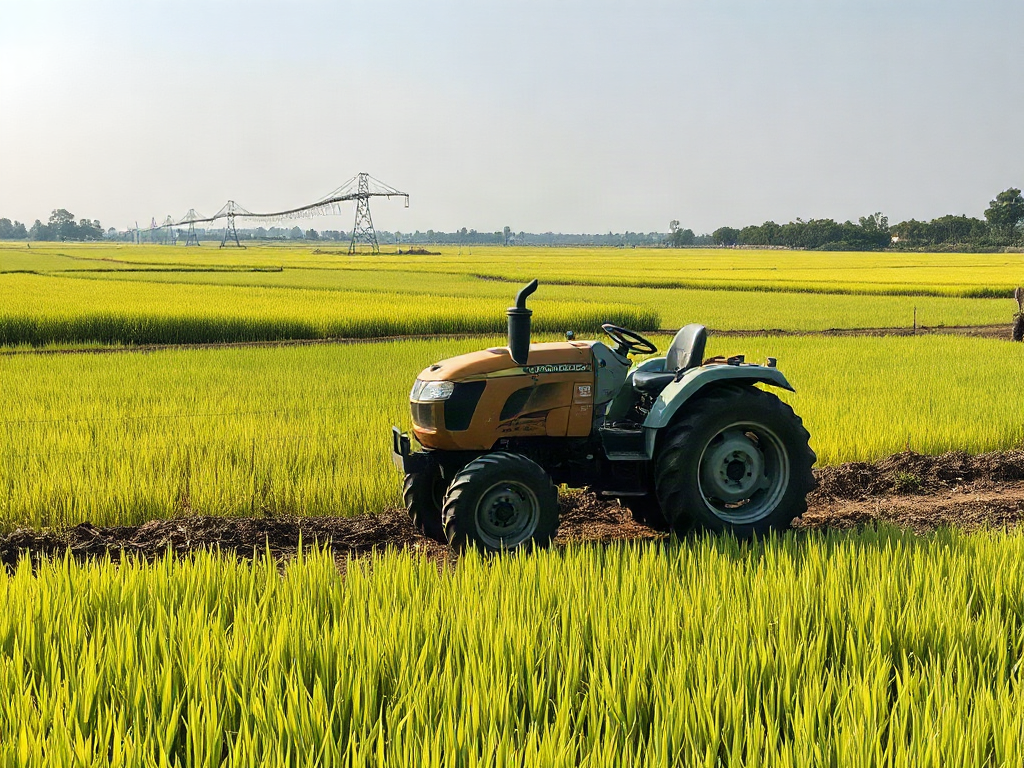
Rice farming in the United States for small growers is most practical where warm-season weather, level ground, suitable soil, and dependable water access align. A workable field plan should match the rice type to the region, confirm drainage and irrigation capacity, and account for specialized harvest and drying needs before planting. Small growers can use leveed paddies, controlled-irrigation fields, or upland systems, but each approach carries different weed, water, and labor demands. The costliest mistakes are planting an unsuitable variety, assuming rice must remain continuously flooded, and producing grain without arranging a combine, dryer, dehuller, or buyer.
What you’ll learn
This guide covers the following practical points:
- Where Small-Scale Rice Can Work — Successful small-scale rice production begins with the site rather than the seed catalog.
- Choose a Rice Production System — The production system determines the field layout, weed pressure, irrigation demand, and equipment burden.
- Build a Field Plan Before Planting — A written field plan exposes costly gaps while they can still be corrected.
- Manage Weeds, Water, and Crop Health — Early weed control has an outsized effect because rice seedlings initially compete poorly with fast-growing grasses and broadleaf weeds.
Where Small-Scale Rice Can Work
Successful small-scale rice production begins with the site rather than the seed catalog. Rice needs enough warm weather to mature, but local rainfall alone does not determine whether a field is suitable. Soil permeability, slope, water availability, drainage outlets, and access for planting and harvest equipment usually matter more.
Much of the commercial U.S. crop is concentrated in the South and California because those regions combine favorable growing seasons with established irrigation, milling, and agronomic support. A small planting may be possible elsewhere, including parts of the Midwest and Northeast, when a locally adapted short-season variety is available. The farther a farm sits from a rice-growing region, however, the harder it may be to obtain seed, rent a suitable combine, dry grain promptly, or find a mill willing to handle a small lot.
Heavy or moderately slow-draining soil makes controlled flooding easier because water remains in the root zone. A sandy field may consume excessive water and lose dissolved nutrients below the crop. Uneven ground creates the opposite problem: low spots remain deep while high spots dry out, producing inconsistent weed control and crop development. Before committing acreage, examine the USDA soil survey, dig inspection holes, observe drainage after rain, and estimate how the field could be leveled or divided.
Water access requires more than a pond or well. The source must deliver adequate flow when the crop needs it, and the field needs a lawful means of withdrawing, distributing, draining, and discharging that water. State water rules, well requirements, stream restrictions, and wetland protections vary, so growers should contact the relevant state agency and local conservation office before earthwork begins. A common failure is investing in levees before confirming that the water source and outlet are usable.
Choose a Rice Production System
The production system determines the field layout, weed pressure, irrigation demand, and equipment burden. Flooding is a management tool rather than a requirement for rice germination. Commercial systems often establish the crop first and add a shallow flood later, after seedlings are sufficiently developed and field operations permit it.
| System | Best Fit | Main Constraint |
|---|---|---|
| Leveed paddy | Level or graded ground with slow-draining soil | Earthwork, water control, and specialized field access |
| Controlled irrigation without continuous flooding | Growers able to monitor soil moisture and irrigate reliably | Less margin for missed irrigation and potentially greater weed pressure |
| Upland rice | Small plots where paddies are impractical | Strong competition from weeds and dependence on rainfall or supplemental irrigation |
A leveed field offers useful water control, but a miniature paddy is not automatically the simplest choice. Poorly placed levees interfere with mowing, harvest turns, and drainage. Water that is too deep can suppress young plants, while uncontrolled releases may move sediment or nutrients off the farm. Small growers should design inlets, spillways, and drainage paths before forming berms.
Upland culture avoids standing water and may suit a garden-scale trial, yet it should not be mistaken for low-input rice. Without flood-based weed suppression, grasses can be difficult to distinguish from rice when young and may overtake the stand quickly. This approach is more credible where a regional upland variety, dependable moisture, and an aggressive cultivation or weed-control plan are available.
Variety choice should follow the system and regional maturity window. Grain color or culinary appeal matters only after adaptation, disease tolerance, lodging resistance, and harvest timing have been considered. Seed sourced through a regional supplier or university-supported program is generally more useful than grocery rice, which may be milled, heat-treated, mixed, old, or poorly suited to the local climate.
Build a Field Plan Before Planting
A written field plan exposes costly gaps while they can still be corrected. Map the planted area, elevation changes, irrigation entry point, drainage outlet, field access, and turning space. Then work backward from the expected harvest period to select a locally appropriate planting window rather than copying a calendar from another state.
Use the following preplant sequence as a compact decision checklist:
- Test the soil. Request locally relevant nutrient and pH recommendations through a university or commercial laboratory.
- Confirm seed adaptation. Ask the supplier about maturity, production system, seed treatment, and regional performance.
- Check water delivery. Test the pump, pipes, gates, and drainage route under working conditions.
- Prepare a uniform seedbed. Correct severe ruts and depressions before they disrupt planting depth or irrigation.
- Reserve harvest capacity. Arrange cutting, transport, drying, storage, and milling before seed goes into the ground.
Seeding rate, depth, fertility, and timing should come from recommendations for the chosen variety and region. Applying a commercial-rice rate to a hand-managed plot may create unnecessary seed expense, while sparse planting leaves more space for weeds. Excess nitrogen can encourage lodging and delay maturity; too little can limit tillering and canopy development. A soil test is therefore more defensible than applying a general fertilizer blend by habit.
Start with a plot small enough to irrigate, weed, harvest, and dry even if rented machinery becomes unavailable. A quarter-acre experiment may teach more than several acres that cannot be processed on time. Keep notes on emergence, irrigation dates, weed escapes, disease symptoms, lodging, and harvest losses. Those records reveal whether expansion would improve efficiency or merely multiply the same bottleneck.
Manage Weeds, Water, and Crop Health
Early weed control has an outsized effect because rice seedlings initially compete poorly with fast-growing grasses and broadleaf weeds. Flooding can suppress some weeds after establishment, but it does not correct a field already dominated by weeds. Begin with a clean seedbed, inspect the crop frequently, and identify problem plants before selecting cultivation, water management, or a labeled crop-protection product.
Herbicide options depend on the rice variety, weed species, location, application timing, and label. A product used in commercial rice may be inappropriate for a tiny plot, especially where application equipment cannot be calibrated accurately. State pesticide rules and labels govern use. Growers seeking nonchemical control should expect more hand labor, stale-seedbed preparation, cultivation, or rotation rather than assuming flooding alone will keep the plot clean.
Water management should maintain crop access to moisture without creating avoidable losses. Check field edges, levees, gates, and high spots instead of judging the entire planting from one low area. Wilting, rolled leaves, cracked soil, or dry high points may indicate insufficient distribution. Persistently submerged seedlings, washed-out levees, cloudy discharge, and weak plants in depressions can indicate excessive depth or poor drainage.
Scout for leaf lesions, discolored plants, insect feeding, poor tillering, and lodged patches. Similar symptoms can result from disease, nutrient imbalance, herbicide injury, cold stress, or water problems, so diagnosis by appearance alone is unreliable. Photograph the affected area, note its position in the field, and take representative plant or soil samples to a county Extension office or diagnostic laboratory. Rotating fields and avoiding volunteer rice can also reduce the carryover of certain weeds, insects, and diseases.
Harvest, Drying, and Market Planning
Harvest and postharvest handling often decide whether a small rice crop becomes usable food or an expensive demonstration. Rice must be cut at an appropriate grain condition, moved promptly, and dried evenly enough to limit spoilage and quality loss. Waiting until the panicles look completely dry can increase shattering, lodging, bird damage, and losses during cutting.
A conventional grain combine may harvest rice if its settings and headers suit the field, but local operators may decline very small, wet, or leveed parcels. Garden-scale plots can be cut and threshed manually, although the labor rises quickly and improvised threshing can scatter grain. Before planting, ask prospective operators about minimum charges, field access, acceptable moisture, cleaning between crops, and whether they will handle the selected acreage.
Harvested rough rice still has a hull. Drying, cleaning, dehulling, and—if white rice is desired—milling are separate operations. Household grain mills generally do not replace a rice dehuller, and small commercial mills may require minimum quantities or specific packaging. Selling food-grade rice also introduces state and local requirements involving processing, labeling, scales, facilities, and taxation. Requirements differ by jurisdiction, so a grower should verify them directly rather than assuming a cottage-food exemption applies.
Direct sales can offer more value per pound than a commodity outlet, but they require consistent grain quality, attractive packaging, customer education, and enough volume to cover processing. Livestock feed, seed production, and food sales each have different quality and regulatory implications. Seed should not be marketed as certified unless it has actually met the applicable certification program. A realistic enterprise budget should include irrigation energy, seed, fertility, weed control, custom harvesting, drying loss, milling yield, packaging, transportation, and unpaid family labor.
Conclusion
A promising rice site combines an adapted variety with uniform ground, manageable soil, lawful water access, and a clear route from harvest to finished grain. Verify those conditions before building levees or purchasing seed. A modest trial plot, supported by soil testing and regional Extension recommendations, will reveal weed pressure, irrigation demands, maturity timing, and processing costs. Expand only after the first crop proves that water delivery, harvest scheduling, drying, dehulling, and the intended market can function together.
Frequently Asked Questions
Can rice be grown outside traditional U.S. rice states?
Yes, where the growing season, variety maturity, soil moisture, and water supply align. Processing and harvest services may be harder to secure outside established production regions.
Does a small rice field need to stay flooded?
No. Flooding is commonly used to manage water and suppress certain weeds, but rice can grow under controlled irrigation or upland conditions if moisture remains adequate.
Can grocery-store rice be planted?
It is unreliable because the grain may be milled, treated, old, mixed, or unsuited to the region. Plant identified seed with known maturity and production characteristics.
What equipment does a small rice grower need?
Needs vary by scale, but planting, irrigation, weed management, harvesting, threshing, drying, cleaning, and dehulling must all be covered by owned, rented, custom, or shared equipment.
Is small-scale rice likely to be profitable?
Profitability depends heavily on irrigation, custom-work minimums, milling access, labor, yield, and selling price. Build a per-acre and per-package budget before expanding beyond a trial plot.