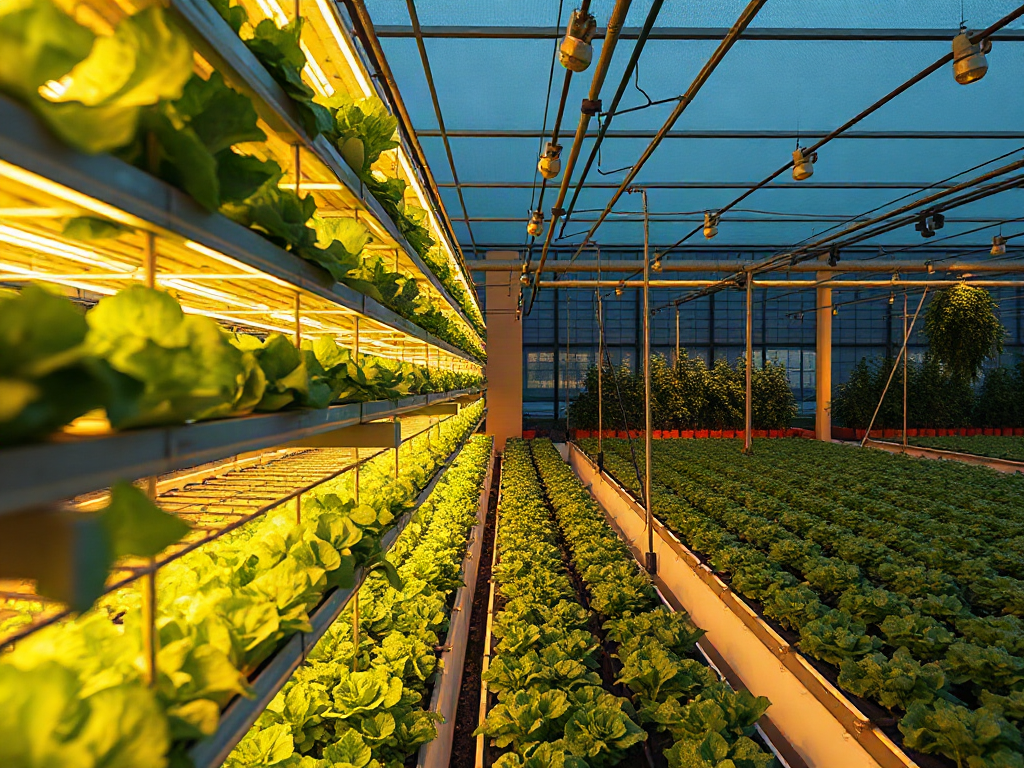
Vertical farming compared with outdoor food production offers tighter control over water, nutrients, temperature, and harvest timing, but it relies more heavily on electricity, equipment, and technical management. Indoor stacked systems suit leafy greens, herbs, seedlings, and other compact crops with short production cycles, while outdoor fields accommodate grains, roots, fruiting plants, and staple foods at far larger scales. Vertical farms can reduce exposure to drought, soil disease, and seasonal weather, yet lighting and climate-control demands may raise costs and energy use. The practical choice depends on crop value, local climate, available land, power reliability, labor skills, and the intended market.
What you’ll learn
This guide covers the following practical points:
- How the Growing Systems Differ — Vertical systems replace much of the field environment with managed infrastructure.
- Resource Use and Environmental Tradeoffs — Water is one of the clearest operational differences.
- Crop Range, Yield, and Food Value — Vertical growing is strongest when a crop is compact, fast, repeatedly marketable, and valuable relative to the space and energy it occupies.
- Cost, Labor, and Operating Risk — Vertical production shifts costs from land and seasonal uncertainty toward buildings, fixtures, controls, and continuous operation.
How the Growing Systems Differ
Vertical systems replace much of the field environment with managed infrastructure. Plants commonly grow on stacked shelves or towers, with roots supplied by a recirculating nutrient solution or another soilless medium. Lamps provide usable light, pumps move water, fans exchange air, and sensors help operators track temperature, humidity, acidity, and nutrient concentration.
Outdoor production uses sunlight, soil, rainfall or irrigation, and natural seasonal cycles. Growers can amend soil, install drip lines, use row covers, rotate crops, and protect plants from pests, but they cannot fully control heat waves, hard freezes, smoke, hail, or prolonged rain. This exposure creates variable harvest dates and quality, although it also removes the need to manufacture light and maintain an enclosed growing climate.
The comparison is therefore not simply indoor technology against traditional soil. It is controlled production with substantial infrastructure versus biologically complex production with greater weather exposure. A vertical rack of basil may produce uniform weekly harvests near a kitchen or market. The same equipment would be poorly matched to sprawling winter squash, deep-rooted parsnips, or sweet corn.
A common misconception is that stacking plants automatically multiplies usable food output. Shelf density matters only if every level receives adequate light, airflow, water, and maintenance access. Crowded leaves, warm nutrient solution, or poorly circulated air can turn apparent space efficiency into disease pressure and uneven growth.
Resource Use and Environmental Tradeoffs
Water is one of the clearest operational differences. A well-managed recirculating system captures solution that drains past the roots and returns it to a reservoir. Outdoor irrigation loses more water through soil movement, runoff, and evaporation, although mulch, drip irrigation, organic matter, and appropriate watering times can reduce those losses considerably.
Lower direct water use does not make an indoor harvest resource-free. Pumps, dehumidification, cooling, heating, ventilation, and artificial lighting may all consume electricity. The size of that burden changes with the crop, building, climate, lamp efficiency, local energy source, and amount of sunlight excluded from the system. Claims that indoor produce is automatically environmentally preferable should be treated cautiously unless those conditions are stated.
| Decision Factor | Vertical Production | Outdoor Production |
|---|---|---|
| Light | Usually supplied or supplemented by lamps | Primarily supplied by sunlight |
| Water handling | Often captured and recirculated | Stored in soil or lost beyond the root zone |
| Weather exposure | Low inside a controlled room | High, with protection possible but incomplete |
| Land footprint | Multiple growing levels in a small floor area | Single growing surface over a larger area |
| Energy dependence | High when lighting and climate systems are active | Lower for the crop itself, though machinery and irrigation use energy |
| Soil role | Often absent from crop production | Central to fertility, drainage, and long-term resilience |
Outdoor land also provides functions that a production-per-floor-area comparison can miss. Managed soil can host decomposers, store organic matter, support crop rotations, absorb rainfall, and provide habitat around field margins. Conversely, poor cultivation can compact soil, increase erosion, or move nutrients off-site. Neither system earns an environmental advantage merely from its label; the equipment, energy, water, site management, and crop output must be considered together.
Crop Range, Yield, and Food Value
Vertical growing is strongest when a crop is compact, fast, repeatedly marketable, and valuable relative to the space and energy it occupies. Lettuce, microgreens, basil, cilantro, mint, and nursery transplants fit those conditions better than crops that need extensive roots, pollination, heavy structural support, or a long maturation period.
Outdoor plots remain more practical for broad dietary production. Potatoes, dry beans, corn, winter squash, onions, carrots, orchard fruit, and many storage crops convert sunlight and land into calories or food that keeps after harvest. These foods may have a lower selling price per pound than specialty greens, but they contribute more directly to household staples and seasonal storage.
Yield comparisons need a defined unit. An indoor room may produce more lettuce per square foot of floor because it uses several tiers and many crop cycles. That does not mean it produces more food per unit of electricity, labor hour, capital invested, or total growing surface. Likewise, a field with one annual harvest may appear less productive until its low lighting cost and ability to grow dense staple crops are included.
For a homestead, crop selection should begin with the intended use. A small indoor shelf can maintain fresh herbs through winter or raise transplants before outdoor planting. The garden can then handle tomatoes, cucumbers, potatoes, beans, and preservation crops during the main season. Trying to produce every household calorie vertically usually misallocates expensive controlled space to plants that perform adequately outside.
Uniform leaves and predictable timing are signs that an indoor crop matches its environment. Stretched stems, pale foliage, tip burn, algae, root discoloration, or wide differences between shelves signal that light, airflow, sanitation, or nutrient delivery needs correction. Outdoors, weak emergence, standing water, repeated pest damage, and declining soil structure call for drainage work, rotation, soil testing, or a different planting window rather than simply adding more fertilizer.
Cost, Labor, and Operating Risk
Vertical production shifts costs from land and seasonal uncertainty toward buildings, fixtures, controls, and continuous operation. Even a modest setup may need shelving, lamps, reservoirs, pumps, plumbing, meters, timers, fans, and backup supplies. Commercial-scale rooms add more complex climate control, food-safety procedures, water treatment, and monitoring.
Outdoor production can begin with fewer mechanical systems, especially on fertile land with dependable rainfall. Its costs instead tend to include soil preparation, irrigation, fencing, tools, pest protection, weed control, harvest equipment, and storage. Cheap land is not automatically productive land; poor drainage, limited water access, heavy deer pressure, or depleted soil can require substantial correction.
Labor also differs in character. Indoor tasks are frequent and exacting: checking reservoirs, adjusting nutrient solution, cleaning channels, inspecting roots, pruning, transplanting, and harvesting on schedule. A missed pump failure can affect an entire rack quickly because roots have little stored moisture. Outdoor work is often more seasonal and physically spread out, with intense periods for bed preparation, planting, weed control, and harvest.
System dependence is the defining indoor risk. A power outage, blocked emitter, failed timer, exhausted nutrient reservoir, or ventilation problem can affect many plants at once. Redundant pumps, high-water alarms, spare parts, and a written outage response reduce that exposure. The common mistake is budgeting for installation while ignoring replacement lamps, electricity, cleaning time, crop losses, and equipment depreciation.
Outdoor failures usually develop through weather, pests, weeds, irrigation problems, or unsuitable timing. Diversifying planting dates and crop varieties, improving soil cover, and avoiding a single large planting can spread risk. Neither approach is labor-free; each replaces one category of work with another.
Choosing a Homestead Production Mix
A combined system usually gives a homestead more useful flexibility than treating the two approaches as rivals. Controlled space can protect a limited number of high-value or season-sensitive crops, while outdoor beds provide the area, sunlight, root depth, and pollinator access needed for diverse household food.
Before buying equipment, work through a crop-specific check rather than starting with tower capacity:
- Name the harvest: Identify the exact greens, herbs, seedlings, or staple crops the household or market will use.
- Calculate the full inputs: Include electricity, nutrient supplies, water treatment, replacement parts, seed, sanitation, labor, and post-harvest handling.
- Check local constraints: Compare available indoor space, outdoor soil, water reliability, climate, power stability, and seasonal light.
- Run a small production cycle: Record germination, crop losses, harvest weight, work time, and input purchases before expanding.
- Assign crops by fit: Keep compact, quick-turn crops in controlled space and place land-hungry or storage crops outdoors.
A cold-climate household, for example, might use one rack for winter salad greens and spring seedlings, then rely on outdoor beds for summer vegetables and autumn storage roots. In a hot region, indoor production could protect tender greens during the harshest months, while heat-tolerant crops remain outside. The correct division changes with climate and goals.
Expansion should follow stable crop quality, repeatable harvest timing, manageable utility use, and a clear outlet for the produce. If trays regularly fail, electricity costs erase the crop’s value, or harvest exceeds household and market demand, adding tiers will multiply the weakness rather than solve it.
Frequently Asked Questions
Is vertical farming more productive than outdoor farming?
It can produce more short-cycle crops per square foot of floor by stacking growing levels and scheduling repeated harvests. Productivity may look different when measured per kilowatt-hour, labor hour, dollar invested, or total growing surface.
Does vertical farming use less water?
Recirculating systems can retain and reuse water that would otherwise drain beyond plant roots. Actual performance depends on leaks, cleaning practices, crop transpiration, cooling, and how efficiently an outdoor comparison site is irrigated.
Which crops are poorly suited to vertical farms?
Field grains, large vines, orchard trees, deep-rooted crops, and many low-value staples are usually difficult to justify indoors because they need extensive space, long growing periods, or substantial light.
Can vertical growing replace a homestead garden?
It can replace part of a garden's role, particularly for herbs, leafy greens, and transplants. Outdoor beds remain better suited to large fruiting plants, storage vegetables, staple crops, and broad crop diversity.
What should a beginner grow in a small vertical setup?
Start with one or two compact crops that share similar conditions, such as lettuce and basil. A limited trial makes it easier to track light height, reservoir condition, crop quality, labor, and operating cost.
Conclusion
Vertical growing earns its place where compact crops, protected scheduling, scarce land, or off-season harvests justify controlled conditions. Outdoor production remains the stronger foundation for crop diversity, staple foods, natural sunlight, and large root or canopy systems. Homesteaders should compare individual crops rather than competing labels, document every input during a small trial, and expand only after harvest quality and operating costs are repeatable. A deliberate hybrid setup often uses each environment where its limitations matter least.