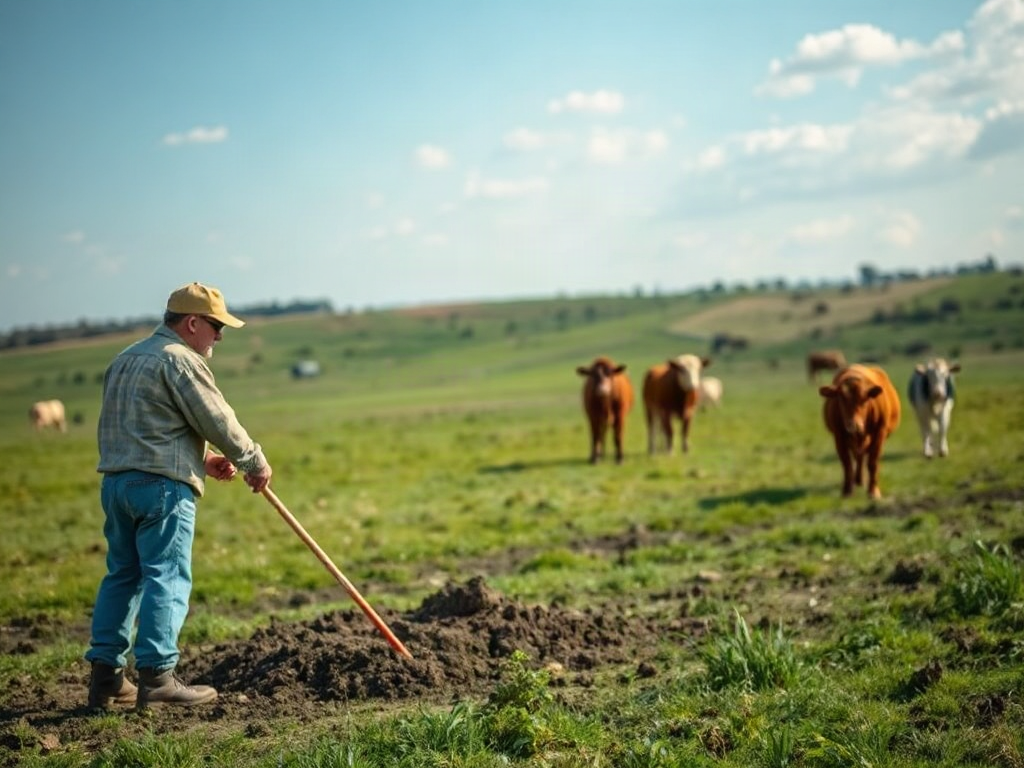
Choosing pasture soil for a productive homestead farm means favoring land with workable drainage, adequate rooting depth, manageable slopes, and soil chemistry that can support the intended forage. A soil test should establish pH and nutrient needs, while field inspection should reveal ponding, erosion, compaction, shallow bedrock, and seasonal wetness. Productive pasture also depends on matching forage species and grazing pressure to the soil rather than expecting fertilizer to correct physical limitations. Before buying or converting land, compare soil maps with test pits and wet-season observations, then budget for lime, fertility amendments, fencing, water access, and pasture recovery.
What you’ll learn
This guide covers the following practical points:
- Soil Characteristics That Matter Most for Pasture — Pasture performance rests first on physical soil conditions, because lime and fertilizer cannot create rooting depth or make persistently saturated ground behave like a well-drained field.
- How to Evaluate Pasture Land Before Committing — A useful evaluation combines mapped soil information, laboratory testing, and direct field observation.
- Match Forage and Livestock to the Site — Suitable pasture soil is defined partly by what the homestead expects it to produce.
- Separate Correctable Problems From Costly Limitations — Some pasture deficiencies are practical to correct, while others can consume more money than the land will return.
Soil Characteristics That Matter Most for Pasture
Pasture performance rests first on physical soil conditions, because lime and fertilizer cannot create rooting depth or make persistently saturated ground behave like a well-drained field. Deep, moderately drained soil generally gives forage roots more access to water and nutrients while allowing machinery and livestock onto the field sooner after rain.
Drainage deserves close attention, but neither extreme is ideal. Waterlogged soil restricts root oxygen, delays spring growth, and becomes vulnerable to hoof damage. Very sandy or gravelly soil drains rapidly but may lose moisture during dry periods and require more careful nutrient management. Look for standing water, gray or mottled subsoil, wetland vegetation, cracked dry surfaces, or sharply changing plant growth across the field.
Texture affects both management and forage choice. Loams and silt loams are often workable because they balance water storage with drainage. Clay can be productive when its structure is sound, yet it compacts readily when grazed wet. Sandy soil warms quickly and resists puddling, but drought-sensitive forage may thin out without reliable rainfall or irrigation.
Rooting depth and slope can outweigh a favorable topsoil test. A dark surface layer may conceal bedrock, dense clay, or a compacted layer within a few inches. Steep fields shed water faster, increase erosion exposure, and complicate mowing, seeding, and manure spreading. A common mistake is judging pasture by green growth during one favorable season rather than examining the soil profile and landscape position.
How to Evaluate Pasture Land Before Committing
A useful evaluation combines mapped soil information, laboratory testing, and direct field observation. Soil maps can identify drainage class, slope, depth, and likely limitations, but map boundaries are not precise enough to replace walking the property. Small wet pockets, filled gullies, traffic pans, and disturbed areas may not appear at the mapped scale.
Divide the land into distinct sampling areas rather than mixing the entire property into one composite sample. A hilltop, lower swale, former crop field, and old livestock lot may have very different fertility histories. Submit samples to a regional laboratory or extension-associated service and identify pasture as the intended use so the recommendations reflect forage production rather than a garden or row crop.
Soil pH influences nutrient availability and legume persistence. The acceptable range varies with forage species and local soil conditions, so use the laboratory recommendation instead of applying lime by habit. Phosphorus, potassium, organic matter, and other reported measures help estimate amendment needs, but nitrogen recommendations also depend on whether the stand is grass-dominant or contains productive legumes.
Inspect below the sod with a shovel or soil probe in several representative places. Note the depth of dark topsoil, resistance to penetration, root distribution, stones, moisture, and changes in color or texture. Visit after substantial rain if possible. A field that looks firm during a dry sale inspection may hold water for days during its normal grazing season.
| Field Check | Favorable Sign | Warning Sign |
|---|---|---|
| Drainage | Water infiltrates without prolonged ponding | Standing water, saturated ruts, or gray subsoil |
| Root zone | Roots extend through a deep, friable profile | Shallow rock, hardpan, or dense compacted layer |
| Surface cover | Dense sod with limited bare ground | Weeds, moss, erosion channels, or hoof damage |
| Access | Stable lanes and reachable paddocks | Wet gateways or slopes unsafe for equipment |
Match Forage and Livestock to the Site
Suitable pasture soil is defined partly by what the homestead expects it to produce. A field intended for occasional poultry rotation has different demands from one expected to carry cattle, horses, sheep, or goats through a long grazing season. Larger animals exert more pressure around gates, shade, feeders, and water points, where even good soil can become compacted.
Forage selection should follow local climate, drainage, and intended use. Cool-season grasses, warm-season grasses, and legumes differ in their tolerance of drought, wet feet, acidity, close grazing, and traffic. Local extension recommendations are more useful than a universal seed mixture because a species that performs well in one region may fail under another region’s heat, winter conditions, or rainfall pattern.
Existing vegetation provides clues but not a complete diagnosis. A dense stand of desirable forage suggests that the site can maintain cover under its recent management. Bare patches, erosion, unpalatable weeds, or sparse growth may indicate overgrazing, compaction, poor fertility, unsuitable species, or several problems at once. Identify the cause before reseeding; new seed will not persist if livestock return before roots are established or if drainage remains unresolved.
Stocking capacity should be treated as variable rather than as a fixed acreage formula. Forage growth changes with soil, rainfall, season, fertility, and rest periods. Begin conservatively, monitor residual plant height and ground cover, and adjust grazing time or animal numbers. Buying hay or establishing a sacrifice area may protect the pasture during drought and prolonged wet weather.
Separate Correctable Problems From Costly Limitations
Some pasture deficiencies are practical to correct, while others can consume more money than the land will return. Low pH, moderate nutrient deficiencies, thin forage cover, and localized compaction may respond to amendments, overseeding, controlled traffic, and better grazing recovery. The cost and timing still matter: lime may take time to react, and newly seeded pasture needs protection during establishment.
Shallow bedrock, severe erosion, extensive seasonal saturation, flood exposure, and very steep slopes are harder to overcome. Drainage work may affect neighboring land or regulated waters and should never be assumed feasible without checking local requirements. Imported topsoil rarely makes economic sense across pasture acreage, and repeated fertilizer applications cannot compensate for roots confined to a few inches of soil.
Infrastructure can change the practical value of otherwise good soil. A productive back field loses usefulness if livestock must cross an unsafe road, water cannot be delivered reliably, or machinery has no stable access. Conversely, a modest field near the barn may be valuable for turnout while deeper, better-drained ground carries the main grazing rotation.
Prepare an improvement budget before assigning value to a promising parcel. Include soil tests, lime and fertilizer, seed, site preparation, fencing, water lines, gates, lanes, weed control, and purchased feed while the pasture establishes. The common failure is pricing only seed and assuming the field will become productive in one season.
Pasture Soil Decision Checklist
A final decision should distinguish evidence from assumptions. Rate each field separately because a single parcel may contain excellent upland soil, a wet bottom, and an eroded slope. A smaller area of reliable grazing ground can be more useful than a larger acreage dominated by seasonal limitations.
- Map the soils: Review soil type, slope, drainage class, depth, and known limitations.
- Walk in contrasting weather: Compare dry-season firmness with conditions after meaningful rainfall.
- Inspect the profile: Dig or probe representative areas for compaction, rock, roots, and wetness.
- Test distinct zones: Obtain separate laboratory results for visibly different fields or landscape positions.
- Define the use: Specify livestock, grazing months, hay needs, machinery, and desired forage species.
- Price the correction: Estimate amendments, establishment, access, water, fencing, and feed during recovery.
- Reject unworkable assumptions: Do not count wet ground, brush, steep banks, or inaccessible corners as equal grazing acreage.
Signs that a pasture plan is working include increasing desirable plant cover, roots extending into friable soil, fewer bare traffic areas, and enough regrowth between grazing periods. Repeated ponding, expanding weeds, exposed soil, declining forage density, and animals grazing plants too closely signal that soil limitations or stocking pressure remain unresolved.
Conclusion
Choose pasture by weighing drainage, rooting depth, slope, soil test results, usable acreage, and access as one operating system. Favor limitations that can be corrected within a realistic budget, and discount land whose productivity depends on major earthwork or consistently favorable weather. Map the candidate fields, inspect them after rain, sample distinct soil zones, and build an establishment budget before committing livestock or purchase money.
Frequently Asked Questions
What soil type is best for homestead pasture?
A deep, moderately drained loam is often versatile, but the best soil is one matched to local rainfall, suitable forage, livestock pressure, and available management.
Can clay soil support productive pasture?
Yes, clay can store water and nutrients, but grazing it while saturated can cause compaction and hoof damage. Good timing, ground cover, and rest are critical.
Should pasture soil be tested before buying land?
Yes. Separate samples from distinct fields can reveal pH and fertility needs, although testing should be combined with drainage, depth, slope, and compaction checks.
Can fertilizer fix poor pasture soil?
Fertilizer may correct documented nutrient shortages, but it cannot repair shallow bedrock, persistent saturation, severe erosion, or unsuitable grazing pressure.
How can I tell whether a field stays too wet?
Visit after heavy rain and look for prolonged ponding, soft gateways, ruts, wet-tolerant vegetation, sparse roots, and gray or mottled colors below the surface.
Additional Resources
Authoritative Sources
- USDA NRCS Soil Resources
nrcs.usda.govOfficial soil health, conservation, water, and land-management guidance for agricultural operations.