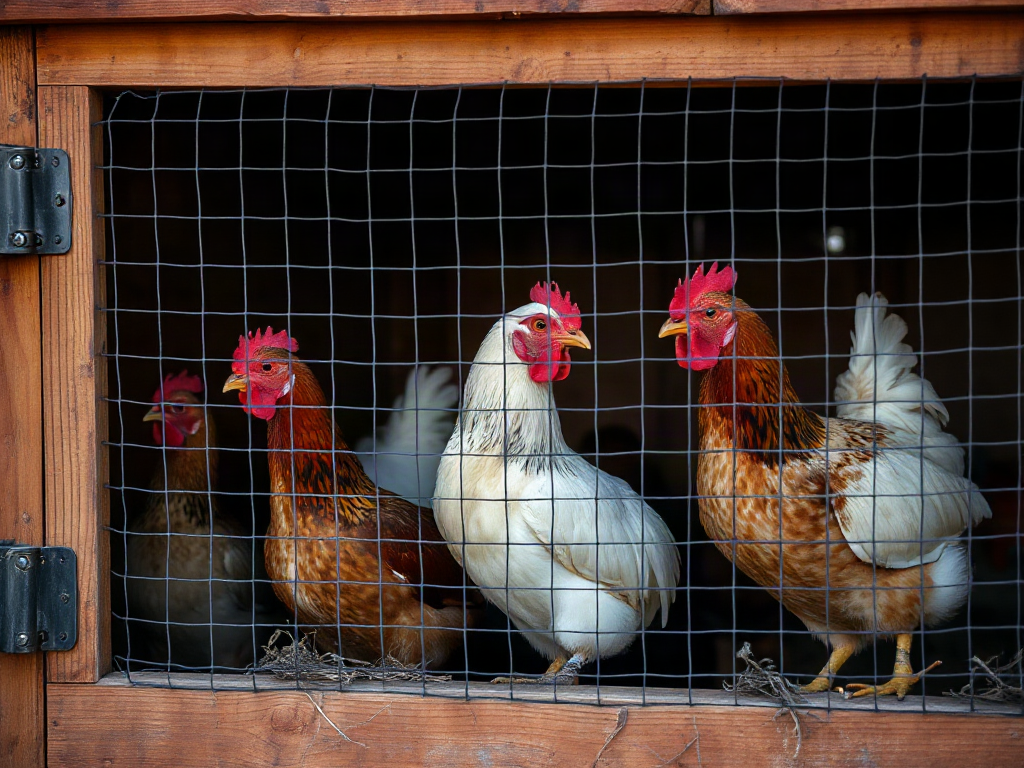
Keeping farm chickens safe from nighttime predators requires a locked coop that resists digging, prying, reaching, and entry through small gaps. Use sturdy walls, half-inch hardware cloth over openings, predator-resistant latches, and a solid floor or buried perimeter barrier rather than relying on lightweight poultry wire. Close every bird inside before dusk, remove feed that attracts rodents and wildlife, and inspect doors, vents, and run edges regularly. Automatic doors and electric fencing can add protection, but neither replaces a secure sleeping enclosure. Tracks, disturbed soil, damaged mesh, missing birds, or chickens refusing to enter the coop signal that the setup needs immediate attention.
What you’ll learn
This guide covers the following practical points:
- Identify the Nighttime Predator Risks — Predator pressure is shaped by the coop location, nearby habitat, and the weak points available after dark.
- Build a Predator-Resistant Coop — The enclosed sleeping coop should be the flock's strongest nighttime barrier.
- Secure the Run and Perimeter — A daytime run becomes a nighttime liability if chickens can remain outside the locked coop.
- Follow a Nightly Lockup Routine — A dependable lockup routine closes the brief window when chickens settle but predators become active.
Identify the Nighttime Predator Risks
Predator pressure is shaped by the coop location, nearby habitat, and the weak points available after dark. Raccoons may manipulate simple latches or reach through wide openings, while foxes and coyotes commonly test fence lines and exposed edges. Smaller predators can exploit narrow construction gaps, and climbing animals may bypass an open-topped run. Rodents drawn to spilled feed can create another problem by attracting larger hunters.
Read the site before buying more fencing. Muddy tracks, droppings, feathers near a fence, disturbed soil, and repeated nighttime noises can reveal how an animal approaches. A bent lower fence suggests pushing or digging; damage around a vent points to climbing or prying. Missing birds without much disturbance may indicate a different entry route than a scene with scattered feathers, but signs alone do not always identify the animal conclusively.
Nearby woods, brush piles, drainage corridors, barns, and tall vegetation provide concealed travel routes. A coop beside dense cover therefore needs stronger perimeter control than one in a clear, frequently used yard. Removing every wild animal from the property is neither realistic nor necessary. The practical objective is to deny access to sleeping chickens and stop predators from being rewarded for testing the enclosure.
Build a Predator-Resistant Coop
The enclosed sleeping coop should be the flock’s strongest nighttime barrier. Solid framing and intact wall panels matter because thin mesh and deteriorated wood can flex or pull away under pressure. Cover windows, vents, and other necessary openings with securely fastened half-inch hardware cloth. Poultry wire is useful for containing chickens, but its larger openings and light construction make it a poor primary predator barrier.
Fastening method matters as much as mesh size. Staples that barely enter the wood can loosen, especially around corners or warped framing. Sandwiching hardware cloth beneath screwed wooden battens or attaching it with suitable screws and washers produces a more durable edge. Check roof-to-wall joints, eaves, pipe penetrations, and the gap beneath the door; an opening that looks insignificant in daylight may still provide leverage or access.
Doors need latches that cannot be opened by bumping, lifting, or simple manipulation. A basic sliding bolt may require a locking clip or secondary catch. The people caring for the flock must still be able to operate the latch quickly, so complicated hardware that is routinely left unsecured is not an improvement.
Floor design should match the site. A sound concrete or raised solid floor offers strong resistance to digging when its edges and wall joints remain intact. A dirt-floor coop needs a protected perimeter, such as an outward-facing hardware-cloth apron, because a barrier placed only at the wall can be tunneled under. Buried materials eventually corrode and are difficult to inspect, while a horizontal apron near the surface can be easier to monitor and repair.
Secure the Run and Perimeter
A daytime run becomes a nighttime liability if chickens can remain outside the locked coop. Secure run construction still matters, however, because predators often investigate before dusk or return at dawn. Use firmly anchored fencing, close gaps at gates, and protect the lower perimeter against reaching and digging. A covered top is appropriate where climbing predators or aerial attacks are credible risks.
Choose perimeter protection according to the pressure and budget. A fully framed run covered with hardware cloth offers strong physical exclusion but costs more and requires careful snow-load and maintenance planning. Welded wire may suit a larger daytime enclosure when chickens are reliably locked into a stronger coop at night. Lightweight netting can deter some aerial approaches, but it should not be treated as a complete barrier against climbing, chewing, or force.
Properly installed electric fencing can discourage repeated approaches around a larger poultry area. Its effectiveness depends on correct energizer selection, grounding, vegetation control, wire placement, and routine voltage checks. Follow the manufacturer’s installation directions and applicable local requirements. A dead wire caused by weeds, a discharged power source, or damaged connections creates only the appearance of protection.
Consider a flock housed near woodland as a practical comparison. Covering an expansive range area entirely in hardware cloth may be unaffordable, while leaving the coop door open creates severe exposure. A sensible layered arrangement is a rigid lockable coop, a smaller reinforced run for low-supervision periods, and a wider electrified boundary where conditions allow. The strongest investment remains the place where the birds spend the night.
Follow a Nightly Lockup Routine
A dependable lockup routine closes the brief window when chickens settle but predators become active. Count the birds at the roost rather than assuming every chicken entered. Young birds, newly introduced hens, or a low-ranking flock member may sleep beneath the coop, in a nest box, or behind equipment until they accept the roosting pattern.
Complete the following checks before leaving the poultry area:
- Confirm every chicken is inside and account for any missing bird.
- Close and latch the pop door, human door, windows, and access panels.
- Remove spilled feed and store bulk feed in a durable closed container.
- Look for fresh digging, displaced objects, loose mesh, or an obstructed door track.
- Verify that water or electrical equipment does not interfere with closure.
An automatic pop door is useful when work schedules or winter daylight make manual closing inconsistent. Select a unit suitable for the coop opening, keep its track clean, and confirm that all chickens enter before it closes. Light-based controls adapt to changing sunset times but may react to deep shade or severe weather; timer-based controls require seasonal adjustment. Battery condition, ice, bedding, and warped framing can also stop a door from seating fully.
Feed management reduces attraction but does not make an open coop safe. Bringing feeders inside can be counterproductive if the coop is poorly sealed and rodents can enter. The better approach is to limit spillage, protect stored feed, remove persistent rodent cover, and keep the chicken enclosure physically secure regardless of how clean the area appears.
Inspect and Improve Your Defenses
Predator resistance declines as wood shifts, fasteners loosen, soil erodes, and vegetation conceals damage. Run a hand and flashlight along door frames, lower fence edges, corners, vents, and roof joints. Push gently against mesh panels to find flexing attachments. After storms, freezing weather, excavation, or nearby land clearing, perform an additional inspection because conditions and wildlife movement may have changed.
Signs that protection is working include undisturbed perimeter soil, doors that close squarely, stable mesh edges, and chickens entering and roosting normally. Repeated alarm calls after dark, reluctance to approach the coop, fresh tracks, claw marks, or a latch found partly moved indicate active testing. Treat those signs as a warning rather than waiting for a loss.
If an attack occurs, move surviving chickens into a confirmed secure enclosure before making assumptions about the predator. Photograph tracks and damage, locate the actual breach, and repair both the opening and the weakness that created it. Replacing torn mesh without strengthening its attachment may invite another entry at the same point. Injured birds should be separated from flock mates and evaluated promptly; contact a veterinarian when wounds are serious, hidden beneath feathers, or beyond routine first aid.
A monthly hands-on inspection is a reasonable baseline, but high-pressure sites need more frequent checks. Look nightly at moving parts and obvious ground disturbance, then schedule deeper inspections after weather events and seasonal changes. Cameras can help identify approach routes, yet they document risk rather than stop it. Spend first on physical exclusion, then use cameras, lights, or alarms to refine the setup.
Frequently Asked Questions
Will poultry wire protect chickens from predators?
Poultry wire mainly keeps chickens contained. Its light strands and larger openings may allow tearing or reaching, so securely fastened hardware cloth is a better choice for coop openings and other high-risk areas.
Should the chicken run be covered at night?
A roof or strong mesh cover is warranted where animals can climb into the run, but chickens should still sleep inside a locked coop. A run cover does not correct weak gates, open edges, or digging access.
Are automatic chicken doors safe from predators?
They can improve lockup consistency when correctly installed and checked daily. Tracks, batteries, sensors, and closure timing can fail, so the door should supplement a secure coop rather than operate without inspection.
How can I stop predators from digging under the coop?
Protect the perimeter with a durable floor or an outward-facing hardware-cloth apron that blocks tunneling near the wall. Inspect for erosion, corrosion, lifted edges, and digging after rain or ground disturbance.
Do motion lights keep chickens safe at night?
Motion lights may interrupt some approaches temporarily, but wildlife can become accustomed to them. Use lighting as an alert or secondary deterrent, not as a substitute for locked doors and reinforced openings.
Conclusion
Nighttime flock security is strongest when several defenses support one another: a rigid sleeping coop, reinforced openings, secure latches, protected ground edges, and a consistent head count at lockup. Inspect the enclosure under pressure rather than judging it by appearance alone. Repair fresh damage immediately, verify automatic equipment every day, and direct the largest share of the budget toward physical barriers. Deterrents and cameras are useful additions only after the coop itself can withstand persistent testing.