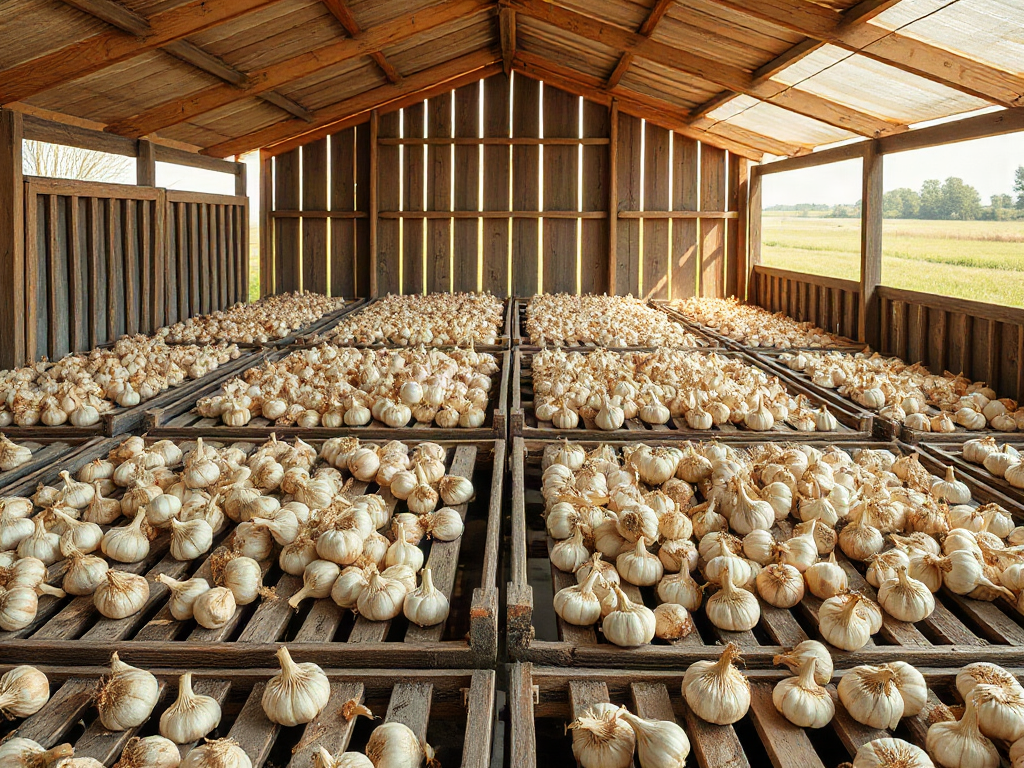
Curing onions and garlic for longer farm storage means drying freshly harvested bulbs until their outer skins, necks, and roots are sufficiently dry to resist moisture loss and decay. Place sound, unwashed bulbs in a shaded, well-ventilated space, spread them in a single layer or hang them in loose bundles, and protect them from rain and condensation. Onions commonly need about two to four weeks, while garlic often needs three to four weeks, depending on humidity, airflow, and bulb size. Store only firm bulbs with dry wrappers and closed necks; use bruised, cut, sunscalded, or soft bulbs promptly instead of mixing them into the storage crop.
What you’ll learn
This guide covers the following practical points:
- Harvest Bulbs Ready for Curing — Harvest condition sets the storage potential before curing begins.
- Set Up the Curing Space — A useful curing area combines shade, steady air movement, low exposure to nighttime dampness, and enough room around each bulb.
- Check, Trim, and Sort Cured Bulbs — A cured bulb should feel firm and dry rather than merely dusty on the surface.
- Move Cured Bulbs Into Storage — Storage should keep cured bulbs dry, dark, ventilated, and protected from freezing or sharp temperature swings.
Harvest Bulbs Ready for Curing
Harvest condition sets the storage potential before curing begins. Bulbs lifted at the proper stage have mature skins and enough remaining foliage to finish drying, while overmature bulbs may have split wrappers or exposed cloves. For bulb onions, harvest when a substantial share of the tops has naturally bent over and begun yellowing. Garlic is generally ready when several lower leaves have browned but upper leaves remain green.
Loosen the soil with a fork rather than pulling hard on the tops. Pulling against compacted ground can tear onion necks or separate garlic stems from the bulbs, leaving an opening where decay may begin. Shake off loose soil gently, but do not wash the crop. Wetting the bulbs adds moisture precisely when the goal is to remove it.
Handle fresh bulbs as carefully as fruit. A dropped onion may look sound while developing a soft internal bruise, and a shovel nick in a garlic bulb can expose several cloves. Set damaged bulbs apart for immediate kitchen use. The common mistake is assuming curing will repair harvest injuries; it dries protective tissues but cannot restore a cut, crush, or disease-damaged bulb.
If the weather is dry, onions can remain on the soil surface briefly after lifting. Garlic is more vulnerable to sunscald and should be moved promptly into shade. Neither crop should be left outside through rain, heavy dew, or intense afternoon sun.
Set Up the Curing Space
A useful curing area combines shade, steady air movement, low exposure to nighttime dampness, and enough room around each bulb. A roofed porch, open-sided shed, ventilated barn, or dry outbuilding can work. A sealed garage with stagnant air is a poor choice unless doors, windows, or fans provide dependable ventilation.
Spread bulbs on mesh racks, slatted shelves, or clean screens in a single layer. The openings let air reach the underside, where moisture otherwise lingers. Onions may also be laid in shallow rows with their tops extending away from the bulbs. Garlic can be tied in small, loose bundles and hung, but large tight bundles trap dampness around stems and inner bulbs.
| Crop | Typical Curing Period | Useful Readiness Signs |
|---|---|---|
| Bulb onions | About 2–4 weeks | Dry papery skins, shriveled roots, and a tight, dry neck |
| Garlic | About 3–4 weeks | Dry wrappers, dry roots, and a firm stem or neck |
These periods are working ranges rather than deadlines. Small bulbs in dry, breezy weather may finish sooner; large bulbs exposed to humid air may take longer. Turn or reposition bulbs if a rack has dead-air pockets. A fan can improve circulation, but it should move air across the area rather than blast one group continuously.
Watch for condensation, musty odors, wet neck tissue, and spreading dark or soft areas. Those signs indicate that moisture is not leaving evenly or that damaged bulbs remain in the lot. Increase spacing and airflow, then remove questionable bulbs. Adding heat without ventilation is a weak fix because warm, moisture-laden air can remain trapped around the crop.
Check, Trim, and Sort Cured Bulbs
A cured bulb should feel firm and dry rather than merely dusty on the surface. Onion necks should no longer feel thick, green, or moist when gently pinched. Garlic wrappers should be dry, and the stem should have lost its fresh flexibility. Thick-necked onions deserve special attention because their centers may still hold moisture after the outer skins appear finished.
Once curing is complete, trim onion tops to leave roughly an inch of dry neck unless the onions will be braided. Cut dry roots close to the base without cutting into the basal plate. Garlic tops can be trimmed a short distance above the bulb, or softneck garlic can retain longer stems for braiding. Brush away loose soil by hand; peeling off sound wrappers to make bulbs look cleaner removes part of their storage protection.
Sort the crop into practical groups before it enters storage:
- Long-storage candidates: firm, mature bulbs with intact skins, dry necks, and no wounds.
- Use-first bulbs: thick-necked, lightly bruised, partially exposed, or otherwise imperfect bulbs that remain sound.
- Discard or compost separately: bulbs with active rot, strong off odors, leaking tissue, or extensive mold.
For example, a large onion with a thick neck may be more visually impressive than a smaller, tight-necked onion, yet the smaller bulb is usually the better storage candidate. Size alone is a poor sorting rule. Neck closure, wrapper integrity, firmness, and freedom from damage provide more useful evidence.
Do not trim before curing merely to save rack space. Green tops and roots still contain moisture, and cutting them early creates fresh wounds close to the bulb. Delayed trimming allows those tissues to dry and seal naturally.
Move Cured Bulbs Into Storage
Storage should keep cured bulbs dry, dark, ventilated, and protected from freezing or sharp temperature swings. Mesh bags, slatted crates, and shallow ventilated trays allow air exchange. Deep buckets, sealed plastic tubs, and tightly packed sacks can collect moisture and conceal a failing bulb until decay spreads to its neighbors.
Onions generally keep best in a cool, dry location with good airflow. Garlic also needs dry, ventilated storage, although extremely dry conditions can shrivel cloves over time. A cellar that is suitable for humid root-crop storage may be too damp for either crop. Likewise, a warm kitchen is convenient for a small quantity but can accelerate sprouting and moisture loss.
Keep onions away from potatoes in storage. Potatoes release moisture, and the shared environment often becomes too humid for dependable onion keeping. Store only the amount that can be checked without dismantling an oversized pile. Several shallow crates are easier to inspect than one deep container.
Mark containers by variety and harvest date. Pungent storage onions commonly outlast mild, sweet types, while garlic storage life varies by type and growing conditions. Rather than expecting every cultivar to last equally long, inspect known short-keeping varieties first and plan meals or preservation around them.
Check the crop every few weeks and remove bulbs that are softening, sprouting, leaking, or developing an unusual odor. Successful storage is visible as dry containers, firm bulbs, and little change between inspections. Condensation, damp wrappers, clustered sprouting, or repeated soft rot indicates that the storage location or initial sorting needs correction.
Frequently Asked Questions
Can onions and garlic cure in direct sunlight?
Brief mild exposure may dry surface soil, but prolonged direct sun can heat or scald bulbs. Move garlic promptly into shade and cure both crops under cover with steady airflow.
Should onions and garlic be washed before curing?
No. Shake or brush off loose soil and keep the bulbs dry. Washing adds moisture and can drive water beneath wrappers, increasing the chance of decay.
Can onions and garlic be cured together?
Yes, if both have ample spacing, shade, and ventilation. Check them separately because onions and garlic may finish at different times and show different readiness signs.
What should I do with bulbs that do not cure properly?
Use firm but imperfect bulbs promptly. Discard bulbs that are soft, leaking, moldy, or foul-smelling rather than placing them beside sound storage bulbs.
Why are stored onions or garlic sprouting early?
Warm temperatures, temperature swings, cultivar traits, and incomplete maturity can encourage sprouting. Move sound bulbs to a cooler, dark, dry location and use sprouting bulbs first.
Conclusion
Good storage begins with mature, undamaged bulbs and a curing area that removes moisture without baking the crop. Prioritize shade, spacing, and moving air; then judge readiness by dry necks, roots, and wrappers rather than the calendar alone. Sort aggressively before storage, use imperfect bulbs first, and inspect ventilated containers regularly. Those steps prevent one weak bulb or a damp storage pocket from undermining an otherwise sound harvest.