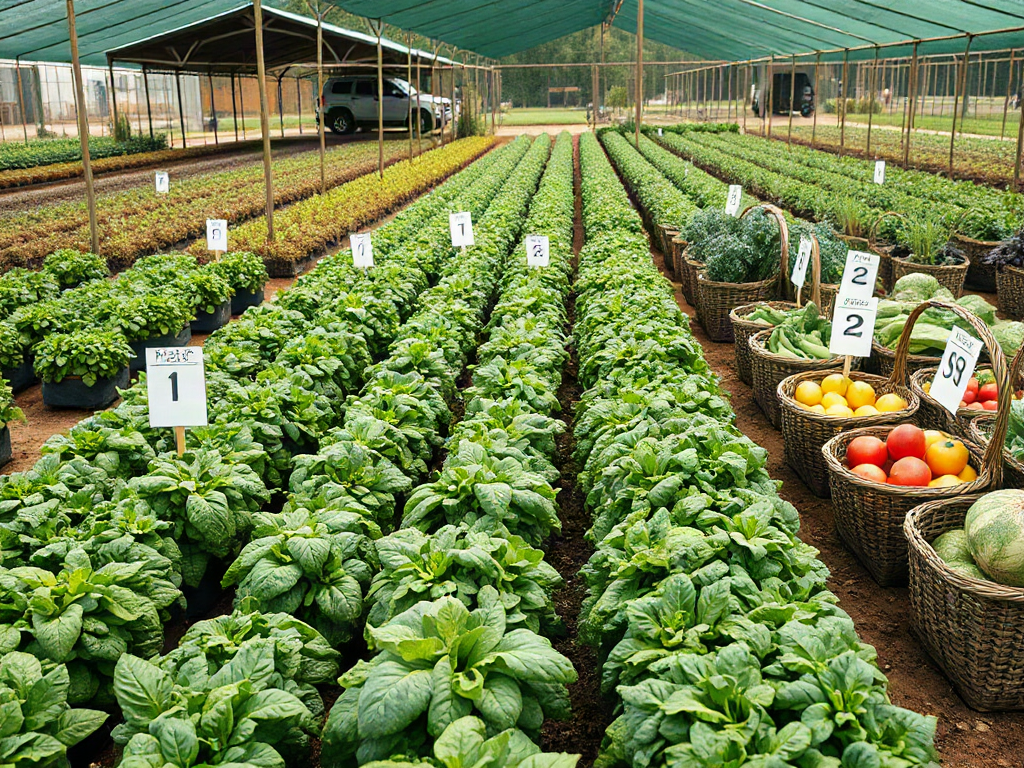
Planting succession intervals for continuous farm harvests commonly begin at 7 to 21 days, but the useful interval depends on crop maturity, harvest duration, weather, and expected demand. Fast, short-lived crops such as radishes may need weekly sowings, while carrots, beans, and head lettuce often suit two- to three-week gaps. Record each planting date, first harvest, final harvest, and usable yield, then adjust the next interval from actual field performance. Smaller plantings made more frequently usually provide steadier harvests than several large plantings, provided labor, irrigation, bed space, and seedling capacity can support the schedule.
What you’ll learn
This guide covers the following practical points:
- Calculate Intervals From Harvest Windows — A workable interval begins with the period during which one planting produces marketable or kitchen-ready food.
- Match the Schedule to Each Crop — Crop growth habit determines whether repeated sowing, repeated transplanting, or one long-lived planting is the better approach.
- Adjust for Season, Weather, and Demand — Calendar intervals must widen or narrow as growth rates change.
- Build a Workable Succession Calendar — A useful calendar works backward from desired harvest weeks while respecting bed turnover and labor.
Calculate Intervals From Harvest Windows
A workable interval begins with the period during which one planting produces marketable or kitchen-ready food. Days to maturity indicate when harvest may begin, but they do not reveal how long that planting will remain productive. A radish bed may be usable for only a short period before roots become oversized, while an indeterminate tomato planting can produce across many weeks. Succession timing should therefore follow the harvest window rather than the seed packet number alone.
Use a simple field calculation: estimate how many harvest weeks one planting supplies, decide how much overlap provides insurance, and schedule the replacement planting accordingly. If an illustrative bush bean block produces well for about three weeks and the goal is one week of overlap, the next block should begin producing roughly two weeks after the first. Because both plantings require time to mature, count backward from the desired first picking date using the expected days to harvest under that season’s conditions.
Harvest windows should be recorded rather than assumed. For every sowing, note the planting date, emergence date, first useful harvest, peak harvest, and final acceptable picking. After two or three rounds, those records reveal whether the listed maturity estimate matches the farm’s soil, temperature, irrigation, and harvest standards.
A common failure is dividing the season into equal calendar blocks without considering crop behavior. Equal planting intervals do not produce equal harvest intervals when spring temperatures are rising or autumn growth is slowing. Treat the first schedule as a testable forecast, not a fixed promise.
Match the Schedule to Each Crop
Crop growth habit determines whether repeated sowing, repeated transplanting, or one long-lived planting is the better approach. Quick crops harvested once benefit most from tight intervals. Crops picked repeatedly may need fewer successions, while storage crops are often planted in larger blocks for a concentrated harvest rather than uninterrupted fresh supply.
| Crop pattern | Illustrative starting interval | What should trigger adjustment |
|---|---|---|
| Fast, single-harvest crops such as radishes | 7–10 days | Roots mature faster than they can be harvested |
| Leaf lettuce and salad greens | 7–14 days | Heat, bolting, or changing weekly demand |
| Head lettuce and transplanted brassicas | 14–21 days | Uneven transplant size or compressed maturity |
| Bush beans and summer squash | 14–21 days | Declining quality, pest pressure, or harvest labor |
| Carrots and beets | 14–21 days | Bed occupancy, storage plans, and preferred root size |
These ranges are starting points rather than universal prescriptions. A household that eats one basket of greens each week needs smaller sowings than a produce stand supplying several customers. Likewise, cut-and-come-again lettuce can remain productive longer than whole heads, so harvest method changes the necessary planting frequency.
Long-season crops need a different decision. Repeated tomato or pepper plantings may not be worthwhile where frost ends the season before later plants repay their bed space. A second cucumber or summer squash sowing can be more useful because it replaces aging plants and spreads disease or pest risk. The weak assumption is that every vegetable needs succession planting; some need only staged varieties, selective harvesting, or one well-managed planting.
Adjust for Season, Weather, and Demand
Calendar intervals must widen or narrow as growth rates change. Two lettuce sowings made 14 days apart in cool soil may mature only a few days apart after warmer weather accelerates the younger planting. The opposite occurs late in the season: a two-week sowing gap can become a much larger harvest gap as shorter days and lower temperatures slow development.
Use field conditions to modify the next date. If the previous planting emerged late because the seedbed dried out, correct irrigation or seed depth before simply shortening the interval. If several successions are converging toward the same harvest week, delay the next sowing, reduce its row length, or switch to a slower cultivar. Signs that the schedule is working include manageable picking volumes, little unharvested produce, and a new block reaching peak quality as the previous block declines.
Demand deserves equal weight. A continuous harvest is only useful when the amount matches household use, market orders, preservation capacity, or livestock feeding plans. Track usable yield by bed length or row length and compare it with weekly consumption. If a 20-foot lettuce row repeatedly produces twice what can be used, sowing every week will magnify the surplus. Reduce the row to 10 feet before changing the interval.
Weather remains the largest uncertainty. Heavy rain can prevent sowing, heat can reduce germination, and an early frost can end a late succession. Maintain one backup date and enough seed for a replacement sowing, but avoid crowding every missed planting into the next available week. That response often creates a labor bottleneck and a later glut.
Build a Workable Succession Calendar
A useful calendar works backward from desired harvest weeks while respecting bed turnover and labor. Begin with no more than a few high-value or frequently eaten crops. Managing weekly sowings for every vegetable can exceed the time available for bed preparation, transplant care, irrigation, weeding, and picking.
- Choose the harvest period. Mark the first and last realistic harvest weeks using local frost dates and the crop’s temperature tolerance.
- Estimate maturity and harvest duration. Use seed information as a baseline, then replace estimates with farm records.
- Select a starting interval. Use shorter gaps for brief harvest windows and longer gaps for crops that produce repeatedly.
- Size each planting from demand. Set row length, plant count, or tray count according to expected weekly use.
- Review before every sowing. Check the previous block’s growth, available bed space, forecast conditions, and current demand.
Suppose a grower wants carrots available from mid-June through August. Using illustrative assumptions, the chosen cultivar needs about 65 days under favorable conditions, each block can be harvested over roughly three weeks, and a one-week overlap is desired. Plantings might initially be scheduled about two weeks apart. The grower then counts back approximately 65 days from each target harvest date to establish sowing dates, recognizing that the earliest cool-soil planting may take longer and the later warm-soil planting may catch up.
Keep the calendar visible and operational. Include bed assignment, cultivar, row length, seed quantity, expected first harvest, and actual results. Reserve space for failed or delayed sowings rather than filling every bed on paper. The most damaging planning mistake is creating a schedule that assumes perfect germination, unrestricted irrigation, and unlimited harvest labor. A slightly conservative calendar is easier to correct than an overplanted one.
Frequently Asked Questions
How often should succession crops be planted?
Many vegetable successions begin 7 to 21 days apart. Use the shorter end for quick, single-harvest crops and longer intervals for crops with extended picking windows, then revise the schedule from actual harvest records.
Should planting intervals stay the same all season?
No. Rising spring temperatures can compress harvest dates, while shorter autumn days can spread them apart. Review crop growth before each scheduled sowing and adjust the date or planting size.
Is days to maturity enough to schedule successive plantings?
Days to maturity is only a baseline. The schedule also needs emergence time, harvest-window length, seasonal growth rate, cultivar differences, and whether the crop is direct-seeded or transplanted.
How can a grower prevent succession harvests from overlapping too heavily?
Reduce the next planting's size, delay it, or choose a slower cultivar when younger blocks are catching up. Weekly field checks are more reliable than following unchanged calendar dates.
Which records are most useful for improving succession timing?
Record sowing, emergence, transplanting, first harvest, peak harvest, final harvest, usable yield, and losses. Pair those dates with row length and weather notes so future intervals reflect field performance.
Conclusion
Reliable succession scheduling comes from matching planting size and frequency to each crop’s real harvest window. Start with a reasonable interval, reserve room for weather delays, and record when every block actually begins and ends production. Prioritize frequently used, short-window vegetables before adding complex successions. After each harvest cycle, change one variable—date, planting size, cultivar, or overlap—so the next schedule becomes steadier without creating excess produce or unmanageable labor.