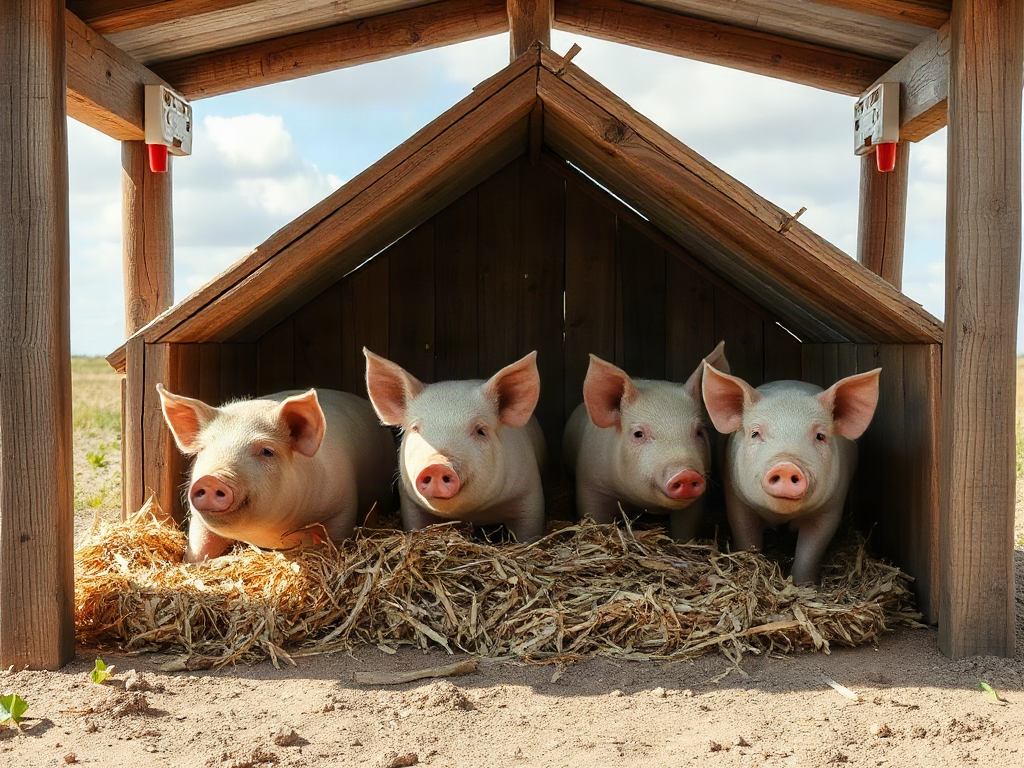
Pig shelter and bedding on a small farm must keep pigs dry, protected from wind and sun, and able to rest without lying in manure or wet material. A sound setup combines a weatherproof roof, draft control at pig level, high ventilation for moisture removal, firm drainage, and enough clean straw or low-dust shavings for nesting. Bedding should be topped up when lightly soiled and removed when it becomes wet, compacted, moldy, or strongly ammonia-scented. Seasonal adjustments matter: deepen bedding during cold weather, increase shade and airflow during heat, and maintain a separate dry sleeping area in every season.
What you’ll learn
This guide covers the following practical points:
- Shelter Location and Construction — A pig shelter works best on elevated, well-drained ground with convenient access to water, feed, fencing, and equipment.
- Space, Ventilation, and Temperature Control — Usable resting space must allow every pig to lie down comfortably without blocking the entrance or forcing another pig into a wet corner.
- Choosing and Managing Pig Bedding — Good pig bedding is dry, absorbent, comfortable, low in dust, and practical to remove.
- Seasonal Shelter Checklist — Seasonal preparation should address the failure most likely to occur next, rather than adding equipment without inspecting the existing shelter.
Shelter Location and Construction
A pig shelter works best on elevated, well-drained ground with convenient access to water, feed, fencing, and equipment. Pigs naturally separate their sleeping and dunging areas when given enough clean space, but poor drainage can erase that distinction. Runoff entering the shelter turns bedding into a heavy manure pack, raises humidity, and leaves pigs without a dry place to lie down.
Face the opening away from prevailing winter winds when the site permits, while preserving access to summer breezes. A roof with adequate overhang limits wind-driven rain, and a slight floor slope carries water away rather than toward the bedded area. Earthen floors are economical and comfortable but may become rutted or muddy. Concrete is easier to scrape, although it needs generous bedding because bare concrete is hard, cold, and potentially slippery.
The building must also withstand rooting and rubbing. Protect exposed insulation, cover sharp fasteners, secure gates, and use interior surfaces that tolerate cleaning. Portable huts can serve rotational paddocks well because they move with the pigs, but they still require anchoring, ventilation, and a dry base. A lightweight hut placed in a low spot is not safe merely because it has a roof.
Walk through the shelter after a hard rain. Water flowing under the walls, damp bedding along the entrance, or puddles beside the feeder indicate a siting or grading problem. Correct the water route before adding more bedding; absorbent material cannot compensate for continuous runoff.
Space, Ventilation, and Temperature Control
Usable resting space must allow every pig to lie down comfortably without blocking the entrance or forcing another pig into a wet corner. The appropriate allowance varies with body size, group behavior, climate, shelter design, and whether feed or water is inside. Crowding is evident when pigs pile excessively in mild weather, weaker animals cannot reach the bedded zone, or the entire floor quickly becomes soiled.
Ventilation should remove moisture and stale air without directing a cold stream across resting pigs. Openings high on opposing walls or near the roof can release warm, damp air while solid lower walls shield the sleeping area. Closing a building tightly during winter often creates condensation and ammonia accumulation. If the roof drips, surfaces remain damp, or the air irritates the eyes and nose, more moisture removal and better manure management are needed.
Cold and heat require different responses. In cold conditions, pigs use dry bedding as insulation and may burrow into straw. Damp bedding loses much of that practical value. During hot weather, deep bedding can retain heat, so shade, unrestricted drinking water, airflow, and a managed cooling area become higher priorities. A wallow should be outside the sleeping shelter and positioned so muddy runoff does not enter the bed.
| Condition | Shelter Priority | Warning Sign |
|---|---|---|
| Cold or windy | Dry nesting material and protection at pig level | Persistent piling, shivering, or drafts across the bed |
| Hot and sunny | Shade, airflow, drinking water, and separate cooling space | Heavy panting, crowding at water, or reluctance to enter the shelter |
| Wet weather | Roof runoff control and a raised sleeping surface | Saturated entrances, muddy beds, or water under the walls |
| Humid or enclosed | High-level ventilation and frequent manure removal | Condensation, persistent odor, or damp interior surfaces |
Behavior is useful for evaluating the setup, but sudden lethargy, breathing difficulty, loss of coordination, refusal to drink, or persistent abnormal temperature-related behavior warrants prompt contact with a veterinarian. Shelter changes are not a substitute for assessing a sick or distressed pig.
Choosing and Managing Pig Bedding
Good pig bedding is dry, absorbent, comfortable, low in dust, and practical to remove. Straw is commonly chosen because pigs can arrange it into a nest and its long fibers create loft. Wood shavings absorb moisture effectively, although very fine or dusty material is a poor choice around confined animals. Hay can provide temporary bedding, but valuable feed-quality hay is expensive for this purpose and spoiled hay may carry mold.
A mixed approach can be useful on a firm floor: an absorbent lower layer of coarse shavings topped with straw for nesting. Material must come from a clean source and be free of chemical contamination, sharp debris, visible mold, and excessive dust. Avoid treated or painted wood waste. Cedar and strongly aromatic wood products also merit caution, particularly in enclosed structures where ventilation is limited.
Bedding depth should follow conditions rather than a fixed calendar. Start with enough material to separate the pigs from the floor, then add clean bedding as the surface becomes flattened or lightly soiled. Remove the pack when moisture reaches the resting surface, odor persists after ventilation, mold appears, or the material becomes dense and difficult for pigs to rearrange.
A Practical Bedding Check
Kneel near pig level and inspect several locations, especially beside walls and near the doorway. Push through the upper layer to the floor. A dry-looking surface can conceal a wet, warm layer underneath. Also check whether manure is accumulating in the sleeping zone; that often points to crowding, an inconvenient entrance, poorly placed feed or water, or a bed that has already become unpleasant.
Deep-litter management reduces the frequency of complete cleanouts but does not mean leaving a wet pack unattended. It requires regular additions of dry carbon-rich material, protection from water leaks, and close monitoring of odor and heat. For a beginner with only a few pigs, routine spot cleaning and scheduled full removal are often easier to judge than an unmanaged deep pack.
Seasonal Shelter Checklist
Seasonal preparation should address the failure most likely to occur next, rather than adding equipment without inspecting the existing shelter. Before winter, focus on wind exposure, roof leaks, dry bedding storage, and frozen-water contingencies. Before summer, inspect shade coverage through the hottest part of the day, water capacity, airflow, and the route taken by wallow runoff.
Use this compact inspection sequence whenever weather changes or pigs move to a new paddock:
- Check the site: confirm that rainwater and wallow overflow move away from the sleeping area.
- Check the structure: look for loose panels, protruding hardware, damaged roofing, and gaps pigs can enlarge.
- Check pig-level conditions: feel for drafts, inspect the floor, and smell the air close to the bed.
- Check the bedding: part the material to find hidden moisture, compaction, mold, or manure.
- Check pig behavior: note piling, panting, avoidance of the shelter, bullying, or competition for dry space.
Consider an illustrative wet-weather comparison. Two identical huts may perform very differently if one sits on compacted high ground and the other rests in a shallow depression. Adding several bales of straw to the low hut may hide the moisture briefly, but raising or relocating it addresses the source. Bedding is a comfort and moisture-management tool, not a substitute for grading and drainage.
Keep clean bedding under cover and away from ground moisture. Storing a modest reserve near the pig area makes prompt changes more likely during storms, but the stack should not obstruct ventilation or become accessible for rooting. Used bedding and manure need a planned destination that does not direct nutrients or contaminated runoff toward wells, waterways, or neighboring property; local requirements may apply.
Frequently Asked Questions
What is the best bedding for pigs?
Clean wheat or barley straw is a practical nesting material, while coarse, low-dust wood shavings add absorbency. Availability, climate, floor type, and disposal options should determine whether one material or a layered combination works best.
How often should pig bedding be changed?
Inspect it daily and remove wet or heavily soiled areas promptly. Complete replacement is needed when the lower layer is saturated, compacted, moldy, or persistently odorous; no single schedule fits every stocking level and season.
Do pigs need an enclosed shelter in winter?
Pigs need a dry resting area protected from precipitation and direct drafts, but a tightly sealed building can trap humidity and ammonia. Provide wind protection at body level while maintaining ventilation above the sleeping zone.
Can a pig wallow be placed inside the shelter?
A wallow is better placed outside the sleeping structure. Position it where overflow cannot drain into bedding, feed areas, or drinking-water locations, and provide shade so mud is not the pigs' only heat-management option.
Why are pigs sleeping outside their shelter?
The shelter may be hot, damp, drafty, crowded, dirty, poorly ventilated, or socially difficult to enter. Inspect conditions at pig level and watch whether a dominant animal is guarding the doorway before assuming the pigs simply prefer outdoors.
Conclusion
Prioritize site drainage, structural safety, pig-level draft protection, and high-level ventilation before spending more on bedding. Use clean straw or low-dust shavings according to the floor and season, then inspect beneath the surface rather than judging appearances alone. Correct leaks, runoff, crowding, or poor water placement when bedding repeatedly fails. A brief daily check of the bed, air, water, structure, and pig behavior will reveal developing problems while they are still manageable.