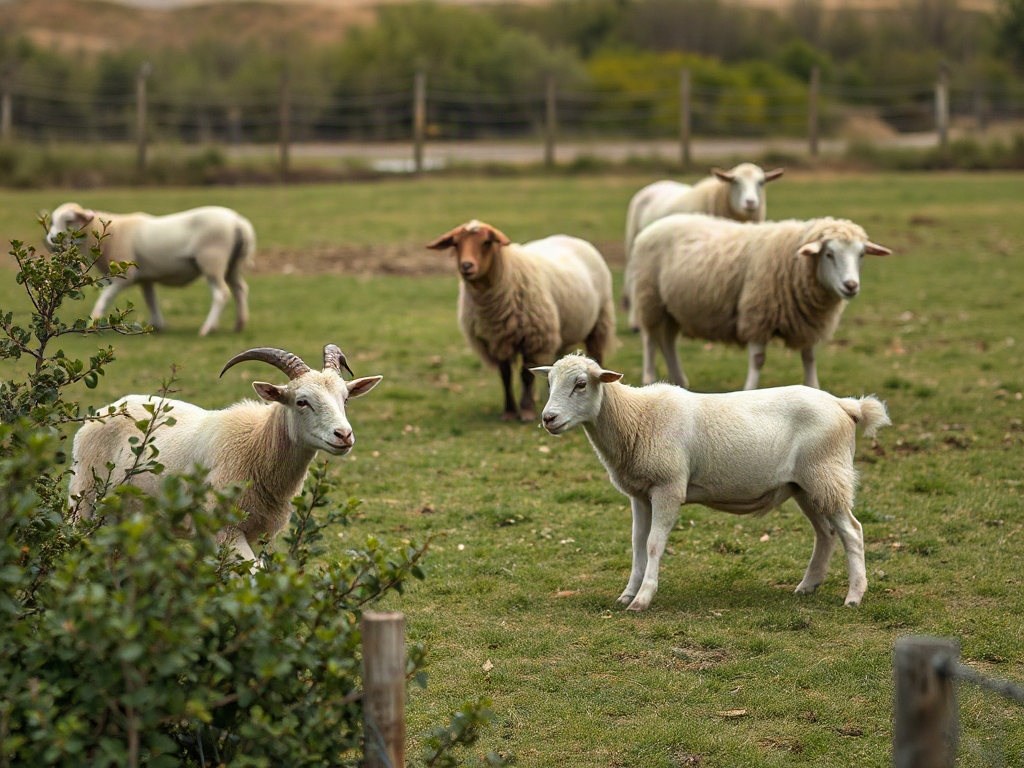
Sheep versus goats for small farm brush control comes down to vegetation type: goats usually tackle woody browse, vines, and upright shrubs more readily, while sheep generally favor grasses, weeds, and lower broadleaf growth. Goats reach higher and may strip leaves or bark, but their climbing and testing behavior demands stronger fencing. Sheep are often easier to contain, yet they may leave mature brush untouched. Neither animal is a one-pass clearing tool; successful control requires managed paddocks, repeated browsing, suitable stocking pressure, protection from toxic plants, and a health plan addressing parasites, water, minerals, shelter, and predators.
What you’ll learn
This guide covers the following practical points:
- How Sheep and Goats Target Vegetation — Feeding height and plant preference determine whether a flock will suppress the growth actually causing trouble.
- Fencing, Handling, and Land Impact — Containment often makes goats the more demanding option.
- Animal Health and Safety Constraints — Brush-control livestock still require full husbandry rather than being turned loose to live on unwanted plants.
- Choosing a Brush-Control Method — The best choice follows the dominant vegetation and the owner's ability to manage the animals.
How Sheep and Goats Target Vegetation
Feeding height and plant preference determine whether a flock will suppress the growth actually causing trouble. Goats are browsers: they commonly investigate leaves, twigs, vines, saplings, and shrubs above ground level. Sheep are primarily grazers, although some breeds and individual animals consume broadleaf weeds and tender brush. They tend to work closer to the soil surface than goats.
A neglected field with tall grass, clover, and soft weeds is usually a better match for sheep. A hedgerow crowded with brambles, multiflora-type roses, honeysuckle-like vines, and leafy saplings generally favors goats. Plant maturity matters too. Either species may eat young shoots while rejecting older stems that have become fibrous, thorny, or inaccessible.
| Comparison Factor | Sheep | Goats |
|---|---|---|
| Typical feeding zone | Ground level and low growth | Low growth through reachable shrubs |
| Common preference | Grass, forbs, and tender weeds | Leaves, vines, twigs, and woody browse |
| Likely weak point | May bypass mature shrubs | May leave much of the grass behind |
| Property risk | Close grazing under pressure | Bark stripping and damage to valued shrubs |
Browsing removes a woody plant’s leaf area, not necessarily its root system. Repeated defoliation can weaken susceptible plants because they must spend stored energy producing new shoots. A single visit often creates a tidier appearance without lasting suppression. The common mistake is assuming animals will kill established brush during one grazing period; resprouting should be expected, observed, and targeted again before it fully recovers.
Fencing, Handling, and Land Impact
Containment often makes goats the more demanding option. They can climb, lean on barriers, exploit uneven ground beneath a fence, and reach through openings toward preferred plants. Sheep are not automatically easy to fence, but a sound woven-wire perimeter or properly trained electric setup is often more predictable for them. Fence design must also account for horns, head entrapment, predators, and the reliability of the power supply.
Portable electric netting can divide overgrown ground into small working areas, provided the animals have been conditioned to respect it and vegetation is kept from draining the charge. Netting should not be treated as a set-and-forget barrier. Walk it frequently for sagging sections, fallen branches, poor grounding, animals caught in mesh, and places where terrain creates a gap. Local predator pressure may justify a more substantial perimeter or livestock guardian strategy.
Hoof action and feeding pressure can either aid or damage the site. Concentrating animals briefly may trample dead material and expose new shoots, but leaving them after desirable forage is exhausted encourages overgrazing, bark chewing, soil exposure, and repeated traffic around water or shade. Wet ground is especially vulnerable to pugging and erosion.
Protect orchard trees, windbreaks, gardens, ornamentals, and young timber before releasing either species. Goats may stand against guards or reach farther than expected, while hungry sheep can also chew bark. A fence placed directly against a valued planting is rarely enough; a setback keeps leaves and trunks beyond reach.
Animal Health and Safety Constraints
Brush-control livestock still require full husbandry rather than being turned loose to live on unwanted plants. They need dependable water, species-appropriate minerals, adequate nutrition, shade or shelter, routine observation, and a relationship with a livestock veterinarian. Browse quality changes with season and plant maturity, so an apparently green paddock may not provide a balanced ration.
Before fencing a work area, identify the plants growing there. Some landscape plants, woodland species, wilted leaves, and dumped yard trimmings can be hazardous to livestock. Animals do not reliably avoid every toxic plant, especially when desirable forage is scarce or unfamiliar material has been tossed into their enclosure. Remove uncertain clippings and ask a local extension office or veterinarian for help identifying questionable vegetation.
Internal parasites can become a major constraint when sheep or goats repeatedly use the same ground. Very short grazing may increase exposure near the soil surface, while crowded, damp holding areas can build contamination. A veterinarian can help establish monitoring and treatment decisions appropriate to the animals and region; routine treatment without diagnosis should not be assumed to solve the problem.
Check animals daily for appetite, alertness, gait, body condition, injuries, fence entanglement, and changes in manure. Brush can hide holes, wire, sharp debris, and unstable footing. Failure is indicated by weight loss, persistent diarrhea, lameness, dull behavior, repeated escapes, or animals eating protected plants because suitable forage has run out. Move them and seek qualified advice rather than pushing for additional clearing.
Choosing a Brush-Control Method
The best choice follows the dominant vegetation and the owner’s ability to manage the animals. Start by walking the site and estimating whether the troublesome cover is mostly grass and herbaceous weeds, leafy woody growth, or thick mature stems. Note poisonous plants, water access, wet areas, perimeter weaknesses, valuable trees, and places where animals cannot be observed easily.
Consider an illustrative property with a grassy acre, scattered blackberry-like canes, and a dense strip of saplings along one boundary. Sheep could maintain the open acre and consume some tender shoots, but they would probably leave much of the woody strip. Goats would put more feeding pressure on the canes and sapling leaves, yet mowing might still be needed in the grass. A practical sequence could use mechanical cutting for large stems, goats for regrowth, and mowing or sheep for the grassy portion.
Use a short decision check before acquiring animals:
- Match the feeder to the plants. Choose sheep for predominantly low herbaceous growth and goats for reachable woody foliage.
- Budget for containment first. Repair the perimeter and prepare subdivisions before livestock arrive.
- Plan repeated treatment. Revisit resprouting plants while leaves are accessible rather than waiting for full recovery.
- Define the stopping point. Move animals before forage scarcity causes overuse or damage to retained vegetation.
- Arrange year-round care. Brush work is seasonal, but ownership obligations continue after clearing ends.
A mixed group can broaden the range of vegetation eaten, although it also complicates fencing, feeding, minerals, handling, and health management. Sheep and goats should not automatically share the same mineral program because their nutritional tolerances differ. New owners may be better served by one species that fits most of the property, or by hiring an experienced targeted-grazing operator for a defined project.
Progress should be measured by plant response rather than by how bare the paddock looks. Useful signs include reduced leaf cover on target shrubs, weaker or fewer new shoots, accessible regrowth being consumed, and desirable ground cover remaining intact. Escapes, bare soil, untouched mature stems, damaged trees, or declining animal condition show that the paddock size, timing, species choice, or mechanical preparation needs adjustment.
Frequently Asked Questions
Are goats always better than sheep for clearing brush?
No. Goats usually apply more pressure to vines, shrubs, and saplings, while sheep are often a better fit for grass, weeds, and low broadleaf growth. The dominant vegetation should drive the choice.
Will sheep or goats permanently kill brush?
Not necessarily. They remove leaves and tender shoots, but established roots may resprout. Lasting suppression commonly requires repeated browsing, and large stems may need cutting or other site-appropriate control.
Can portable electric netting contain goats?
It can work when goats are trained to electric fencing, the charger and grounding are adequate, and the net remains tight and clear of vegetation. Frequent inspection is still necessary.
Can sheep and goats browse together?
They can, and their feeding preferences may complement each other. Mixed management requires careful attention to fencing, handling, parasite exposure, and species-specific nutrition, particularly mineral access.
What should be checked before animals enter an overgrown area?
Identify questionable plants, remove wire and sharp debris, secure fences, protect valued trees, verify water and shade, inspect footing, and establish a way to observe and move the animals promptly.
Conclusion
Choose livestock for the vegetation that covers most of the site, not for a general reputation as a brush eater. Goats fit leafy woody growth; sheep fit grass and lower weeds. Secure containment, plant identification, protected trees, daily health checks, and planned return visits matter as much as species. Map the property first, test a manageable paddock, record what is eaten and what resprouts, then adjust timing or combine browsing with mechanical cutting.