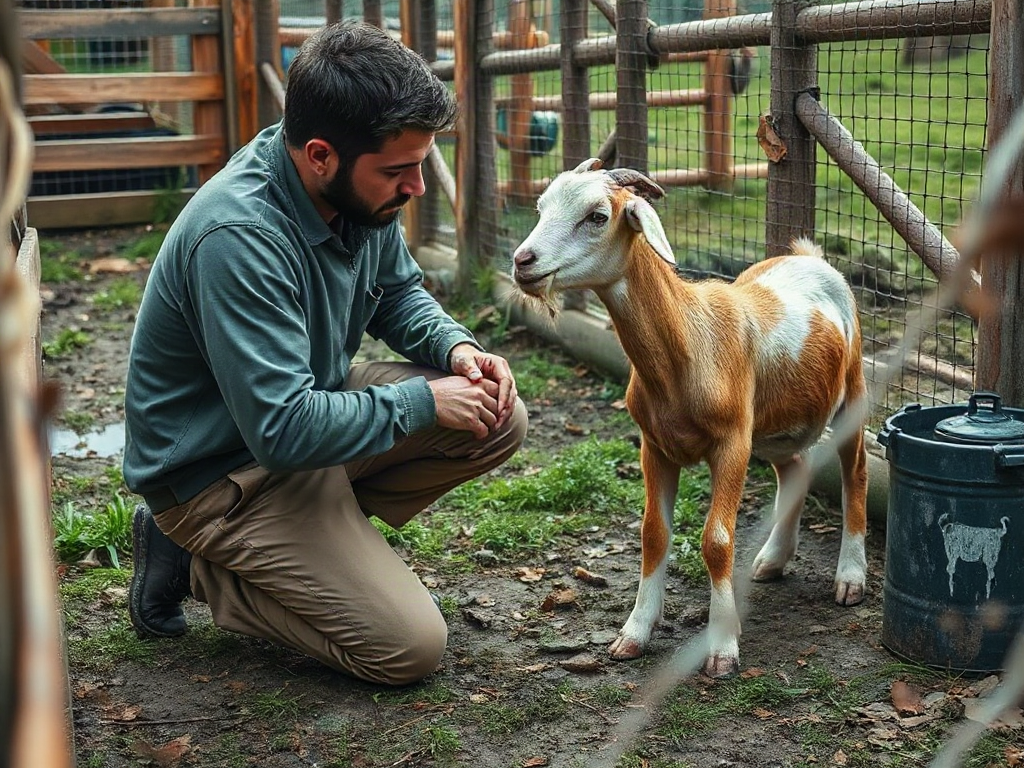
Signs a homestead goat may need veterinary care when normal feeding, movement, breathing, rumination, or elimination changes noticeably. Emergency warning signs include severe breathing difficulty, collapse, repeated straining without urination, uncontrolled bleeding, a rapidly enlarging left abdomen, seizures, or inability to stand. Prompt advice is also warranted for persistent diarrhea, marked weakness, unusual isolation, pale eyelids, pregnancy complications, or a kid that will not nurse. Separate the goat safely, record symptoms and recent feed changes, and call a livestock veterinarian rather than giving leftover antibiotics, dewormers, or human medicine without direction.
What you’ll learn
This guide covers the following practical points:
- Changes in Normal Goat Behavior — A goat's departure from its usual routine often appears before an obvious physical crisis.
- Warning Signs That Require an Emergency Call — Severe impairment of breathing, circulation, urination, consciousness, or mobility warrants immediate veterinary contact.
- Symptoms That Need Prompt Assessment — Persistent or combined abnormalities should be discussed with a veterinarian even when the goat remains standing.
- What to Do Before the Veterinarian Responds — Safe containment and accurate observations are more useful than hurried treatment.
Changes in Normal Goat Behavior
A goat’s departure from its usual routine often appears before an obvious physical crisis. A normally eager eater that hangs back at feeding, a social doe that isolates herself, or a steady walker that suddenly lags behind deserves closer observation. Individual baseline matters: a quiet older goat may naturally be less active than a growing kid, but an abrupt change in either animal is meaningful.
Watch the whole goat rather than relying on a single symptom. Appetite, cud chewing, posture, gait, breathing, manure, urination, milk production, and interaction with the herd provide a more useful picture together. A goat standing apart with its head low, refusing feed, and producing abnormal manure is more concerning than one briefly resting after the others move away.
Subtle illness can be missed when the keeper checks only whether the feeder is empty. Herd mates may consume the feed, and a goat can approach the trough without eating much. Observe individual chewing and swallowing when possible. Note whether the goat is drinking, passing urine and manure, and moving comfortably enough to compete for food.
Environmental context can explain some short-lived changes but should not be used to dismiss them. Heat, transport, kidding, a ration change, or disruption in herd order may reduce intake or alter behavior. If the change is pronounced, accompanied by physical symptoms, or does not resolve as expected, contact a veterinarian. The common mistake is waiting for a goat to look critically ill before acting.
Warning Signs That Require an Emergency Call
Severe impairment of breathing, circulation, urination, consciousness, or mobility warrants immediate veterinary contact. Call an emergency livestock veterinarian if a goat collapses, cannot rise, has seizures, suffers major trauma, bleeds uncontrollably, or struggles visibly for air. Blue-gray gums or tongue, extreme weakness, and rapidly worsening distress add urgency.
A rapidly expanding left side of the abdomen with discomfort or breathing trouble may indicate dangerous digestive distension. Do not assume every large abdomen is the same problem or attempt an invasive procedure based on an online description. The goat’s diet, speed of onset, breathing, and ability to belch or pass material affect the veterinarian’s assessment.
Repeatedly posturing or straining to urinate with little or no output is especially concerning, including in male goats. It can be mistaken for constipation because the goat may stretch, vocalize, kick at the belly, or repeatedly lie down and rise. Treat absent urine as an urgent veterinary problem rather than waiting to see whether a laxative helps.
Pregnancy and birth create additional emergencies. Seek immediate help for heavy bleeding, tissue protruding abnormally, a doe in severe distress, or labor that is not progressing. A kid that is limp, cold, unable to breathe normally, or unable to nurse also needs prompt direction. Pulling a kid without understanding its position can injure both animals, so describe what is visible and follow the veterinarian’s instructions.
- Call now: severe breathing difficulty, collapse, seizure, major bleeding, inability to stand, or no urine despite repeated straining.
- Report the timeline: when the goat was last normal and how quickly the condition changed.
- Describe immediate risks: pregnancy status, trauma, possible toxin exposure, recent grain access, or a new feed.
Symptoms That Need Prompt Assessment
Persistent or combined abnormalities should be discussed with a veterinarian even when the goat remains standing. Refusing food, stopping normal rumination, repeated diarrhea, marked lethargy, coughing with labored breathing, nasal discharge accompanied by illness, or an unexplained decline in milk output can point to problems that cannot be distinguished reliably by appearance alone.
Eyelid and gum color can add context but should not be treated as a complete diagnosis. Unusually pale tissue may accompany a serious underlying problem, while yellow or blue-gray discoloration has different possible implications. Lighting, pigmentation, and observer experience can mislead. Photograph the tissue in natural light if the veterinarian requests it, but do not choose a dewormer or other medication solely from color.
Feet and legs also deserve attention. Sudden non-weight-bearing lameness, a hot swollen joint, a deep wound, or pain after a fall needs timely assessment. Mild limping may allow a scheduled call, but worsening pain, spreading swelling, foul drainage, or loss of appetite raises the priority. Forcing an injured goat to walk merely to test the leg can worsen damage.
Young kids and late-pregnancy does can deteriorate faster than a stable adult, so a wait-and-see approach carries more risk. A kid that misses nursing opportunities, remains apart, develops diarrhea, or feels weak should be evaluated promptly. Similarly, reduced intake, weakness, unusual neurologic behavior, or failure to recover normally around kidding deserves a call. A phone conversation can help determine whether the goat needs transport, a farm visit, or specific monitoring.
What to Do Before the Veterinarian Responds
Safe containment and accurate observations are more useful than hurried treatment. Move the goat to a quiet, dry pen where breathing, manure, urine, and feed intake can be monitored, provided moving it will not aggravate trauma or severe respiratory distress. Keep a familiar herd mate within sight if isolation causes agitation, while preventing competition and unwanted contact when contagious illness is possible.
Write down the goat’s age, sex, pregnancy or lactation status, symptom onset, last normal meal, manure and urine changes, recent feed access, medications, and parasite-control history. If you know how to collect a rectal temperature safely, record the reading and the time rather than interpreting it in isolation. Short videos of breathing, gait, straining, or neurologic behavior may help the veterinarian understand an intermittent sign.
A useful decision comparison is a goat that briefly skips hay after transport versus one that refuses both hay and a favored feed while standing hunched and passing diarrhea. The first may justify close observation and a routine call if appetite does not return; the second has multiple body-system changes and warrants prompt professional advice. The number, severity, and progression of signs matter more than finding one familiar label online.
- Protect the goat from weather, crowding, falls, and access to questionable feed.
- Call the veterinarian and state the most urgent symptom first.
- Record breathing effort, mobility, eating, drinking, rumination, urine, and manure.
- Follow instructions about water, feed, transport, samples, or examination.
- Avoid leftover prescriptions, human pain relievers, blind deworming, and forced oral fluids unless directed.
Medication choice and dose depend on the goat, suspected condition, formulation, route, and food-animal considerations. Giving an unconfirmed treatment can obscure symptoms, cause harm, or delay appropriate care. If veterinary access is limited, establish an emergency contact and transport plan before the herd has a crisis.
Frequently Asked Questions
Is a goat that stops eating always an emergency?
Not always, but complete feed refusal is abnormal and becomes more urgent when paired with weakness, abdominal swelling, diarrhea, breathing changes, pain, or absent urine. Call a veterinarian promptly if appetite does not return or other signs appear.
Why is a goat standing alone from the herd?
Isolation may reflect pain, weakness, fever, injury, bullying, or stress. Check whether the goat eats, walks normally, chews cud, breathes comfortably, and passes normal urine and manure rather than assuming it simply wants solitude.
Should pale eyelids be treated with a dewormer immediately?
No. Pale eyelids can be concerning, but color alone does not identify the cause or the correct medication. Contact a veterinarian for assessment and testing guidance, especially if the goat is weak, losing condition, or breathing rapidly.
When is goat diarrhea serious enough for a veterinary call?
Call promptly when diarrhea is persistent, profuse, bloody, accompanied by weakness or poor intake, or affecting a young kid. Record its appearance, duration, recent feed changes, and whether other goats are affected.
Can I give a sick goat leftover antibiotics or human medicine?
Do not give either without veterinary direction. The drug, formulation, dose, route, and withdrawal requirements may be inappropriate, and treatment before assessment can complicate diagnosis or harm the goat.
Conclusion
Good decisions begin with knowing each goat’s normal appetite, posture, movement, rumination, and social behavior. Escalate immediately for breathing distress, collapse, severe bleeding, urinary obstruction signs, seizures, or dangerous kidding problems. For less dramatic changes, assess the complete pattern and its progression rather than guessing from one symptom. Record useful observations, contain the goat safely, and let a livestock veterinarian direct medication and urgent care.