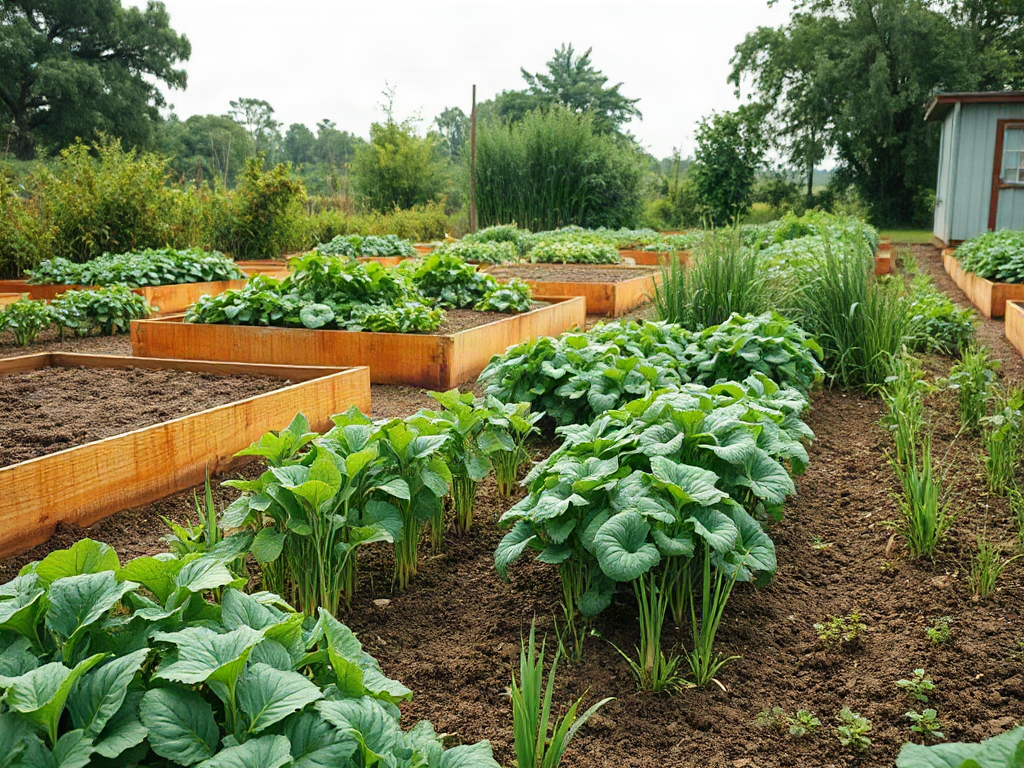
Farm drainage fixes for waterlogged planting areas should begin by identifying whether runoff, compacted soil, a high water table, or a blocked outlet is keeping the root zone saturated. Redirect surface water with shallow swales or diversion drains, relieve compaction where appropriate, and raise planting beds when reliable underground drainage is impractical. Subsurface tile can drain larger fields, but it needs adequate slope, a protected outlet, and careful placement around utilities and wet areas. Avoid digging a trench that merely transfers water downhill; confirm where discharge can safely go before changing the site.
What you’ll learn
This guide covers the following practical points:
- Diagnose the Source Before Digging — A wet planting area is a symptom, not a diagnosis.
- Control Surface Runoff and Low Spots — Surface water should usually be intercepted before it reaches the planting ground.
- Improve the Root Zone Without Trapping Water — Raised beds and crowned rows provide planting roots with more aerated soil even when the underlying ground drains slowly.
- Decide Whether Subsurface Drainage Is Justified — Subsurface drainage is most useful where excess water can move through the soil to perforated pipe and then flow by gravity to a durable outlet.
Diagnose the Source Before Digging
A wet planting area is a symptom, not a diagnosis. Water may be arriving as runoff from a roof, lane, pasture, or neighboring slope; it may also be trapped by compacted soil, an abrupt change in soil texture, a blocked ditch, or a seasonally high water table. Each cause calls for a different repair.
Observe the site during rain and again 24 to 48 hours later. Moving sheets or narrow streams point to a surface-flow problem. Water that appears from the uphill edge after rainfall may indicate seepage. Puddles confined to wheel tracks or former travel lanes suggest compaction, while broad saturation that persists across the lowest ground may reflect groundwater rather than poor grading.
Dig several inspection holes across the wet and dry portions when the ground is safe to work. Compare the depth at which water enters, note dense or smeared layers, and examine whether the topsoil changes suddenly to clay or another slowly permeable material. Do not rely on one hole: a buried stone line, former ditch, or isolated compacted patch can give a misleading result.
Before excavating, identify buried utilities and determine where drained water could legally and safely discharge. A drain without a dependable outlet becomes a buried reservoir. Sending water toward a road, neighboring property, septic area, manure storage site, or unstable bank can create a larger problem than the original wet patch. Wetlands and regulated waterways may also limit earthwork, so local requirements should be checked before altering natural drainage.
Control Surface Runoff and Low Spots
Surface water should usually be intercepted before it reaches the planting ground. A broad, shallow diversion swale placed upslope can guide clean runoff around a garden or field, while a grassed waterway can carry concentrated flow through land that must remain protected from erosion. These features work by spreading and slowing water rather than forcing it through a narrow, easily eroded trench.
Grade changes should be gentle and should preserve a continuous path to a stable outlet. Depressions along a swale create standing pools, while an excessively steep channel can cut into bare soil. Establish dense vegetation where water moves across exposed ground, and armor only the short sections where flow enters or exits with enough force to dislodge soil.
Filling a low spot is reasonable only after explaining why it is low. Adding topsoil to a basin with no outlet may shift ponding to its perimeter. Fine soil placed over saturated clay can also create a soft, layered profile that machinery compacts easily. If minor regrading is suitable, strip and save the topsoil, shape the underlying grade, then replace the topsoil rather than burying fertile soil beneath subsoil.
A simple field comparison helps clarify the choice: runoff that crosses a vegetable plot during every storm calls for interception upslope, whereas rain that falls directly on a nearly level clay bed may be managed better with raised rows and protected traffic lanes. The mistake is treating both situations with the same trench.
Improve the Root Zone Without Trapping Water
Raised beds and crowned rows provide planting roots with more aerated soil even when the underlying ground drains slowly. They are particularly useful for compact gardens, perennial rows, and sites where deep excavation lacks a suitable outlet. Orienting rows so excess water can move toward a safe collection area is preferable to building cross-slope ridges that behave like small dams.
Keep foot and equipment traffic out of the growing zone, especially while soil is wet. Tire pressure and repeated passes compress pore spaces, reducing infiltration and leaving roots in saturated soil longer after rain. Permanent beds with designated paths preserve the loose root zone more effectively than annual deep tillage followed by unrestricted traffic.
Organic matter can improve aggregation and water movement in many mineral soils, but compost is not an instant drainage outlet. Mix suitable amendments into the established topsoil instead of placing a sharply different layer beneath it. Coarse gravel under a bed is a common failed shortcut: water may perch above the texture boundary until the upper soil becomes sufficiently saturated to move into the coarser material.
Deep ripping or subsoiling may help when inspection confirms a compacted layer and the soil below it can accept water. It should be done when the profile is dry enough to fracture; working saturated soil can smear the slot and worsen compaction. The benefit may also be temporary if tractors continue using the same planting ground. If water rises from below during wet seasons, loosening soil will not lower the water table and could make the area harder to traverse.
| Observed condition | Likely first response | Warning sign |
|---|---|---|
| Runoff enters from uphill | Diversion swale or grassed waterway | Erosion at the outlet |
| Compacted travel lane holds water | Restrict traffic and loosen when dry | Smearing instead of soil fracture |
| Small plot over slow soil | Raised beds or crowned rows | Water trapped between beds |
| Broad seasonal saturation | Evaluate outlet and subsurface options | No gravity discharge point |
Decide Whether Subsurface Drainage Is Justified
Subsurface drainage is most useful where excess water can move through the soil to perforated pipe and then flow by gravity to a durable outlet. It can reclaim a larger planting block without open ditches crossing the work area, but installation cost, maintenance, soil conditions, and downstream effects make it a more involved choice than raised beds or surface grading.
A workable system needs a surveyed grade rather than a slope judged by eye. Pipe that rises and falls can retain sediment and water, and an outlet set too high cannot drain the intended soil depth. Filter or envelope material must suit the surrounding soil; an improvised gravel trench can admit sediment or create preferential flow without solving saturation between lines.
Outlet protection deserves as much attention as buried pipe. Keep the opening visible, stabilize the discharge area, prevent animal entry with an appropriate guard, and inspect after heavy storms. Roots, sediment, crushed pipe, and submerged outlet ends are common reasons a once-effective line stops working. Mark the route so later fence posts, tillage, or excavation do not damage it.
Consider professional design when drainage covers a sizable field, crosses property boundaries, approaches a foundation or septic system, or requires a pumped outlet. A soil and water conservation office, drainage contractor, or agricultural engineer may help assess grades, soil behavior, erosion exposure, and applicable rules. Subsurface drainage should not be installed on the assumption that every wet area is defective; some depressions receive more water than a reasonable pipe network can manage, and some naturally wet areas should remain undisturbed.
A Four-Step Drainage Plan
A staged repair limits unnecessary excavation and reveals whether a less expensive change is sufficient. Use the following sequence through at least one meaningful rain event rather than installing every possible measure at once.
- Map the water. Mark inflow points, puddle boundaries, slopes, compacted lanes, existing ditches, and possible outlets while conditions are wet.
- Stop outside inflow. Repair blocked culverts or gutters and divert clean upslope runoff using a stable, vegetated route.
- Protect the planting zone. Establish permanent traffic paths, crown rows, or build raised beds while retaining drainage between them.
- Escalate only if needed. If broad saturation remains, verify elevation, soil profile, discharge capacity, and permissions before installing subsurface pipe.
For an illustrative garden on a gentle slope, suppose stormwater visibly enters at the upper boundary, crosses two compacted paths, and pools around four beds. An upslope swale addresses the external inflow; reshaped paths then carry incidental water toward the same stable outlet, while raised bed surfaces protect roots. If the beds remain saturated despite no incoming runoff, inspection can shift to the soil profile or groundwater rather than making the swale larger.
Success means the root zone becomes workable sooner, water follows the intended route without cutting channels, and the outlet remains stable. Failure signs include new ponding beside filled areas, sediment at the discharge point, slumping bed edges, or water redirected onto other land. Recheck the system after major storms because flow paths that look harmless in light rain may behave differently under heavier runoff.
Frequently Asked Questions
Will adding gravel fix a waterlogged planting area?
Not by itself. A gravel layer without a functioning outlet may hold water or cause it to perch in the soil above. Gravel is useful only as part of a properly designed drain or stabilized discharge area.
Should raised beds run uphill and downhill or across the slope?
The layout must let excess water leave without eroding soil. On gentle ground, crowned rows aligned toward a protected outlet often drain better; cross-slope beds need breaks or channels so they do not dam runoff.
Can deep tilling solve poor drainage?
It may temporarily break a verified compacted layer when soil is dry enough to fracture. It will not correct a high water table or missing outlet, and repeated traffic can quickly recreate compaction.
How can I tell whether a drain outlet is adequate?
The outlet should sit below the intended drain, remain open during wet periods, and release water without erosion or damage downstream. Elevations should be measured rather than estimated visually.
When should I seek professional drainage help?
Get qualified assistance when work affects a large field, neighboring land, roads, buildings, septic areas, wetlands, waterways, pumped systems, or buried utilities, or when no safe gravity outlet is apparent.
Conclusion
Effective drainage work begins with watching where water enters, how long it remains, and where it can leave safely. Intercept outside runoff first, protect the root zone with controlled traffic and suitable bed shaping, then consider buried pipe only after confirming grades and an outlet. Test each change during real rain, inspect for erosion or shifted ponding, and escalate the design when the repair could affect neighboring land, infrastructure, or regulated wet areas.