First of all let me state that we are not prescribing or suggesting anyone take herbs instead of seeing a Health Professional. Some Homesteaders are living off grid and prefer an all-natural approach to health care, so we’re just suggesting some herbs to grow for home medicine. Always, the recommendation is to seek professional guidance who will know your specific needs.
While herbs are amazing to grow for food, they can also be grown for medicine. Many natural herbs provide medicinal properties, either on their own or in addition to other herbs and homemade concoctions. Here are some of the best herbs to grow at home for medicinal purposes.
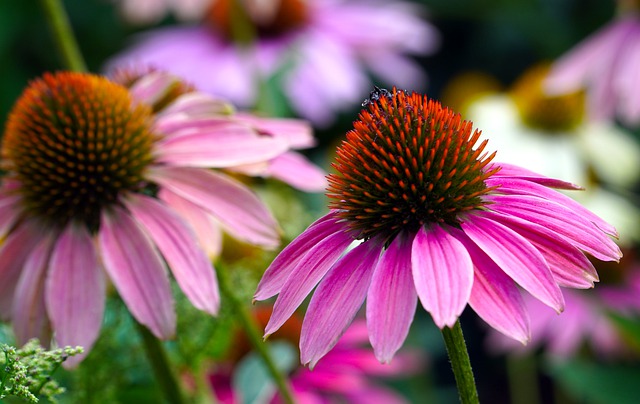 Echinacea
A popular herb used for natural medicine is echinacea. Echinacea is a type of coneflower that typically grows well in the fall if you start it from its seed, though you can transplant the plant as well. Echinacea is often used to boost your immunity and can also help to ease a sore throat when you drink it as a tea or gargle with a cooled-off version of the brewed tea.
Chamomile
When it comes to medicinal herbs, most people are familiar with chamomile. Your parents or grandparents likely always had chamomil e tea in the house, not just for the flavor, but because of how much it can relax and soothe you. Chamomile is often used to reduce anxiety and promote better sleep. It can also be used to reduce swelling and inflammation of surface wounds.
Lemon Balm
Another herb you can grow at home for medicinal purposes is lemon balm. This is quickly becoming a popular healing herb, thanks to the many healing properties it contains. Lemon balm can help with your gut health and nervous system, as well and help to prevent certain types of viruses. While you should consult your pediatrician before use, it is likely gentle enough to give to children as well.
Peppermint
Many forms of mint come with some powerful healing properties, though peppermint is often at the top of the list. Peppermint has a long list of natural medicinal qualities, including settling the stomach and easing nausea, helping with digestive issues, calming sore muscles, and using to reduce inflammation in the body.
 Lavender
And of course we have to include lavender on this list. It is one of the most popular herbs, both for its delicate and inviting scent, but also because of the many medicinal qualities it has. Lavender is often used to relax the body and mind, but it can also help with muscle tension, digestive and gut issues, and improve mental clarity.
Starting your own herb garden is a wonderful home project that can not only give you herbs to cook with, but to help provide you with some home healing.
Popular Questions
What is the fastest way to improve Some Herbs Homesteaders Can Grow For Home Medicine without making beginner mistakes?
The fastest way to improve Some Herbs Homesteaders Can Grow For Home Medicine is to simplify the process and control one variable at a time. Start with the most important baseline: define the goal, identify the main failure point, and test one change before making another. Keep short notes so you can connect the outcome to the adjustment you made. This prevents guesswork and helps you build a repeatable method instead of chasing random fixes.
What should you check first when Some Herbs Homesteaders Can Grow For Home Medicine is not working well?
Check the most immediate bottlenecks first: setup errors, missing inputs, bad timing, or inconsistent follow-through. Before buying anything new or changing the whole system, confirm that the basics are being done correctly and consistently. A small diagnostic checklist usually reveals the real problem faster than broad trial and error. Once the weak point is clear, make one correction and watch the result before adjusting anything else.
What common mistakes make Some Herbs Homesteaders Can Grow For Home Medicine harder than it needs to be?
The most common mistakes are changing too many variables at once, skipping the basics, and judging results too quickly. Many people also copy generic advice without adapting it to their exact situation, which leads to weak results and confusion. A better approach is to work from a simple baseline, make measured changes, and give each change enough time to show whether it helped. That makes progress easier to track and repeat.