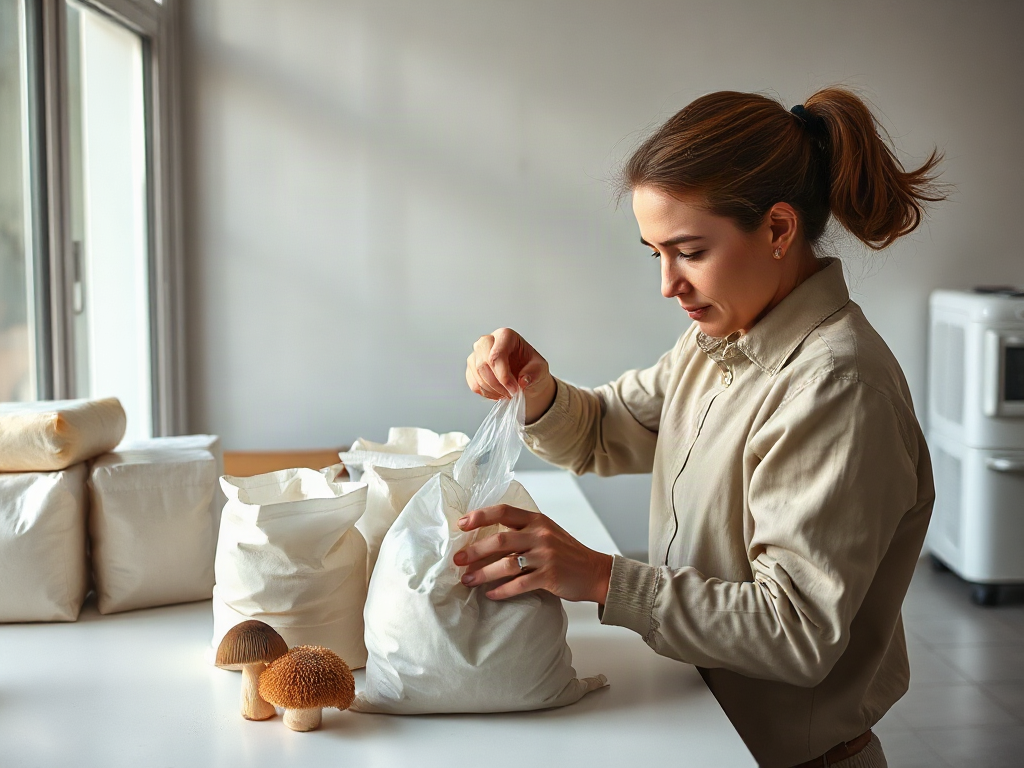
Mushroom farming training options for first-timers should combine species-specific instruction, supervised practice, and a small production trial before substantial equipment is purchased. A useful course covers sterile or low-contamination handling, substrate preparation, inoculation, fruiting conditions, harvest timing, and recordkeeping. Workshops provide immediate feedback, online courses offer flexible theory, and farm apprenticeships reveal the daily labor and environmental controls behind consistent crops. Beginners should choose training based on the mushroom species and production method they intend to use, then confirm that the instructor demonstrates contamination diagnosis, climate management, food-handling practices, and realistic production costs rather than promising effortless yields.
What you’ll learn
This guide covers the following practical points:
- Choosing a Training Format That Fits the Farm — The best training format depends on what a beginner needs to produce, not simply what course is nearby.
- Skills a Beginner Course Should Actually Teach — A credible beginner course connects the mushroom life cycle to each production task.
- Evaluating Instructors, Facilities, and Course Claims — Strong instructors make their production system visible and distinguish demonstration from dependable operating practice.
- Turning Training Into a Small Production Trial — Training becomes useful when the learner repeats one documented process on a manageable scale.
Choosing a Training Format That Fits the Farm
The best training format depends on what a beginner needs to produce, not simply what course is nearby. Someone planning oyster mushrooms on purchased fruiting blocks needs different instruction from a grower preparing shiitake logs or making sterilized indoor substrate. Species, production scale, available space, and tolerance for laboratory-style work should narrow the choices before price does.
Short, in-person workshops are well suited to first exposure. Participants can feel properly hydrated substrate, see clean inoculation technique, recognize mature mushrooms, and ask why a fruiting room is arranged a certain way. Their limitation is compressed practice: a one-day class may demonstrate the full cycle even though the crop itself develops over weeks or months.
Online courses make it easier to revisit climate settings, process sequences, and recorded demonstrations. They work best when paired with an actual grow because contamination and poor fruiting are difficult to understand from images alone. Before enrolling, check whether the course includes instructor feedback on photographs, production logs, or failed batches.
Farm internships and apprenticeships expose learners to repetitive operational work: cleaning rooms, filling bags, monitoring humidity, harvesting on schedule, and recording losses. That realism is valuable for anyone considering sales. The tradeoff is time, travel, and the possibility that the host farm uses only one production system.
| Training option | Best use | Main limitation |
|---|---|---|
| In-person workshop | First supervised inoculation and fruiting practice | Limited time to observe a complete crop cycle |
| Online course | Flexible theory, demonstrations, and review | Little physical feedback unless mentoring is included |
| Farm apprenticeship | Daily workflow and commercial reality | Greater time commitment and a narrow farm-specific system |
| Extension or community program | Regional production context and local contacts | Availability and subject depth vary by location |
A common mistake is selecting a broad “grow mushrooms” class without checking its species or method. Ask for a syllabus and choose instruction that closely resembles the operation you can realistically build.
Skills a Beginner Course Should Actually Teach
A credible beginner course connects the mushroom life cycle to each production task. Learners should understand what mycelium is doing during colonization, why competing molds or bacteria gain an advantage, and how fresh air, moisture, temperature, and light influence fruiting. Memorizing settings without understanding those relationships leaves a grower unable to respond when conditions change.
Substrate instruction should be precise about the demonstrated process. Straw pasteurization, supplemented sawdust sterilization, ready-to-fruit blocks, and outdoor logs are not interchangeable. Each method requires different equipment, cleanliness, inoculation material, time, and contamination control. First-timers should leave able to repeat one complete method safely rather than receive superficial exposure to every technique.
A practical course should address the following production tasks:
- selecting a beginner-appropriate species and compatible substrate;
- measuring and documenting substrate preparation;
- handling spawn without unnecessary exposure to contaminants;
- identifying healthy colonization and suspicious colors, odors, or textures;
- managing humidity and fresh-air exchange without soaking the crop;
- judging harvest readiness, cooling the crop, and cleaning the growing area; and
- recording batch dates, inputs, yields, losses, and labor.
Environmental monitoring deserves hands-on attention. High humidity alone does not create a good fruiting room; stagnant air can contribute to malformed growth, while direct misting may damage developing mushrooms. Training should show where sensors are placed, how observations are recorded, and how adjustments are made gradually.
Programs aimed at commercial beginners should also cover workflow and food handling. Harvesting a flush is only part of the job. Mushrooms are perishable, and a grower must plan clean containers, prompt cooling, storage, delivery timing, and any applicable local rules. A weak course focuses on impressive flushes but ignores labor, spoilage, and discarded contaminated batches.
Evaluating Instructors, Facilities, and Course Claims
Strong instructors make their production system visible and distinguish demonstration from dependable operating practice. A trainer should be able to explain which species are grown, whether spawn is purchased or produced, how contamination is tracked, and what parts of the process require specialized equipment. Photos of mushrooms alone do not establish teaching quality.
Ask whether students will inoculate substrate themselves, inspect cultures or colonizing material, enter a fruiting space, and review unsuccessful batches. Failure analysis is especially useful. Green mold, sour odors, stalled colonization, cracked caps, or elongated stems can point to different process problems, but diagnosis requires context such as batch age, substrate treatment, temperature, and airflow.
Facilities should match the advertised method. Instruction in sterile culture work calls for a controlled workspace and clear sanitation procedures. A log-growing class should provide sound wood, suitable inoculation tools, and instruction on moisture and site selection. An indoor fruiting course should show ventilation and water management rather than treating a small tabletop kit as a commercial model.
Be cautious when a program promises predictable income, exceptionally rapid payback, or near-perfect yields. Production results vary with biological material, climate, sanitation, labor, market access, and operator consistency. Training can shorten the learning curve, but it cannot remove crop losses or create buyers.
Before paying, request four concrete details: the syllabus, instructor experience with the demonstrated system, the amount of participant practice, and the support available after class. Also determine what the fee excludes. Spawn, substrate, lodging, protective supplies, laboratory access, or follow-up consultation may cost extra. The cheapest class can become poor value if it teaches a method that requires facilities the learner cannot afford.
Turning Training Into a Small Production Trial
Training becomes useful when the learner repeats one documented process on a manageable scale. Choose a forgiving species and a method covered directly by the course. For example, a homesteader might fruit several purchased oyster blocks before preparing a small batch of pasteurized straw. That progression separates fruiting-room management from substrate-production problems.
Write the process before beginning. Record the source and type of spawn, substrate recipe or product, preparation dates, inoculation date, colonization observations, fruiting conditions, harvest weight, labor, and discarded units. Consistent records reveal whether a change improved the process or merely coincided with a better batch.
- Repeat the taught method. Avoid changing the substrate, container, spawn rate, and fruiting location at the same time.
- Inspect on a schedule. Note colonization progress, odors, condensation, room conditions, and visible contamination.
- Change one variable when possible. A single adjustment is easier to evaluate than several simultaneous corrections.
- Review the full cycle. Include cleaning time, waste, harvest quality, storage, and labor—not just the appearance of the best cluster.
Signs that the trial is working include reasonably even colonization, repeatable fruiting, mushrooms with expected form, and declining losses as technique improves. Warning signs include recurring contamination at the same production stage, large condition swings, inconsistent records, or dependence on improvised corrections that cannot be repeated.
Scale only after several batches have passed through the same workflow. Buying a larger sterilizer, humidification system, or many blocks before mastering sanitation and fruiting can multiply losses. If problems persist, targeted mentoring may be more valuable than another broad introductory course: send the instructor batch records and photographs, then ask for feedback tied to a specific production stage.
Frequently Asked Questions
Is an online mushroom course enough for a complete beginner?
An online course can teach process order and production theory, but it is stronger when paired with a small grow and instructor feedback. Physical practice is needed to recognize substrate moisture, clean handling, airflow problems, and harvest readiness.
Which mushroom is suitable for first-time practical training?
Oyster mushrooms are commonly used in introductory indoor training because they grow on several prepared substrates and produce visible feedback relatively quickly. The suitable choice still depends on climate, workspace, available substrate, and whether the student wants indoor or outdoor production.
Should beginners learn to make spawn immediately?
Not necessarily. Purchasing reliable spawn lets a beginner concentrate on substrate preparation, colonization, and fruiting. Spawn production adds culture handling, sterile technique, quality control, and equipment demands that may be better studied after basic production is repeatable.
How can I tell whether a mushroom workshop is practical?
Check whether participants perform inoculation, examine healthy and contaminated material, review environmental controls, and receive a procedure they can repeat. A workshop consisting mainly of lectures or harvest photographs offers limited operational practice.
What should I buy before attending training?
Buy only basic note-taking and any required protective supplies unless the instructor provides a confirmed equipment list. Waiting prevents spending on a pressure sterilizer, humidifier, shelving, or laboratory tools that may not suit the chosen production method.
Conclusion
Choose training by working backward from the species, substrate, growing space, and scale you can support. Favor programs that let students handle materials, inspect failed batches, manage fruiting conditions, and document an entire production cycle. Afterward, repeat one taught method in a small trial and use batch records to locate problems before expanding. Additional mentoring should address a specific bottleneck rather than repeat broad introductory material.