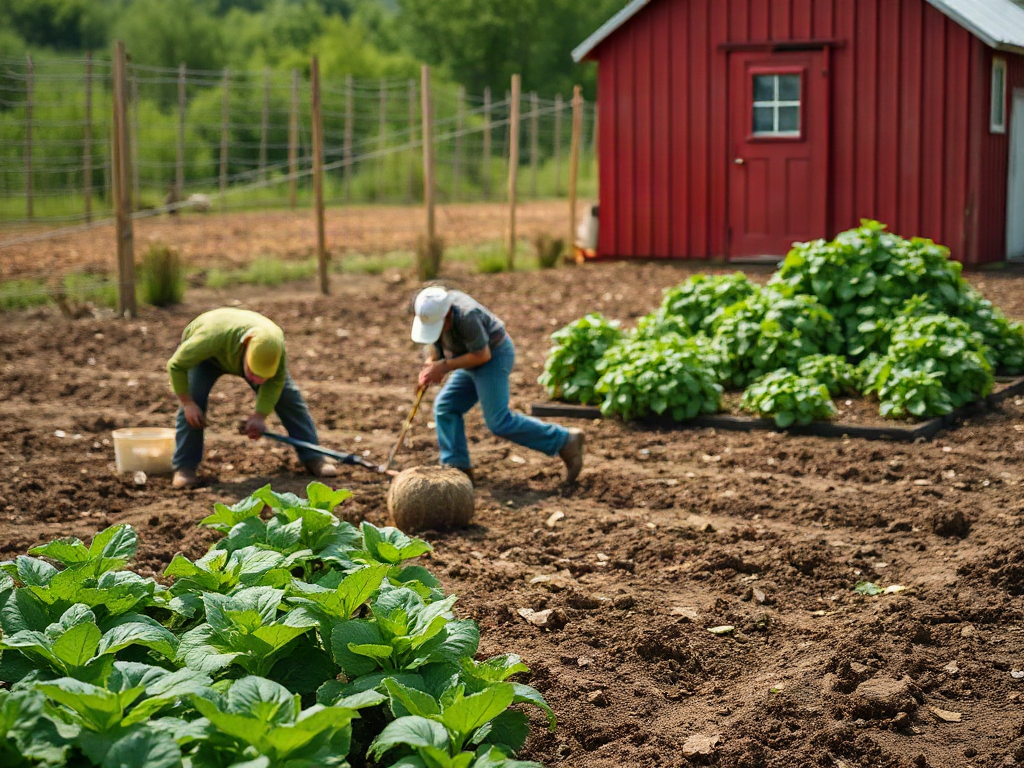
Beginners should practice crop planning, soil assessment, irrigation control, recordkeeping, equipment maintenance, and routine livestock observation before expanding a farm. These farming skills reveal whether current yields, labor demands, feed use, water systems, and expenses are genuinely under control. Practice them through at least one complete production cycle, recording inputs, harvests, losses, maintenance, and time spent on recurring chores. Expansion is more defensible when the existing operation meets routine deadlines without repeated emergencies, unexplained losses, or dependence on improvised repairs.
Can You Run One Production Cycle Reliably?
A complete production cycle tests more than whether plants grow or animals survive. It shows whether the farm can move through planning, purchasing, planting or breeding, routine care, harvest or sale, cleanup, and preparation for the next cycle without recurring breakdowns. A beginner who has handled only spring planting has not yet experienced peak weed pressure, harvest congestion, winter feeding, storage losses, or the repair work that follows heavy use.
Use the current operation as a working trial rather than assuming more land will make it more productive. For a market garden, that means following several beds from seed order through harvest and post-season residue management. For a laying flock, it means tracking feed, egg collection, bedding, predator pressure, seasonal laying changes, and manure handling. The purpose is not perfection. It is to distinguish occasional trouble from a system that routinely consumes more time, money, or attention than expected.
Labor should be measured during the busiest weeks, not estimated from quiet periods. Ten additional beds may look manageable while seedlings are in trays, yet become burdensome when irrigation repairs, weeds, harvesting, washing, and sales all compete for the same morning. Likewise, adding animals increases daily obligations even during illness, bad weather, family commitments, or equipment failure. Expansion based on average workload can therefore hide the days most likely to cause crop loss or neglected chores.
Create a short operating checklist for the existing scale:
- Recurring work: Note each daily, weekly, and seasonal task and its realistic duration.
- Critical deadlines: Mark jobs that cause immediate losses when delayed, such as watering transplants or securing animals at night.
- Backup capacity: Identify who can perform essential chores and which supplies must remain on hand.
- Failure log: Record missed plantings, escapes, irrigation faults, spoilage, and emergency purchases.
- End-of-cycle review: Separate problems caused by poor execution from limits imposed by weather, land, or infrastructure.
Reliable completion matters more than a single impressive harvest. A large crop produced through exhausting manual intervention may not be repeatable at twice the scale. Signs of readiness include chores completed on schedule, losses that have understandable causes, workable backup plans, and enough time to maintain facilities after production tasks are done. Repeatedly postponing cleanup, repairs, or records indicates that additional capacity would amplify neglected work rather than improve output.
How Well Do You Manage Soil, Water, and Crops?
Soil and water management should be repeatable before a beginner adds growing space. Visual inspection alone cannot reveal every nutrient limitation, drainage problem, or unsuitable pH condition, while watering by habit often produces alternating stress and saturation. Learn how conditions differ across the present site, then match crops and irrigation to those conditions instead of applying one treatment everywhere.
Start with representative soil testing and careful field observation. A laboratory test can provide baseline information about pH and nutrient status, while a shovel reveals compaction, rooting depth, moisture, texture, and earthworm activity. Walk the site after substantial rain to locate standing water, erosion channels, and areas that dry unusually quickly. Sample or manage visibly different areas separately; combining a low wet patch with a dry upper slope can produce an average result that describes neither area well.
Irrigation practice should include calculating how long a zone takes to water, checking pressure at the far end, detecting clogged emitters, and confirming moisture below the surface. Dark topsoil does not prove that water reached a crop’s active root zone. Conversely, leaving a system on longer does not correct poor distribution and may leach nutrients or encourage root problems in poorly drained ground. Before adding beds, verify that the water source, pump, filters, lines, and available watering window can serve the proposed area during hot, dry conditions.
Crop planning connects those physical limits to a workable calendar. A beginner may successfully grow six vegetables but still struggle to seed successions, rotate crop families, estimate harvest windows, or reserve space for cover crops. Practice mapping beds, recording sowing and transplanting dates, and comparing expected harvest timing with what actually occurs. For example, expanding salad production without a succession schedule can create one brief surplus followed by empty beds and no dependable weekly supply.
Judge practices by crop response and field condition, not by how advanced they appear. Hand watering may be acceptable for a small seedling area because it allows close inspection; it becomes inefficient across distant plots. Drip irrigation reduces some labor but adds filtration, pressure, layout, and inspection requirements. Mulch can suppress weeds and moderate moisture, yet the material, application labor, pests, and end-of-season handling still need consideration. Expansion should follow evidence that the chosen system distributes water evenly, maintains workable soil, and fits the farm’s available labor.
Warning signs include unexplained yellowing, chronic weed seed production, erosion after ordinary storms, frequent reseeding, or yields that vary sharply without recorded reasons. Correcting those issues on a small plot provides far cheaper feedback than repeating them across a larger field.
Are Records Revealing the True Cost of Growth?
Useful farm records connect physical production with labor and money. Receipts alone show spending but not which crop, flock, or field used the input. Harvest totals alone show volume but not whether the output covered seed, feed, packaging, fuel, losses, and time. Beginners need a simple system they will maintain consistently, because incomplete precision is less useful than a modest set of dependable figures.
Record inputs when they are used rather than trying to reconstruct the season later. For crops, track the growing area, seed or transplant cost, amendments, planting date, major labor tasks, harvest quantity, discarded produce, and sales or household use. For livestock, track animal numbers, feed purchases and use, bedding, production, mortality, routine supplies, and significant health or housing events. Keep household consumption visible; food used at home still represents farm output, even when it produces no cash sale.
| Record | What It Reveals | Expansion Question |
|---|---|---|
| Labor by task | Seasonal bottlenecks and inefficient routines | Can peak work be completed with available help? |
| Inputs by enterprise | Where cash and materials are being consumed | Will volume lower costs or simply multiply them? |
| Harvest or production | Usable output rather than planted capacity | Is current space producing consistently? |
| Losses and waste | Spoilage, mortality, culls, and failed plantings | Which problems must be corrected first? |
| Sales and home use | Where finished output actually goes | Is there a reliable destination for added production? |
Reviewing records should lead to operational decisions. Suppose a grower sells every tomato harvested but loses a large share to cracking and lacks time to sort and pack during peak weeks. More tomato plants would increase pressure on the weakest part of the operation. Improving irrigation consistency, harvest frequency, handling, or sales scheduling may deliver more usable produce from the same space.
Cash flow deserves separate attention from eventual profitability. Seeds, feed, fencing, irrigation parts, and fuel may be paid for months before crops or animals generate income. A plan that appears profitable at the end of a season can still create a cash shortage during establishment. Keep a reserve for routine operation and foreseeable repairs rather than assigning every available dollar to expansion.
A common mistake is using gross sales as proof that an enterprise should grow. Gross sales do not account for unsold inventory, personal withdrawals, equipment wear, or unpaid labor. Records do not need to resemble a complex commercial accounting system, but they should answer three practical questions: what was produced, what resources it consumed, and where the output went. If those answers remain uncertain at the present scale, projections for a larger operation are assumptions rather than plans.
Which Maintenance and Livestock Routines Need Practice?
Maintenance and animal observation become harder to improvise as a farm grows. A loose gate, leaking coupling, dull blade, or damaged electric fence may be a minor interruption on a small holding. With more acreage or livestock, the same fault can delay several jobs, waste water, increase fuel use, or allow animals into unsafe areas. Beginners should become competent at inspection, routine servicing, and knowing when a repair exceeds their tools or experience.
Build maintenance around the equipment actually in use. Practice cleaning soil from hand tools, sharpening appropriate cutting edges, lubricating specified points, inspecting hoses and electrical cords, checking fasteners, and storing machinery under suitable cover. Follow the manufacturer’s instructions for powered equipment; improvising around guards, pressurized systems, fuel, hydraulics, or electrical faults can create serious hazards. The goal is not to perform every repair personally. It is to recognize abnormal heat, vibration, leakage, noise, wear, or poor performance early enough to stop and obtain qualified help.
Keep frequently needed consumables and correctly sized replacement parts organized. A spare irrigation fitting is useful only if it matches the installed line, and an unlabeled collection of old hardware is not a dependable inventory. Note part numbers, service dates, and the tools needed for routine work. Expansion may justify duplicate tools or a more capable machine, but buying equipment before understanding task duration, terrain, storage, and maintenance obligations can exchange a labor problem for a debt and repair problem.
Livestock adds a separate set of observation skills. Learn each species’ normal appetite, movement, posture, social behavior, manure, water consumption pattern, and response to weather. Daily observation should occur while animals are calm enough for differences to be noticed, not only during feeding commotion. Changes do not establish a diagnosis, but they can signal the need to isolate an animal when appropriate, review feed and water access, inspect housing, and contact a veterinarian or experienced local professional.
Practice handling, moving, counting, and securing the current group before increasing numbers. A small flock that cannot be safely moved between areas will not become easier when doubled. Housing should also be tested in wet, hot, cold, and windy conditions where relevant: ventilation, shade, drainage, clean water, dry resting areas, predator resistance, and manure removal all behave differently as stocking increases.
Readiness appears as uneventful routines rather than heroic recoveries. Gates close correctly, tools are returned ready for use, water reaches every animal, maintenance happens before breakdown, and backup caretakers can follow written instructions. Frequent escapes, empty waterers, deferred servicing, or uncertainty about normal animal behavior are reasons to stabilize the existing operation before adding stock or machinery.
Frequently Asked Questions
How long should a beginner farm before expanding?
Complete at least one full production cycle at the current scale. More time may be needed when seasonal weather, breeding cycles, perennial crops, or incomplete records have not yet exposed the farm's peak labor and infrastructure demands.
Which farming skill should be practiced first?
Practice scheduling and completing essential daily work first. Soil improvement, machinery, and new enterprises cannot compensate for missed watering, late planting, unsecured animals, or harvests left in the field.
Do beginners need expensive farm-management software?
No. A notebook or basic spreadsheet can track dates, labor, inputs, output, losses, and sales. Choose a format that can be updated during busy weeks and reviewed by crop, field, or livestock group.
What is the clearest sign a small farm is not ready to expand?
Repeated emergencies caused by unfinished routine work are a strong warning. Chronic equipment failures, missed plantings, animal escapes, unrecorded spending, or unsold harvests usually become more costly at a larger scale.
Should a farmer buy equipment before adding acreage?
Only after defining the task, workload, terrain, storage, servicing, and cash requirements. Renting, borrowing, or hiring custom work may be more sensible when a machine will be used infrequently.
Conclusion
Expansion should follow proof that the present farm operates predictably through its busiest and most difficult periods. Use the current acreage, crop plan, or livestock group to test scheduling, soil and water decisions, recordkeeping, maintenance, and backup arrangements. Give priority to failures that would multiply with scale: uneven irrigation, recurring escapes, unexplained losses, deferred repairs, weak sales outlets, and workloads that already exceed available time.
The next step is a written end-of-cycle review. Identify the most restrictive resource, whether it is labor, water, cash, storage, equipment, housing, or market capacity. Correct that constraint, repeat the relevant routine, and look for measurable evidence that the change worked. Add land, animals, or infrastructure only when existing production is controlled well enough that growth has a defined purpose, a workable budget, and sufficient operating capacity.