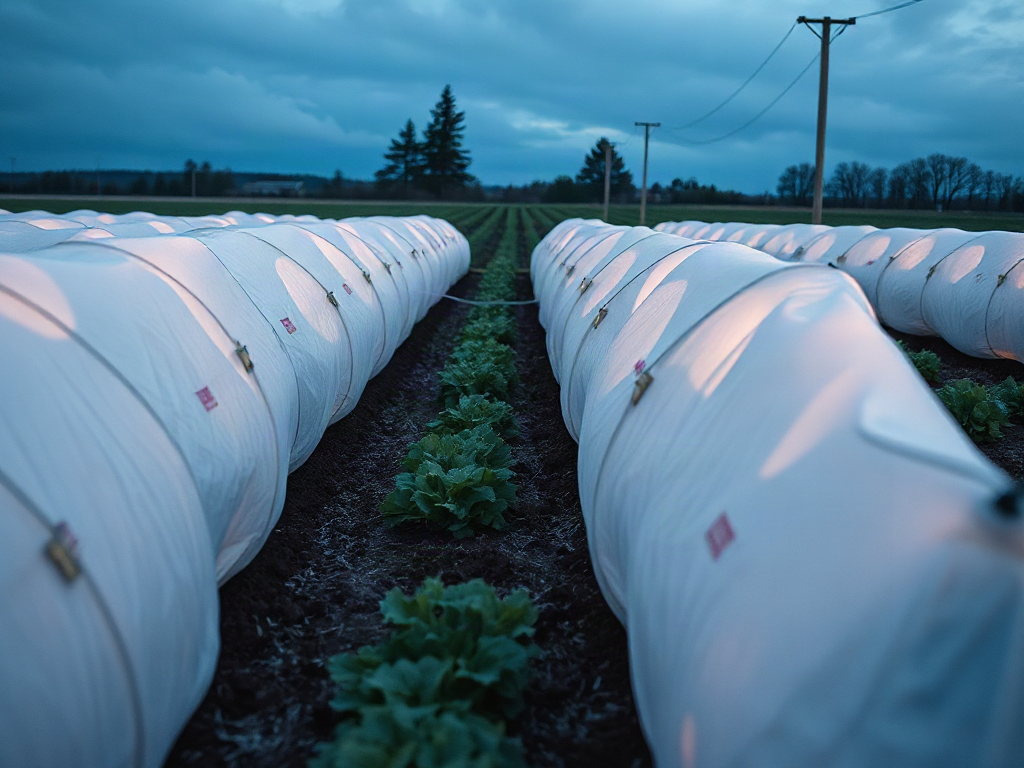
Frost protection methods for early farm plantings work best when growers match the timing and technique to the crop, forecast, soil moisture, and type of freeze expected. Row covers and low tunnels trap ground heat, while irrigation can protect plants only when water is applied continuously and safely through the freezing period. Covers should be installed before temperatures fall, supported above tender foliage when possible, and sealed at the edges without crushing plants. Windy freezes, low field pockets, wet fabric, and protection removed too late can reduce effectiveness or cause additional crop damage.
What you’ll learn
This guide covers the following practical points:
- Assess Frost Risk Before Covering — A useful frost plan begins with the temperature expected at plant height, not merely the forecast shown for a nearby town.
- Choose Covers and Low Tunnels by Crop — Spun-bonded row cover is usually the most flexible option for short rows and mixed early plantings.
- Use Water and Stored Soil Heat Carefully — Moist, firm soil generally stores and releases more heat overnight than dry, loose, heavily cultivated soil.
- Protect Larger Planting Areas Efficiently — Large acreages require triage because covering every row may cost more in labor and material than the planting justifies.
Assess Frost Risk Before Covering
A useful frost plan begins with the temperature expected at plant height, not merely the forecast shown for a nearby town. Cold air settles into hollows, along hedges, and at the bottom of sloping ground. A field thermometer placed near the crop canopy can reveal that one bed regularly becomes colder than another only a short distance away.
Radiational frost usually develops on clear, calm nights as exposed soil and plants lose heat. Lightweight covers perform well under these conditions because they retain some warmth rising from the soil. An advective freeze arrives with a colder air mass and wind; moving air strips heat from covered rows and makes loose materials difficult to secure. Passive covers may offer limited protection in that situation, particularly during a long or severe freeze.
Crop condition matters as much as the forecast. Newly emerged beans, squash, tomatoes, and other warm-season plants can be injured by conditions that established spinach, peas, onions, or brassicas tolerate. Blossoms and fresh transplants are often more vulnerable than dormant tissue or hardened foliage. Check the cold sensitivity of the particular crop and growth stage rather than assuming every green plant needs identical treatment.
A common failure is waiting for visible frost to begin. By then, covers may be wet, wind may be rising, and delicate leaves may already be cooling rapidly. Set supports, stage weights, test irrigation equipment, and identify priority beds during daylight. Protect the least cold-tolerant and highest-value plantings first when labor or materials are limited.
Choose Covers and Low Tunnels by Crop
Spun-bonded row cover is usually the most flexible option for short rows and mixed early plantings. It admits light and rain, can remain over many cool-season crops for several days, and is available in different weights. Heavier fabric generally holds more heat but transmits less light and can flatten seedlings if snow, rain, or wind loads it against the foliage.
For tender transplants, hoops create an insulating air space and prevent cold fabric or plastic from resting directly on leaves. Polyethylene over hoops captures heat effectively but requires daytime ventilation. Bright sun can raise temperatures quickly inside a sealed tunnel even while outdoor air remains cool. Fabric is more forgiving, although it still needs inspection after windy weather.
| Protection | Best Use | Main Tradeoff |
|---|---|---|
| Light row cover | Established cool-season rows and mild frost | Less heat retention than heavier material |
| Heavy row cover | Tender seedlings during a colder night | Lower light transmission and greater weight |
| Plastic low tunnel | High-value beds needing stronger heat capture | Must be vented promptly in sunshine |
| Individual cloche | Scattered transplants or gap replacements | Labor-intensive over a large area |
Seal every perimeter with soil, boards, sandbags, or smooth weights. Warm air escapes through an open end or flapping edge, so covering only the top of the row provides less protection than expected. Avoid sharp stones or bare metal that can tear fabric. Leave enough slack for expansion and plant growth, but not so much that the cover whips against seedlings.
Household blankets can serve during an emergency, yet they become heavy when wet and block all light. Plastic laid directly on foliage may conduct cold to points of contact and can collect condensation. If either material is used temporarily, support it above the crop and remove or vent it after the danger passes.
Use Water and Stored Soil Heat Carefully
Moist, firm soil generally stores and releases more heat overnight than dry, loose, heavily cultivated soil. If the ground is dry, irrigating it during the day before a predicted radiational frost can improve heat storage. The aim is evenly moist soil, not saturated beds or standing water around roots.
Mulch complicates early-season frost protection. Thick straw or fluffy organic mulch insulates the soil and restricts the heat it can release toward plants at night. Pulling mulch back temporarily from tender rows exposes darker soil to daytime sun and allows stored warmth to rise under a cover. Replace the mulch after the cold spell if it is needed for weeds or moisture control.
Overhead irrigation protects tissue through the heat released as water freezes, but it is an active system rather than a quick spray before bed. Application must generally continue while ice is forming and until temperatures rise enough for melting to begin. Stopping too soon can allow plant temperatures to fall sharply. Inadequate flow, wind, clogged nozzles, poor drainage, or a pump failure can turn the method into a damaging ice load.
Use irrigation only when the system has enough capacity to cover the full area uniformly and run for the entire event. It is a poor first experiment on a critical planting during a freeze warning. Drip irrigation can moisten soil in advance, but it does not coat foliage uniformly and should not be treated as a substitute for correctly managed overhead freeze protection.
Protect Larger Planting Areas Efficiently
Large acreages require triage because covering every row may cost more in labor and material than the planting justifies. Divide the field by crop value, cold sensitivity, growth stage, and terrain. A newly transplanted tunnel of tomatoes in a low spot deserves attention before a mature bed of hardy greens on higher ground.
As an illustrative decision, consider three early plots: direct-seeded spinach, flowering strawberries, and recently set peppers. Spinach may need no intervention during a light frost if it is acclimated. Strawberry blossoms may justify a purpose-built cover or a proven irrigation system because reproductive tissue is exposed. Peppers should receive a supported row cover or low tunnel, with edges tightly sealed. The comparison is based on vulnerable tissue and likely loss, not simply the area occupied.
Permanent field design can reduce repeated emergency work. Keep the earliest tender crops out of frost pockets when possible, maintain drainage paths for cold air, and place low-tunnel beds where covers can be anchored securely. Windbreaks can reduce damaging airflow, but dense barriers may also trap cold air on the uphill side. Observe where frost first appears across several events before changing permanent layouts.
Fans and heaters are specialized tools, not universal solutions. A fan may help only when warmer air exists above a shallow layer of cold air; it cannot manufacture heat during every freeze. Open flames, improvised heaters, and unattended combustion equipment introduce fire and carbon-monoxide hazards. Small farms usually gain more reliable protection by adjusting planting dates, using transplants of different ages, staging covers, and reserving active systems for crops that justify their operating demands.
Frost-Night Checklist
Final preparation should happen while there is enough light to find gaps, repair tears, and verify water flow. A cover that looks secure at sunset may loosen as fabric contracts or wind direction changes, so plan at least one safe inspection before the coldest part of the night.
- Check field-level conditions: Compare the forecast with thermometers near the most vulnerable beds.
- Prioritize plantings: Cover tender transplants, blossoms, and low-lying rows before hardened crops.
- Prepare the soil: Water dry ground early enough for the surface to absorb moisture; avoid late puddling.
- Install and seal: Support covers where needed, close every edge, and use weights that will not tear the material.
- Verify active systems: Confirm pump capacity, nozzle coverage, fuel or power, drainage, and the ability to operate through the event.
- Inspect after sunrise: Vent plastic promptly, uncover heat-sensitive crops when conditions permit, and let icy plants thaw before handling them.
Success is indicated by secure edges, stable temperatures beneath the cover, and foliage that remains firm after gradual thawing. Flapping fabric, collapsing hoops, dry areas within an irrigated block, or ice accumulating beyond the crop’s ability to support it signal that the protection is failing. Correcting those problems early is more effective than adding random layers after temperatures have already fallen.
Frequently Asked Questions
What temperature should trigger frost protection?
Use the crop's cold tolerance and growth stage rather than one universal temperature. Begin preparations when field-level readings may approach the crop's injury range, especially for blossoms, seedlings, and warm-season transplants.
Can row cover touch vegetable plants?
Light fabric can rest over sturdy, low crops, but hoops are safer for tender transplants and blossoms. Supports reduce abrasion, crushing, and cold contact where wet material presses against foliage.
Should plants be watered before a frost?
Dry soil may be watered during the day so it can absorb heat before nightfall. Avoid saturating poorly drained beds, and do not confuse soil moistening with continuous overhead irrigation used for active freeze protection.
When should frost covers be removed?
Vent plastic soon after sunlight begins warming the tunnel. Fabric may remain longer over suitable cool-season crops, but check temperature, moisture, pollination needs, and wind before leaving it in place.
Is plastic or fabric better for frost protection?
Fabric is easier to manage and allows some air and moisture exchange. Plastic can capture more daytime heat but needs support, tight anchoring, and prompt ventilation to avoid overheating the planting.
Conclusion
Effective frost preparation combines local temperature readings, crop-specific priorities, secure covers, and realistic limits on labor and water. Stage materials before sunset, protect vulnerable growth first, and treat irrigation as a continuously managed system rather than a last-minute spray. After each event, record which beds cooled fastest and where covers failed. Those observations will improve planting locations, material choices, and response timing during the next cold spell.
Additional Resources
Authoritative Sources
- USDA NRCS Soil Resources
nrcs.usda.govOfficial soil health, conservation, water, and land-management guidance for agricultural operations.