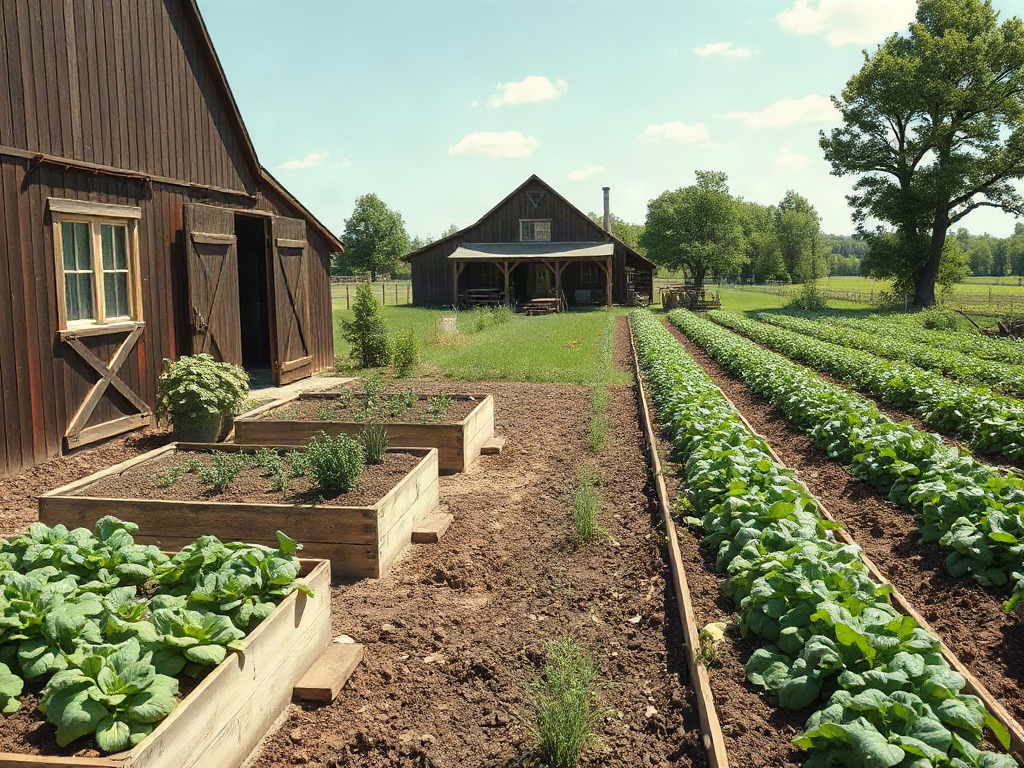
Raised beds or field rows for a homestead farm should be chosen according to drainage, soil condition, available space, crop mix, labor, and equipment access. Raised beds suit wet or compacted ground, intensively planted vegetables, and sites where imported soil can correct poor growing conditions. Field rows generally serve larger plantings better because they cost less to establish, accommodate wheel hoes or tractors, and do not require permanent bed walls. Many homesteads benefit from combining both: contained beds near the house for frequently tended crops and field rows for corn, potatoes, squash, dry beans, and cover crops.
What you’ll learn
This guide covers the following practical points:
- How Raised Beds and Field Rows Differ — Raised beds concentrate improved growing soil above the surrounding grade, while field rows place crops directly in prepared native ground.
- Site Conditions That Should Drive the Choice — Drainage and workable soil depth should carry more weight than appearance.
- Cost, Labor, and Equipment Tradeoffs — Raised beds shift work and expense toward installation, whereas field rows require recurring cultivation across a larger open surface.
- Matching Crops to the Growing System — Crop habit determines whether concentrated bed space or long-row efficiency has greater value.
How Raised Beds and Field Rows Differ
Raised beds concentrate improved growing soil above the surrounding grade, while field rows place crops directly in prepared native ground. That physical distinction changes how water drains, roots spread, paths consume space, and tools move through the garden.
A framed raised bed creates a permanent boundary between planting soil and walkways. An unframed mound can provide many of the same drainage benefits without lumber, blocks, or metal sides. Both approaches protect the growing area from foot traffic, which helps preserve soil structure when gardeners consistently work from the paths.
Field rows use the site more continuously. They may be arranged as single rows, paired rows, or broad planting strips, with enough space between them for cultivation and harvest. Their main advantage is scalability: a gardener can lengthen a row, alter spacing, or reshape the plot without rebuilding permanent structures.
The common mistake is assuming that raised beds automatically produce better crops. Bed walls do not correct poor sunlight, unreliable irrigation, unsuitable soil chemistry, or neglected fertility. Likewise, field rows are not inherently crude or inefficient; well-shaped rows with controlled traffic can offer productive root zones at a much lower establishment cost.
| Decision Factor | Raised Beds | Field Rows |
|---|---|---|
| Drainage | Useful on slow-draining sites | Best where excess water can leave the root zone |
| Startup cost | Higher if frames and imported soil are used | Usually lower when native soil is workable |
| Layout flexibility | Permanent or semi-permanent | Easy to resize and rotate |
| Equipment access | Mostly hand tools and small implements | Suitable for wheel hoes, tillers, and tractors |
| Water behavior | May dry faster in hot weather | Retains moisture longer in many soils |
Site Conditions That Should Drive the Choice
Drainage and workable soil depth should carry more weight than appearance. After a substantial rain, inspect the proposed plot for standing water, saturated soil, erosion channels, and runoff entering from roofs or slopes. A low area that stays wet well after higher ground becomes workable is a strong candidate for elevated planting zones or a different garden location.
Soil texture changes the calculation. Heavy ground may drain slowly and compact when worked wet, so a raised growing surface can extend the workable season. Very sandy soil often drains rapidly already; elevating it further can increase irrigation demand. On such a site, field rows amended with organic matter may conserve water better than shallow framed beds.
Topsoil depth also matters. Where usable soil lies over dense subsoil, rock, or construction debris, imported soil in a bed provides an immediate root zone for vegetables. Before filling beds, correct any source of contaminated runoff and investigate questionable soil rather than treating elevation as a complete barrier.
Sun exposure, wind, and slope should be mapped before construction. Tall bed walls do not compensate for shade, and exposed elevated soil can lose moisture quickly in persistent wind. Rows placed straight down a steep slope can channel water and carry soil away. On sloping ground, align cultivation areas to slow runoff where practical, while preserving a safe outlet for excess water.
A useful site test is to mark prospective beds and rows with stakes and string for a week. Carry watering cans, carts, compost, and harvest baskets through the layout. If paths feel cramped, hoses cross traffic lanes, or the far end is inconvenient to reach, revise the plan before buying materials.
Cost, Labor, and Equipment Tradeoffs
Raised beds shift work and expense toward installation, whereas field rows require recurring cultivation across a larger open surface. A framed bed may need durable sides, fasteners, delivered soil, path material, and a dedicated irrigation line. Field rows can begin with existing soil and simple marking stakes, but weed management may demand more hoeing, mulching, cultivation, or cover cropping.
Bed dimensions should follow reach rather than a standard copied from another garden. A bed accessible from both sides must be narrow enough that the gardener can reach its center without stepping into it. Against a fence or wall, it needs to be narrower because access is available from only one side. Path width should accommodate the actual wheelbarrow, garden cart, or mobility needs of the people doing the work.
Equipment ownership can settle the choice quickly. A homestead using a tractor-mounted cultivator needs straight rows, turning room, and compatible spacing. Permanent boxes break that workflow into hand-managed islands. A small kitchen garden maintained with a hand fork, trowel, and drip lines gains little from tractor geometry and may benefit from compact permanent beds.
Maintenance costs are often underestimated. Untreated wood eventually decays, metal can heat along exposed edges, and masonry is difficult to relocate. Filled beds can settle and require replenishment. Field rows avoid deteriorating frames, but repeated tillage may damage soil structure and bring buried weed seeds to the surface. Shallow cultivation, mulch, and designated walking lanes can reduce that disturbance.
Compare total inputs rather than the price of edging alone. Include soil volume, delivery access, irrigation fittings, path maintenance, replacement materials, and the hours needed to build or reshape the plot. A low-cost unframed raised bed is often the practical middle ground when better drainage is needed but permanent construction is not.
Matching Crops to the Growing System
Crop habit determines whether concentrated bed space or long-row efficiency has greater value. Frequently harvested vegetables and herbs fit well near the house in beds that can be reached from the sides. Lettuce, carrots, onions, radishes, peppers, and culinary herbs can be planted in blocks or closely managed rows without leaving tractor-width aisles between every crop.
Space-hungry or mechanically cultivated crops usually fit field rows more naturally. Corn depends on adequate block planting for pollination, vining squash travels beyond narrow boundaries, and potatoes require room for hilling and digging. Dry beans, storage roots, and cover crops may also occupy enough ground that filling framed beds with purchased soil offers little economic advantage.
Perennial plants require another calculation. Permanent herbs and compact perennial vegetables can suit dedicated beds, but spreading plants may become difficult to divide or contain inside rigid frames. Large berry plantings generally need row access for pruning, mulching, netting, and harvest rather than short enclosed boxes.
Watering method should match the arrangement. Drip tubing or soaker lines are easy to leave in permanent beds, provided the lines cover the planted area evenly. Long field rows can use drip tape, furrows where appropriate, or overhead irrigation, but the row spacing and slope must suit the method. A failing system shows uneven germination, dry edges, runoff, or persistently saturated patches; adjust emitter placement or watering duration before blaming the bed type.
Rotation is simpler when growing areas have compatible dimensions. Field plots can be divided into repeatable blocks, while raised beds of similar size make crop families easier to move between spaces. The mistake is treating small beds as exempt from rotation or soil care. Intensive planting removes nutrients from a limited volume, so compost, amendments based on observed need, and periods of living cover remain useful.
Planning a Mixed Homestead Layout
A mixed layout often assigns each system to the work it handles most efficiently. Place intensively managed beds near a water source and a frequently used path. Reserve the larger, unobstructed plot for crops that need long rows, wide spacing, hilling, cover cropping, or mechanical cultivation.
Consider an illustrative homestead with a well-drained main plot and one wet corner near the kitchen. The household could install three modest beds in the wet area for salad greens, herbs, and carrots while keeping corn, potatoes, winter squash, and dry beans in field blocks. The beds solve a localized drainage and access problem; the field avoids the cost of enclosing and filling the entire production area.
Use this sequence before committing:
- Observe water: Check drainage after rain and identify runoff routes.
- Inspect the soil: Note texture, compaction, rooting depth, stones, and areas that should be tested.
- List the crops: Separate intensively tended vegetables from sprawling, bulk, and mechanically cultivated crops.
- Match the tools: Provide turning and working clearance for the largest tool that will regularly enter the plot.
- Mock up the layout: Mark beds, rows, paths, compost access, and irrigation routes before construction.
- Build in stages: Establish a small section, observe one growing cycle, and expand only after the workflow is proven.
Signs that the arrangement is working include timely access after rain, even irrigation, reachable planting areas, and cultivation that does not damage adjacent crops. Repeatedly stepping into beds, abandoning narrow paths, hauling soil long distances, or leaving row ends uncultivated indicates that the design conflicts with actual labor and tools. Adjusting dimensions early is cheaper than preserving an inconvenient plan.
Frequently Asked Questions
Are raised beds always better than planting in the ground?
No. They are most useful where drainage, compaction, limited topsoil, access, or intensive planting justifies the added materials and concentrated maintenance.
Do raised beds need permanent sides?
No. An unframed mound can elevate the root zone and define traffic lanes at lower cost, although its edges require occasional reshaping.
Which system uses less water?
Neither does in every setting. Elevated soil may dry faster, while poorly shaped field rows may lose water to runoff; soil texture, mulch, wind, and irrigation placement determine actual use.
Can a tractor be used around raised beds?
Large equipment generally works better in field rows. Beds require adequate lanes and turning space, and permanent frames can limit implements designed for continuous rows.
What crops are best kept in field rows?
Corn, potatoes, winter squash, dry beans, cover crops, and other space-demanding plantings often suit field rows because cultivation, hilling, rotation, and harvest need more open ground.
Conclusion
Choose the layout after observing the land and testing the workflow, not from the visual appeal of finished beds. Give priority to drainage, usable soil depth, crop habit, irrigation, tool clearance, and the true cost of filling and maintaining each area. Mark a trial layout, assign permanent beds only where their elevation or access solves a specific problem, and keep larger plantings flexible enough for rotation and cultivation. A staged mixed system is often easier to correct than an entire garden committed to one format.