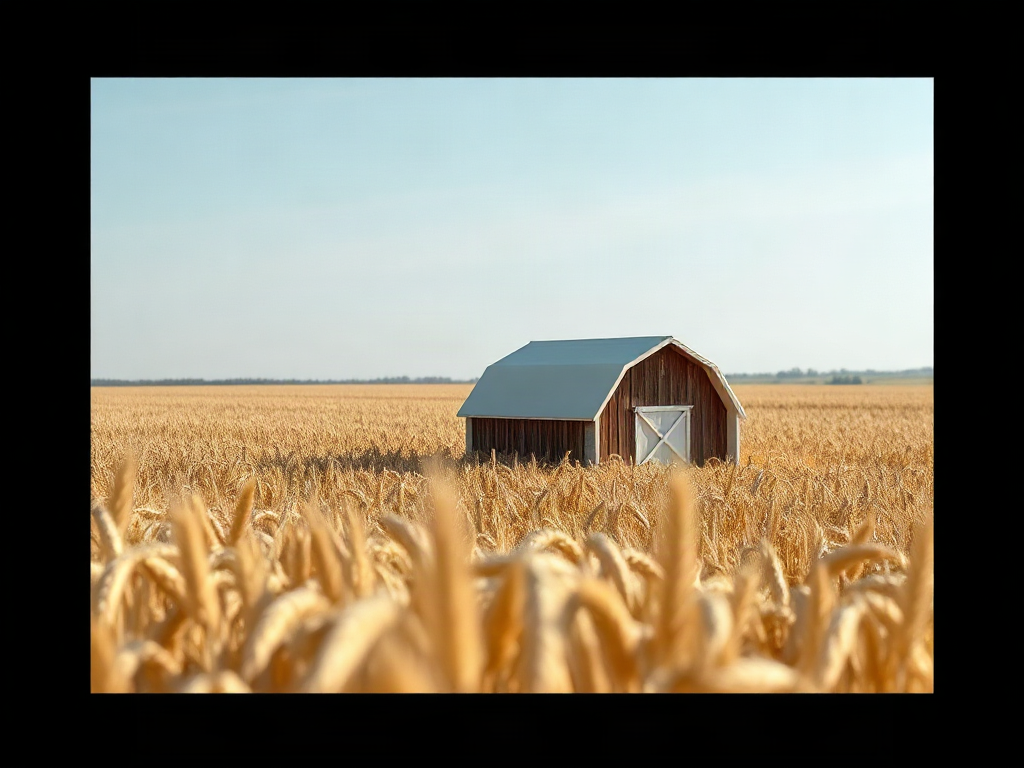
Commercial grain farming and household production are two distinct grain systems: the first pursues marketable volume through mechanization, purchased inputs, specialized storage, and commodity sales, while the second prioritizes food security, manageable labor, and direct household use. Commercial operators spread machinery costs across large acreages but face substantial exposure to input prices, weather, and market swings. Household growers can adapt crops and harvest methods to family needs, although limited land and equipment constrain output. The practical choice rests on purpose, available acreage, labor capacity, storage conditions, and whether the grain must generate revenue or supply the home.
How Do Scale and Purpose Shape Grain Production?
Purpose determines nearly every other difference between the two systems. A commercial grain operation raises wheat, corn, barley, oats, soybeans, or another field crop primarily for sale. Decisions are organized around market specifications, harvestable acreage, machinery efficiency, transport, and the value of the crop after production costs. Household production begins with a different question: how much grain the household can realistically grow, process, store, and use.
Scale changes how land and equipment are managed. A commercial operator may simplify fields around a limited crop rotation because standardized planting, spraying, and harvesting reduce time per acre. Uniform crop maturity matters because a combine must move efficiently through the field and harvested grain must meet buyer expectations for moisture, cleanliness, and quality. A small household plot can tolerate more handwork, irregular boundaries, or several varieties, but every added crop may require a separate planting date, harvest window, and processing method.
Consider corn as a practical example. A market-oriented farm may select grain corn suited to mechanical harvest, dry it to a stable moisture level, and sell it through an elevator or contract. A household might grow a modest patch of flint or dent corn for cornmeal, animal feed, or seed. The second system produces far less total grain, yet the crop can have high household value if the family already mills corn, keeps poultry, or wants a locally adapted seed supply.
A common mistake is treating household grain as a miniature version of commodity production. The strongest household plan usually works backward from use. A family that rarely bakes bread has little reason to devote a large plot to bread wheat, especially if threshing and milling equipment are unavailable. Conversely, a household that regularly eats oatmeal or feeds whole grain to livestock may have a clear use for oats even when selling them would make little economic sense.
Yield per acre is therefore not the only useful comparison. Commercial success depends on saleable yield, quality, timing, and margin across substantial acreage. Household success may mean obtaining clean seed, filling a defined portion of the pantry, reducing purchased feed, or learning a crop without overwhelming the rest of the homestead. The proper measure must match the producer’s actual purpose.
Machinery, Labor, and Field Management
Commercial grain production replaces much manual work with capital-intensive machinery. Tractors, planters or drills, crop-protection equipment, combines, grain carts, trucks, dryers, and handling systems allow a relatively small workforce to cover large fields. That efficiency is essential during narrow planting and harvest windows, but it creates fixed costs and maintenance demands that remain even when crop prices weaken or weather reduces output.
Household production commonly substitutes labor and scheduling flexibility for specialized machines. Seed can be broadcast or planted with a small drill, weeds can be managed by cultivation or crop competition, and grain can be cut with a sickle or scythe. Small threshers exist, but some growers thresh by beating dried heads inside a clean container or bag and then winnow the grain with moving air. These methods are workable for a trial plot; they become exhausting and inconsistent when acreage expands.
The labor bottleneck often appears after the crop looks finished. Cutting is only one task. Sheaves or seed heads may need additional drying, followed by threshing, winnowing, moisture checking, cleaning, bagging, and protection from rodents. A quarter-acre managed by hand can demand more post-harvest attention than expected, particularly when rain threatens mature grain. The same crop harvested by combine is cut, threshed, and initially cleaned in one pass, although drying, transport, and storage still remain.
Field management also differs in precision and risk. Large operators can use soil tests, calibrated seeding rates, field records, and timed applications across many acres, but a mistake in variety selection or input timing is repeated at scale. Household growers can inspect a plot closely and remove isolated weeds or diseased plants. They may also underplant, seed unevenly, or lose the crop to birds because methods developed for vegetable beds do not automatically transfer to dense stands of grain.
A sensible equipment decision compares annual use with ownership burden. Buying a combine for a small homestead plot is rarely practical because storage, repairs, fuel, and depreciation overwhelm its limited use. Hiring a custom operator may work where fields are accessible and large enough to justify the visit, but very small or oddly shaped plots may not qualify. Borrowing or sharing a small thresher can be more suitable for household quantities.
Signs that the chosen scale is working include completing field operations within the crop’s weather window, keeping weeds from dominating the stand, and processing the harvest before quality declines. Grain left outdoors because threshing capacity is inadequate is a clear sign that acreage has exceeded the household’s labor or equipment capacity.
Which System Has the Lower True Cost?
Neither system is automatically cheaper because they account for costs differently. Commercial production can lower machinery and labor cost per unit through scale, yet it requires substantial spending on land access, seed, fuel, fertilizer, crop protection, repairs, insurance, drying, storage, and transport. Revenue also depends on saleable quantity and price, so a productive harvest can still produce a weak margin when costs are high or the market is unfavorable.
Household growers usually spend less in total, but their grain can be costly per pound when labor and processing are counted. A small wheat plot may require inexpensive seed and basic hand tools, yet the time spent preparing soil, managing weeds, protecting mature heads, threshing, cleaning, and milling has real value. Homegrown grain should not be described as free merely because no retail purchase occurs.
| Decision Factor | Commercial Production | Household Production |
|---|---|---|
| Primary return | Income from saleable crop | Food, feed, seed, or experience |
| Largest cost pressure | Land, machinery, inputs, and market exposure | Labor, small-scale tools, and processing time |
| Efficiency advantage | Lower fieldwork time per acre | Close management and flexible crop choice |
| Typical constraint | Capital and commodity margins | Available land, labor, threshing, and storage |
The comparison changes when household grain replaces a specialty product rather than an inexpensive commodity. A family may value a particular open-pollinated corn for meal, a heritage wheat for baking, or an untreated feed grain that is difficult to obtain locally. That value is personal and should be separated from claims of commercial profitability. A crop that makes sense for household use may still be unsuitable for sale once cleaning, packaging, labeling, transport, and customer acquisition are considered.
Weak budgets often exclude failure and opportunity cost. Seed may germinate poorly, birds may take exposed heads, wet weather may delay harvest, or stored grain may develop mold or insect damage. Land devoted to grain also cannot produce vegetables, forage, or another crop during the same period. On a small homestead, that displacement may matter more than the seed bill.
Before expanding, record seed, soil amendments, fuel, hired services, containers, milling charges, and hours worked for one complete season. Divide usable grain—not field weight before cleaning and losses—by total cost. The result does not need to beat supermarket pricing if food security or seed stewardship is the goal, but it reveals what the household is actually trading for those benefits.
How Do Harvest, Storage, and Use Differ?
Harvest and storage determine whether grain becomes a usable product or a spoiled crop. Commercial systems move grain rapidly from the field into carts, trucks, bins, dryers, or an elevator. Moisture and quality are checked because damp grain can heat, mold, lose grade, or become unsafe to store. Household growers face the same biological risks even though their containers are smaller.
Grain that feels dry at the surface may retain enough moisture to cause trouble in a sealed bucket. Drying requirements vary by crop, storage duration, temperature, and intended use, so appearance alone is a weak test. A grain moisture meter suited to the crop can provide more useful information. Small batches should be cooled and cleaned before long storage, then placed in food-appropriate containers if they are intended for people. Containers need protection from insects, rodents, leaks, and temperature swings.
Commercial storage emphasizes throughput, aeration, pest monitoring, and the ability to preserve quality until sale or delivery. Household storage emphasizes manageable batches and rotation. Several smaller containers may be safer than one large container because opening a single batch does not expose the entire harvest, and a problem can be isolated. Labels should identify the crop, variety, harvest year, intended use, and any treatment that makes seed unsuitable for food or feed.
End use changes the required processing. Wheat intended for flour must be cleaned thoroughly and milled; oats may require dehulling depending on the type; dry corn may be shelled and ground; and livestock grain may need different handling than grain for human food. Assuming that harvested grain is immediately kitchen-ready is a frequent failure. Processing equipment, food preparation knowledge, and storage space should be arranged before planting.
A practical household sequence is to harvest a small test area first, complete drying and threshing, inspect the cleaned grain, and confirm that storage and processing methods work. If grain clumps, smells musty, shows condensation, attracts insects, or warms in storage, it needs prompt attention rather than tighter sealing. Material with visible mold or an abnormal odor should not be casually repurposed as food or feed; uncertainty warrants guidance from a local extension service or another qualified source.
Commercial operations have more handling infrastructure, but they also face larger losses when monitoring fails. Household growers have closer control over each batch, yet limited testing equipment can hide problems. Both systems succeed by treating post-harvest management as part of production rather than an afterthought.
Choosing a Realistic Grain Production Scale
The right scale is the largest area that can be planted, managed, harvested, processed, and stored without neglecting another critical homestead task. Acreage alone is a poor starting point. A household needs to match the crop to its climate, soil, equipment, available labor, intended use, and tolerance for losing part of the harvest during the learning period.
Begin with a written production chain rather than a seed catalog. Identify where the grain will grow, how the seedbed will be prepared, how weeds will be controlled, what will cut the mature crop, where it will dry, how it will be threshed and cleaned, and where the finished grain will go. A missing link at the end can waste all the work performed at the beginning.
- Define the output. Choose food, livestock feed, seed saving, sale, or a clearly stated combination.
- Check crop fit. Match planting and maturity needs to local frost, rainfall, and harvest conditions.
- Test the workflow. Use a modest plot that can still be handled if machinery or weather plans fail.
- Secure processing and storage. Arrange threshing, milling, containers, and a dry storage location before harvest.
- Review usable yield. Record losses, labor, quality, and actual household consumption before expanding.
A household considering commercial sales needs an additional layer of analysis. Reliable volume, buyer requirements, field access, transport, crop insurance options, business records, and applicable food, seed, feed, or environmental rules may affect feasibility. Requirements differ by location and product, so local agencies and extension offices are more reliable than assumptions drawn from another region.
Expansion is justified when the household consistently completes harvest on time, uses or sells the grain before quality declines, and can identify the next genuine bottleneck. Expansion is premature when unthreshed bundles accumulate, containers are improvised, milling is unavailable, or grain remains unused from the previous season. Those are workflow failures, not signals to plant more.
Commercial methods may still offer useful lessons to a small producer: calibrated seeding, crop rotation, soil testing, clean storage, maintenance records, and timely field operations apply at any scale. Household production should borrow those disciplines without copying machinery purchases or acreage targets that only make sense when costs are distributed across a much larger crop.
Frequently Asked Questions
Is household grain production cheaper than buying grain?
Not necessarily. Seed and tools may be affordable, but labor, threshing, cleaning, milling, storage, and crop losses can make each usable pound expensive. It is most defensible when the household values a specific variety, feed supply, seed crop, or resilience benefit.
Can a homesteader use commercial grain varieties?
Yes, if the variety suits local conditions and the intended use. Check maturity, disease concerns, processing needs, and whether saved seed will remain useful. A variety selected for commodity handling may not offer the baking, milling, or seed-saving traits a household wants.
What is the biggest challenge in growing grain by hand?
Post-harvest work is often the limiting step. Cutting, drying, threshing, winnowing, cleaning, and storing grain can require more time than field care, especially when wet weather compresses the harvest window.
Does household grain production require a combine?
No. Small plots can be harvested and threshed with hand tools or compact equipment. A combine becomes relevant only when acreage, field access, crop uniformity, and the value of timely mechanical harvest justify ownership or custom service.
Which grain is best for a first household crop?
The best choice is a crop suited to the local climate that the household already knows how to use. Oats, wheat, barley, or dry corn may be practical, but available threshing, dehulling, milling, and storage should influence the decision as much as field performance.
Conclusion
Commercial and household grain systems should be judged against different objectives. A market farm needs efficient acreage, dependable machinery, buyer-compatible quality, disciplined cost control, and enough margin to withstand weather and price pressure. A household plot needs a clear use, a manageable workload, suitable processing, and storage that protects a comparatively small but valuable harvest.
Homesteaders should start by tracing the crop from seedbed to final meal, feed ration, or seed container. Test that chain on limited ground, record usable yield and labor, and expand only after the harvest can be processed without delay. Commercial practices such as calibration, crop records, soil testing, and moisture monitoring remain valuable, but commercial acreage and equipment assumptions rarely transfer directly. The most productive next step is not planting more ground; it is identifying and correcting the first weak link in the household production chain.
For location-specific crop selection, planting windows, soil testing, pest management, harvest moisture, and safe storage, consult a land-grant university extension service serving your region. USDA agricultural resources can also provide context on commodity production, farm economics, and grain markets, while local grain buyers can explain current quality and delivery requirements.