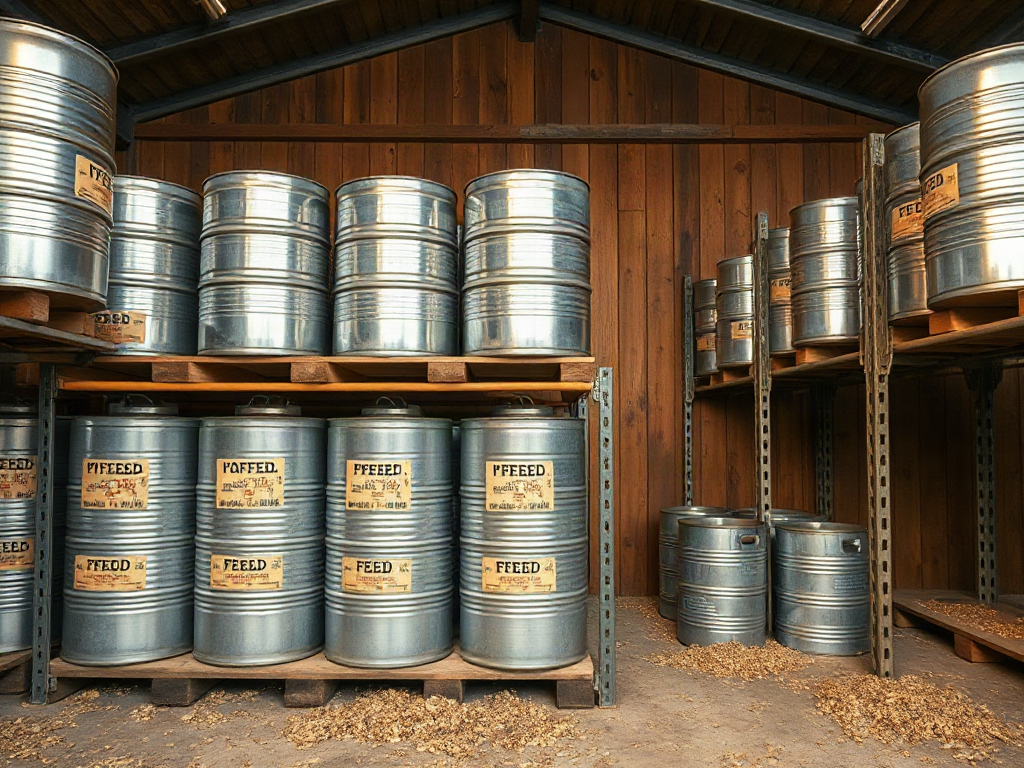
Homestead farm feed storage without attracting rodents depends on denying pests food, shelter, and easy entry rather than relying on traps alone. Keep grain and pellets in tight-fitting metal containers, place them on clean raised surfaces, and buy quantities that can be used before moisture or spoilage develops. Sweep spills promptly, inspect seams and door gaps, and rotate older feed to the front so forgotten bags do not become nesting sites. Monitor for droppings, gnaw marks, damaged packaging, and musty odors; if activity appears, discard contaminated feed, correct the access point, and then use traps where livestock and children cannot reach them.
What you’ll learn
This guide covers the following practical points:
- Choose a Dry, Rodent-Resistant Feed Room — A suitable feed room has a dry floor, intact walls, a closable door, and enough open space to inspect behind every container.
- Select Containers That Protect Feed — Metal containers with secure, close-fitting lids provide the strongest practical barrier for dry grain, pellets, and meal.
- Control Spills and Rotate Inventory — Daily housekeeping removes the scattered kernels that allow rodents to eat without entering a closed bin.
- Monitor and Correct Rodent Activity — Early evidence of rodent activity calls for inspection before additional feed is brought into the room.
Choose a Dry, Rodent-Resistant Feed Room
A suitable feed room has a dry floor, intact walls, a closable door, and enough open space to inspect behind every container. Rodents are drawn not only by feed but also by quiet cavities, loose insulation, stacked clutter, and leaking water. A shed packed with spare lumber and empty sacks may offer nesting cover even when the grain itself is sealed.
Inspect the room in daylight and again from inside with the door closed. Light showing beneath doors or around wall penetrations identifies likely access points. Repair gaps with durable materials suited to the structure; expanding foam by itself is easily damaged and should not be treated as a chew-resistant barrier. Door sweeps, sound thresholds, metal flashing, and hardware cloth can address different openings, but they must fit tightly without interfering with drainage or ventilation.
Feed should sit away from exterior walls and above floors that may sweat, flood, or collect wash water. A raised rack or sturdy pallet makes leaks and droppings easier to spot, but a pallet with inaccessible hollow spaces can become shelter. Choose an open-frame platform that can be swept underneath, and leave an inspection aisle rather than pressing bins into a dark corner.
Water management belongs in the storage plan. Repair roof leaks, keep livestock waterers outside the room, and prevent condensation through appropriate ventilation. Dry storage protects feed quality while making the room less hospitable to pests. The common mistake is choosing a convenient corner of a barn without considering nearby water, nesting cover, or the condition of the building envelope.
Select Containers That Protect Feed
Metal containers with secure, close-fitting lids provide the strongest practical barrier for dry grain, pellets, and meal. Heavy-duty food-safe plastic bins can control moisture and insects, but persistent rodents may gnaw exposed plastic. They are better used inside a well-sealed room than as the sole defense in an open shed.
Match container capacity to the amount of feed used between deliveries. An oversized bin encourages old material to remain at the bottom, while several smaller bins make batch separation and cleaning easier. Do not pour a new purchase over leftover feed. Empty the container, examine the residual feed, wash or brush the interior as appropriate, and let it dry completely before refilling.
| Storage Option | Best Use | Main Limitation |
|---|---|---|
| Galvanized steel can with locking lid | Bagged grain or pellets in barns and sheds | May rust if kept on a wet floor |
| Food-safe plastic bin | Feed kept inside a secure, dry room | Can be gnawed when rodents reach it |
| Original paper or woven bag | Short handling before transfer to a bin | Offers little resistance to teeth or moisture |
| Bulk feed bin | High-volume use with dependable turnover | Requires inspection of outlets, seams, and supports |
Label each container with the feed type and purchase or milling date. Keeping poultry ration, goat feed, mineral products, and medicated feed clearly separated reduces feeding errors as well as waste. Never store pesticides, fuel, or strong-smelling chemicals in feed containers or directly beside them. A container that once held an unknown substance should not be repurposed for animal feed.
Control Spills and Rotate Inventory
Daily housekeeping removes the scattered kernels that allow rodents to eat without entering a closed bin. Spillage often accumulates beneath scoops, around bag-opening stations, and near feeders returned from animal areas. Use a dedicated scoop that remains inside the container, and carry feed in a bucket rather than an open bag that sheds grain along the route.
Buy according to actual consumption rather than the largest discount available. As an illustrative example, if a flock consumes one bag every two weeks, storing six bags creates roughly three months of inventory. That may be reasonable in a dry, secure room, but it increases exposure to humidity, insects, and unnoticed package damage compared with keeping two or three bags. The savings from bulk purchasing disappear when stale or contaminated feed must be discarded.
A compact operating routine keeps storage manageable:
- Receive: Check every bag for tears, dampness, webbing, unusual odor, or spilled contents before accepting or storing it.
- Date: Mark the purchase date where it remains visible after stacking.
- Rotate: Place newer stock behind older stock and finish one batch before opening another.
- Clean: Sweep loose feed and remove empty bags instead of letting them accumulate.
- Review: Compare inventory with normal consumption so unexplained losses are noticed.
Clean feed spilled on a dry surface may look usable, but sweeping it back into a bin can introduce dirt, droppings, moisture, or fragments of packaging. Dispose of questionable material where it will not become another food source near the building. Visible cleanliness is a useful sign, but a room can still have hidden activity; housekeeping must be paired with inspection.
Monitor and Correct Rodent Activity
Early evidence of rodent activity calls for inspection before additional feed is brought into the room. Look along walls and behind bins for droppings, gnawing, greasy rub marks, shredded paper, tracks in dust, and feed disappearing faster than expected. Check container rims and lids because a bin can appear closed while warped edges leave a reachable gap.
Contaminated feed should not be offered to livestock. Remove damaged bags without shaking debris through the room, clean the affected area carefully, and follow appropriate sanitation precautions for rodent-contaminated spaces. If an animal may have consumed contaminated or spoiled feed and shows illness, contact a veterinarian rather than assuming the storage correction resolves the health concern.
Traps can reduce an active population, but they do not compensate for spilled grain or open entry points. Place traps in protected stations or locations inaccessible to livestock, pets, and children, following the product directions. Poison baits create additional concerns around non-target animals and inaccessible carcasses, so their use demands careful label compliance and may be better handled with local pest-control guidance.
Judge the response by several signals: no fresh droppings, no new package damage, stable feed use, and traps remaining undisturbed over repeated checks. Continue monitoring after activity stops because seasonal weather and harvest operations can drive new rodents toward outbuildings. The recurring failure is removing a few animals while leaving the same doorway gap, spilled feed, and nesting material in place.
Frequently Asked Questions
Are plastic totes safe for storing livestock feed?
Food-safe plastic totes can work inside a dry, rodent-resistant room, but they are vulnerable to gnawing. Metal cans with secure lids are generally a more durable choice where rodents may reach the container.
Should feed be stored in its original bag inside a metal can?
Keeping feed in its labeled bag can preserve product identification and directions if the bag fits without preventing the lid from closing. Avoid leaving folds draped over the rim, which can create a gap.
How far off the floor should feed be stored?
No single height suits every building. Raise containers enough to keep them away from floor moisture and allow clear inspection and cleaning underneath without creating concealed nesting spaces.
Can rodent-contaminated feed be salvaged?
Feed exposed to droppings, urine, nesting material, or gnawed packaging should be discarded rather than screened or mixed with clean feed. Isolate it promptly so animals cannot reach it.
Will barn cats keep rodents out of stored feed?
Cats may catch some rodents, but they cannot seal openings or remove scattered grain. Secure containers, exclusion repairs, sanitation, and monitoring remain necessary even when a barn cat is present.
Conclusion
Begin by emptying and inspecting the feed area, sealing visible access points, and transferring vulnerable bags into labeled metal containers. Then establish a repeatable receiving, rotation, and sweeping routine. Watch for fresh evidence rather than assuming a clean-looking room is pest-free. When signs persist despite exclusion and sanitation, use protected traps or qualified pest-control help without exposing livestock, pets, or children to additional hazards.