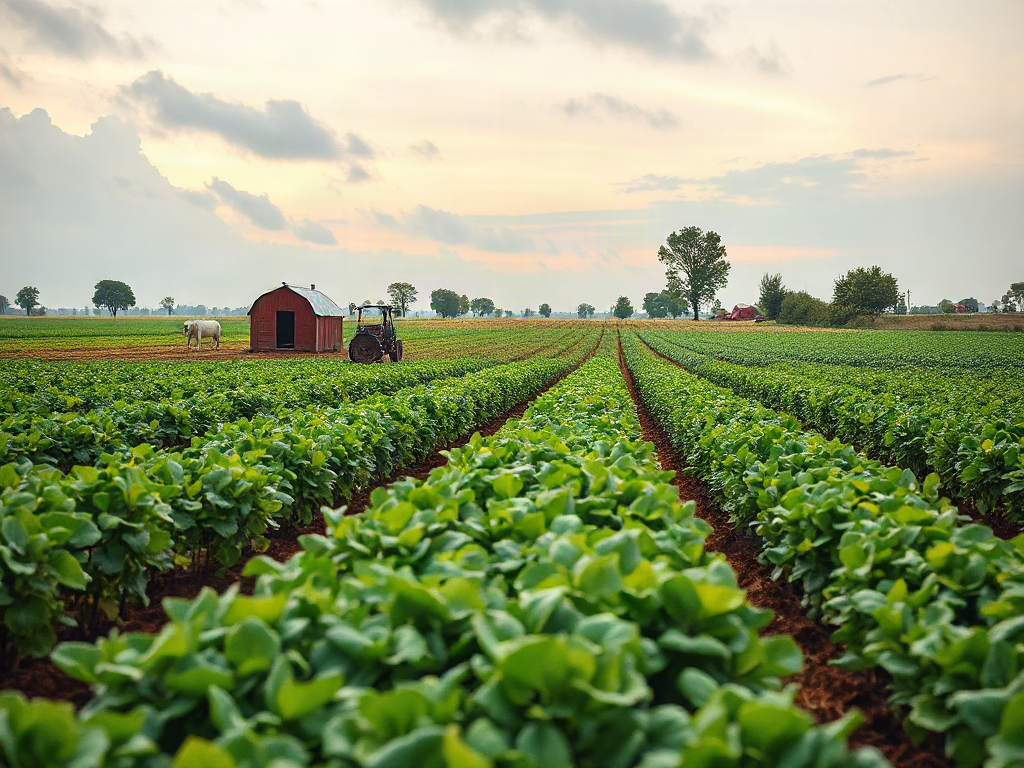
Subsistence farming versus commercial food production differs mainly in purpose, scale, market dependence, and use of resources. Subsistence farms prioritize feeding a household or local community, typically relying on family labor, mixed crops, saved seed, and limited purchased inputs. Commercial operations produce primarily for sale and often depend on specialized equipment, external financing, formal supply chains, and consistent market access. Neither model is automatically more secure or sustainable: household-oriented farms can face harvest and labor shortages, while market-oriented farms are exposed to price swings, debt, fuel costs, and buyer requirements.
How Do the Two Farming Systems Differ?
The dividing line is the destination of the harvest. A subsistence operation directs most of its crops, livestock products, or both toward the producer’s household. A commercial operation plans production primarily around sales to consumers, retailers, processors, institutions, or commodity buyers. Farms can occupy positions between these endpoints, so the distinction describes an economic orientation rather than a rigid classification.
That orientation changes how decisions are made. A household plot may contain maize or potatoes for calories, beans for protein, vegetables for dietary variety, laying hens for eggs, and a few surplus products for exchange. Diversity protects the family from depending on one harvest and spreads work across the season. The producer may value a dependable supply of several foods more than the highest possible revenue from a single crop.
A market-focused farm begins with a buyer or sales channel. Crop selection, planting dates, grading, packaging, volume, and harvest timing must suit that channel. A vegetable grower supplying restaurants may favor uniform salad greens and repeated weekly harvests. A grain operation may concentrate on a small number of crops that can be planted, harvested, stored, and transported efficiently with machinery. Specialization can lower the labor or equipment cost per unit, but it also concentrates exposure to crop failure or weak prices.
| Decision Area | Subsistence Orientation | Commercial Orientation |
|---|---|---|
| Primary purpose | Household food supply | Revenue from sales |
| Typical crop mix | Diverse foods with direct household value | Products selected for demand and margin |
| Labor | Mostly household or community labor | Family, hired, contracted, or mechanized labor |
| Inputs | Often locally available and reused | Frequently purchased and standardized |
| Main exposure | Yield shortfalls and household scarcity | Prices, costs, contracts, and buyer access |
A common mistake is treating “subsistence” as synonymous with primitive or inefficient and “commercial” as synonymous with modern or productive. A carefully managed household farm may use irrigation, improved tools, soil testing, or protected growing. A commercial farm may still depend heavily on family labor and modest acreage. Scale, technology, and purpose often overlap, but they are not the same measure.
Readers comparing the systems should therefore ask where the food goes, what success means, and which constraints govern decisions. Household calories, dietary variety, cash profit, dependable contracts, and maximum yield are different targets. Judging either system by the wrong target produces a misleading comparison.
How Land, Labor, and Inputs Shape Production
Land area alone does not determine whether a farm is subsistence-based or commercial. A small greenhouse can produce high-value crops for sale, while a larger remote holding may primarily feed an extended family. More revealing questions concern land quality, water access, labor at peak periods, storage capacity, transport, and the amount of cash available before harvest.
Subsistence production often uses intercropping, rotations, small livestock, compost, saved planting material, and staggered sowing to obtain several kinds of food from limited resources. These practices can make productive use of family knowledge and locally available materials. They may also demand substantial hands-on labor. Weeding several mixed plots, tending animals, preserving food, and saving seed can become difficult when illness, off-farm work, or migration reduces household labor.
Commercial production tends to standardize operations so crops can be handled quickly and predictably. Uniform rows suit cultivation equipment; a narrow crop range simplifies harvest and packing; purchased seed can provide consistent characteristics; and cold storage may preserve sale quality. These advantages require capital and supporting infrastructure. Equipment must be maintained, fuel or electricity must be available, and purchased inputs create expenses whether the eventual selling price is favorable or not.
Consider two growers with the same acre of irrigated ground. One might allocate beds among staple crops, storage vegetables, herbs, and fresh produce for family meals. The other might grow repeated successions of a premium vegetable for a farmers market. The first sacrifices some production efficiency to obtain a broad pantry. The second may earn more gross revenue, but must meet market dates, maintain visual quality, buy packaging, and sell perishable inventory promptly. Their acreage is identical; their labor calendars and failure points are not.
Before expanding either approach, check five operational limits:
- Peak labor: Identify who will plant, weed, harvest, wash, preserve, or sell during the busiest weeks.
- Water: Match planned acreage to dependable supply and delivery capacity, not an optimistic seasonal estimate.
- Postharvest handling: Provide curing, refrigeration, drying, or protected storage appropriate to the crop.
- Cash exposure: Total the costs due before any food is eaten or product is sold.
- Market access: Confirm realistic buyers, quantities, quality standards, and transportation before scaling for sale.
The frequent failure is expanding planted area without expanding the bottleneck that controls usable output. Extra tomatoes have little value if they cannot be picked, preserved, or sold. More grain does not strengthen household security if moisture or pests ruin it in storage. Productive planning connects field capacity to labor, handling, and destination.
Which System Manages Risk More Effectively?
Neither system removes risk; each places risk in a different location. Subsistence farms carry direct production risk because a poor harvest can reduce the household’s food supply. Commercial farms convert much of their harvest into income, which adds exposure to market prices, buyer decisions, operating costs, credit terms, and supply-chain interruptions.
Diversity is a common defense in household production. If dry weather reduces a moisture-sensitive crop, drought-tolerant staples or livestock products may still provide food. Staggered planting can prevent the entire crop from reaching a vulnerable stage at once. Stored seed and preserved food may reduce dependence on immediate purchases. The limitation is that diversification does not guarantee adequate nutrition or quantity. A household can grow many crops and still face a calorie gap, depleted soil, animal-feed shortages, or insufficient labor.
Commercial farms often manage production uncertainty through irrigation, machinery, planned input applications, storage, forward agreements, insurance where available, or production across multiple fields. Yet technical control over yield does not ensure profit. A strong harvest can coincide with low prices, and a specialized crop may have few alternative buyers. Quality standards can also turn biologically edible produce into an unsalable commercial product because of size, appearance, maturity, or packaging requirements.
The contrast becomes clear during a bumper tomato harvest. A household-oriented grower may eat some tomatoes, preserve others, feed damaged fruit to suitable livestock, share surplus, and save seed where the variety permits. A market grower needs enough customers, harvest labor, containers, transport, and cooling to move a much larger volume quickly. The commercial crop may generate valuable income, but unsold produce becomes a loss after substantial cultivation and handling costs.
Risk assessment should separate four questions: Can the farm produce the crop? Can it harvest and store the crop? Can the household use the quantity produced? Can a buyer take the marketable volume at a workable price? A plan is weak when it answers only the first question.
Signs that a subsistence plan is failing include repeated food gaps, declining yields, seed or feed shortages, and essential work exceeding available labor. Warning signs for a commercial plan include dependence on one buyer, rising input bills, rejected products, unsold perishables, and revenue that looks healthy before labor and equipment costs are counted. Tracking these signals by crop and season is more useful than assuming either model is inherently resilient.
Can a Homestead Combine Household and Market Production?
A mixed model is often the most practical choice for a homestead because food and cash solve different needs. The household can reserve dependable ground for foods it regularly eats while directing selected crops, eggs, seedlings, or other products toward proven buyers. This approach avoids forcing every acre to serve the same purpose.
The strongest mixed plans separate the household food budget from the farm sales budget. Home-consumed produce still has value, but it should not be recorded as cash available for fuel, repairs, loan payments, packaging, or taxes. Likewise, gross sales should not be mistaken for earnings. Seeds, animal feed, soil amendments, market fees, spoilage, mileage, hired help, and equipment use all affect what remains.
A practical sequence begins with household demand. Estimate which foods the family will actually eat or preserve, how much storage is available, and which crops perform reliably on the site. Next, identify one or two sale products with a realistic outlet. Test a manageable volume before buying specialized machinery or committing large acreage. Record labor, yield, losses, price, and repeat demand. Expansion makes sense only when the entire chain—from production through payment—works consistently.
For example, a homestead might grow potatoes, beans, squash, and onions mainly for household use while selling salad greens through a nearby market. The storage crops provide food beyond the growing season, while the greens generate frequent cash flow. The arrangement fails if greens consume so much irrigation and harvest time that staple crops are neglected, or if unsold leaves repeatedly spoil. Separate records reveal whether the market enterprise supports the homestead or competes with it.
Choosing products that share infrastructure can improve the fit. A wash station built for household vegetables can serve a modest market garden; a cool room may protect both stored food and sale inventory. Shared resources become a problem when commercial volume crowds out family storage or introduces handling requirements the homestead cannot meet.
Priorities should remain explicit: protect the household’s minimum food goals, preserve soil and water capacity, cap the cash that can be lost in an unproven enterprise, and confirm demand before increasing output. A mixed system is working when home supplies are dependable, sale records show a genuine margin, peak work remains manageable, and soil fertility is maintained. It is failing when sales are subsidized by unpaid labor, household food targets are repeatedly missed, or expansion creates debt without secure demand.
Frequently Asked Questions
Is subsistence farming always small-scale?
No. It is defined mainly by producing for household use rather than by a fixed acreage. Land needs vary with climate, soil, crops, livestock, household size, and expected diet.
Can subsistence farmers sell surplus produce?
Yes. Selling or exchanging surplus does not automatically make an operation commercial. The distinction shifts when production decisions are made primarily to supply markets and earn revenue.
Is commercial farming more productive?
Commercial specialization may produce more of a particular commodity per worker or unit of equipment, but productivity depends on what is measured. Household farms may prioritize dietary variety and usable food rather than maximum output of one crop.
Which model is better for a new homesteader?
Household production plus a small, tested sales enterprise is often more manageable than immediate specialization. The better choice depends on food goals, market access, available labor, cash reserves, and storage.
What records should a mixed farm keep?
Track planted area, labor hours, purchased inputs, harvest weight, household use, spoilage, sales, mileage, and buyer demand by product. These records show whether expansion would improve food security or actual earnings.
Conclusion
The useful distinction is not old farming versus modern farming, or small holdings versus large ones. It is whether production decisions are organized around household consumption, market sales, or a deliberate combination of both. Each choice creates different demands on labor, cash, storage, transport, and risk management.
Start by defining the outcome the land must deliver: staple food, dietary variety, dependable income, or a measured mix. Then locate the limiting resource, whether that is water, seasonal labor, working capital, cold storage, or access to buyers. Test market enterprises at a volume the household can afford to lose, and keep household food and business accounts separate. Expansion is justified when usable harvests, repeat sales, true costs, and workload records all support it—not merely when more ground is available to plant.