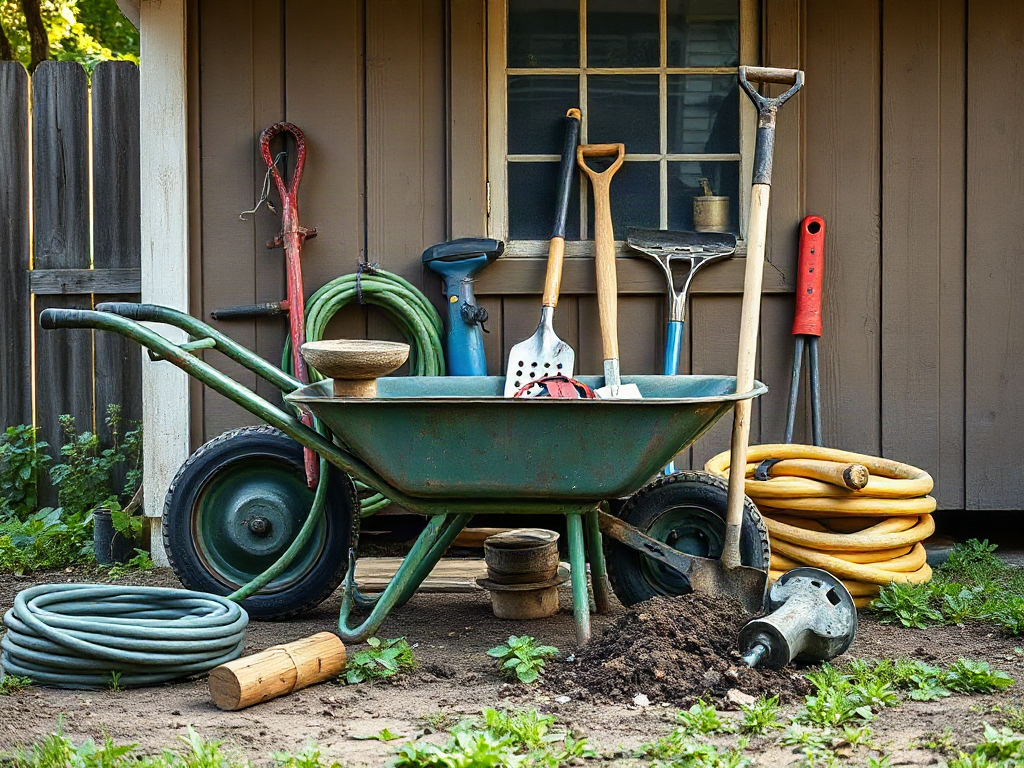
Homestead farm startup tools worth buying first are durable hand tools, safe cutting equipment, water-handling gear, repair supplies, and task-specific protective equipment rather than expensive machinery. Begin with a digging fork, spade, hoe, rake, wheelbarrow or garden cart, pruning tools, hoses, and a basic mechanic’s kit. Match each purchase to immediate jobs, available storage, soil conditions, and the distance between work areas. Rent or borrow tractors, tillers, post drivers, and other infrequently used machines until repeated use can justify ownership. Spending more on comfortable handles, replaceable parts, and locally serviceable equipment usually delivers better value than buying a large bargain-priced kit.
What you’ll learn
This guide covers the following practical points:
- Buy for First-Year Jobs, Not Future Possibilities — A useful startup inventory begins with a written list of work expected during the next season.
- Nine Startup Tool Priorities — The first purchases should cover routine ground work, material movement, plant care, water delivery, repairs, measurement, fencing, cleanup, and personal protection.
- Choose Tools That Fit the Property and Operator — Tool fit affects both output and control.
- Decide What to Rent, Borrow, or Buy — Ownership makes sense when a tool is used frequently, must be available without notice, or costs little to maintain relative to repeated rental.
Buy for First-Year Jobs, Not Future Possibilities
A useful startup inventory begins with a written list of work expected during the next season. Clearing a neglected garden, repairing an existing fence, moving compost, and watering young trees require different equipment. Buying against that list prevents a common mistake: filling a shed with specialized tools while lacking a reliable way to haul soil or shut off a leaking water line.
Sort planned work by frequency, physical demand, and consequence of delay. A tool used several times each week deserves priority over one needed for a single construction project. Watering equipment ranks highly because a broken connector or undersized hose can interrupt daily care. A post-hole auger may feel more substantial, but renting one for a weekend often makes better sense than storing and maintaining it.
Access changes the calculation. A compact garden cart may outperform a large wheelbarrow on narrow paths, while a two-wheeled cart is often steadier on uneven ground. Long distances between a barn, garden, and compost area can justify a larger hauling tool earlier. Measure gates, paths, storage doors, hose runs, and vehicle space before shopping.
Nine Startup Tool Priorities
The first purchases should cover routine ground work, material movement, plant care, water delivery, repairs, measurement, fencing, cleanup, and personal protection. Within each group, buy the simplest tool that can handle the actual workload without excessive strain.
- Digging and soil tools: A round-point shovel, digging fork, sturdy hoe, and garden rake cover planting, bed preparation, compost handling, and surface leveling. A fork is especially useful where turning soil with a shovel would be slow or disruptive.
- Hauling equipment: Choose a wheelbarrow for maneuverability or a two-wheeled cart for stability. Check tire type, axle strength, handle position, and whether a loaded unit can pass through every gate.
- Watering gear: Use drinking-water-safe hose where water may serve people or animals, and select enough diameter and length for the intended run. Keep spare washers, shutoff valves, couplers, and a repair fitting on hand.
- Pruning and cutting tools: Bypass pruners, loppers, a pruning saw, and a utility knife cover many orchard and garden jobs. Match cutting capacity to branch size instead of twisting a small pruner through oversized wood.
- Basic repair tools: A claw hammer, screwdrivers, adjustable wrenches, pliers, socket set, locking pliers, tape measure, and cordless drill handle common fixes. Add tools only when the property’s hardware demands them.
- Measuring and layout tools: A long tape, line level, stakes, mason’s string, and permanent marker improve fence lines, bed spacing, drainage slopes, and building layouts.
- Fencing tools: Fencing pliers, a post level, wire cutters, and a tensioning tool become priorities when animals or perimeter repairs are immediate. Different wire systems require different tensioners and fasteners.
- Cleanup tools: A stiff broom, leaf rake, buckets, scoop shovel, and trash grabber keep work areas clear and reduce damage caused by loose wire, spilled feed, or hidden hardware.
- Protective equipment: Well-fitting gloves, eye protection, hearing protection, sturdy footwear, and task-appropriate respiratory protection should be purchased with the tool that creates the exposure—not afterward.
Avoid inexpensive all-in-one packages when several pieces have thin sockets, loose heads, or uncomfortable grips. A smaller set of serviceable tools is easier to maintain and less likely to fail during heavy work. Replacement handles, blades, batteries, and fittings should be available without replacing the entire tool.
Choose Tools That Fit the Property and Operator
Tool fit affects both output and control. A shovel that is too long for its user becomes awkward in a raised bed, while a short handle forces unnecessary bending in an open plot. Test grip diameter, balance, weight, and handle length while wearing the gloves normally used for chores.
Soil and terrain matter as much as acreage. Rocky ground favors robust digging bars and narrow spades for targeted work. Heavy clay may call for a strong digging fork and a hoe that can be sharpened. Sandy beds rarely justify the same heavy tools. On slopes, stable carts, secure footwear, and manageable load sizes matter more than maximum carrying capacity.
Power sources create another constraint. A battery platform can simplify charging and reduce the number of spare batteries, but it also ties future purchases to one system. Corded tools are economical near reliable outlets, while fuel-powered equipment may suit remote, sustained work but requires fuel storage and engine maintenance. Do not choose a power tool solely from its advertised capability; consider runtime, repair access, noise, storage, and whether a hand tool could complete the occasional job.
For example, a new half-acre growing area near the house might justify a broadfork, cart, hose system, and cordless drill. The same purchases may be poorly matched to scattered livestock paddocks, where fencing tools, portable water fittings, and field-repair supplies solve more urgent problems.
Decide What to Rent, Borrow, or Buy
Ownership makes sense when a tool is used frequently, must be available without notice, or costs little to maintain relative to repeated rental. Rental is usually stronger for expensive equipment needed during a short project, especially when the rental provider handles storage and major maintenance.
| Decision Factor | Buy | Rent or Borrow |
|---|---|---|
| Use pattern | Weekly or season-long chores | One-time or rare projects |
| Availability | Delays would harm crops, animals, or repairs | Work can be scheduled in advance |
| Storage | Dry, secure space is ready | Equipment would remain outdoors or obstruct work |
| Maintenance | Owner can inspect and service it | Special service or transport would be burdensome |
| Typical examples | Shovel, cart, pruner, drill, hose | Trencher, tiller, chipper, post driver |
Use total ownership cost rather than sticker price. Blades, fuel, batteries, tires, belts, winter storage, and transport all belong in the comparison. A used implement can be economical when its frame, guards, controls, and wear parts are sound, but a low price does not compensate for missing safety components or unavailable replacement parts.
As an illustrative decision, suppose a post driver is needed for one new perimeter fence and no further fencing is planned for several years. Renting concentrates the work into a scheduled period and avoids long-term storage. If rotational paddocks will be changed repeatedly, ownership may become reasonable—but only after confirming that the model matches the intended posts and the available power source.
Inspect and Maintain Tools Before They Fail
A modest tool collection remains useful when every item has a storage place and a short maintenance routine. Dirt holds moisture against metal, dull edges require more force, and loose handles can turn an ordinary chore into a preventable failure. Clean tools after use, let them dry, inspect fasteners, and address cracks or movement before the next job.
Sharpen hoes, spades, pruners, and mower blades with methods appropriate to their original bevels. Lubricate pivot points lightly, protect exposed steel where needed, and store hoses drained and out of damaging sunlight or freezing conditions. Battery packs should follow the manufacturer’s temperature, charging, and storage instructions.
Create a small repair station with commonly used fasteners, hose washers, cotter pins, electrical connectors appropriate to existing equipment, penetrating oil, and clearly labeled spare parts. Random bins of unidentified hardware waste time; organize supplies by system or machine.
Signs the approach is working include fewer interrupted chores, tools returning to assigned locations, and consumable parts being replaced before failure. Repeatedly borrowing the same item, improvising unsafe substitutes, or abandoning jobs because equipment is unavailable signals a genuine purchase need. Conversely, dust-covered machinery and dead batteries usually indicate that enthusiasm, rather than workload, drove the purchase.
Frequently Asked Questions
Should a new homestead buy a tractor first?
Not automatically. Rent or hire tractor work until recurring mowing, loader, grading, or material-handling demands show that ownership will save enough time to offset storage, implements, maintenance, and repairs.
Is a wheelbarrow or garden cart better?
A wheelbarrow turns easily in tight spaces, while a two-wheeled cart is generally more stable under bulky loads. Choose after testing the route, gate width, terrain, load type, and comfortable lifting height.
Are used farm tools worth buying?
Used hand tools can offer excellent value when handles, heads, pivots, and cutting surfaces remain serviceable. For powered equipment, also check guards, controls, leaks, parts availability, and the cost of immediate maintenance.
Which tools should not be purchased cheaply?
Prioritize quality where failure creates injury risk, crop loss, or repeated replacement. Cutting tools, ladders, electrical equipment, load-bearing hardware, daily-use hoses, and protective gear warrant careful selection rather than price alone.
How should a beginner set a tool budget?
List first-season jobs, identify the minimum tools for each, and reserve part of the budget for repairs, protective equipment, and rentals. Purchase immediate daily-use items first, then reassess after several weeks of work.
Conclusion
Build the tool shed around work already scheduled, beginning with digging, hauling, watering, cutting, repair, measuring, fencing, cleanup, and protective gear. Property layout, soil, operator fit, storage, and access to repairs should decide the exact models. Rent costly specialty machines until their repeated use is clear. Before buying anything else, inspect the current collection and note which missing tool repeatedly delays a real chore.
Additional Resources
Authoritative Sources
- Tools and Apps
extension.psu.edu